Kingdom
Pseudomonadati
Phylum
Pseudomonadota
Class
Gammaproteobacteria
Order
Enterobacterales
Family
Enterobacteriaceae
Genus
Shigella
Description
Taxonomy
| Kingdom | Pseudomonadati |
|---|---|
| Phylum | Pseudomonadota |
| Class | Gammaproteobacteria |
| Order | Enterobacterales |
| Family | Enterobacteriaceae |
| Genus | Shigella |
| Species | Shigella boydii |
| Strain | strain DMB SH134 |
Profile
| Physiology | |
|---|---|
| Gram staining properties | Negative |
| Shape | Rod |
| Mobility | No |
| Flagellar presence | Yes |
| Number of membranes | 2 |

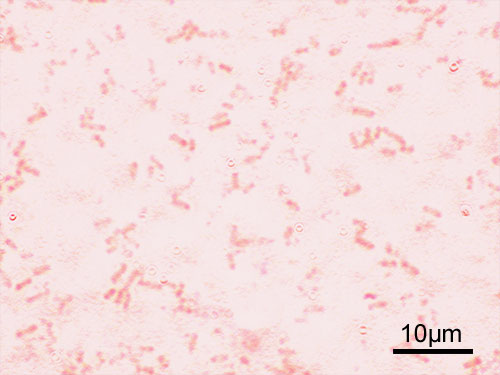
Image source: Wikipedia/Wikimedia
| Ecology, Host, and Life Cycle | |
|---|---|
| Oxygen requirements | Facultative anaerobe |
| Optimal temperature | 37 |
| Temperature range | Mesophilic |
| Habitat | HostAssociated |
| Biotic relationship | Free living |
| Host(s) | Homo sapiens, Metazoa |
| Cell arrangement | Pairs - Singles |
| Sporulation | Not Available |
| Energy source | Chemoorganotroph |
| Pathogenicity | Not Available |
Gene Summary
Adenine Count
1179951 bp
Thymine Count
1180164 bp
Guanine Count
1201480 bp
Cytosine Count
1210614 bp
Genome Length
4772209 bp
Protein-coding Genes
4434 genes
Non-Coding Genes
251 genes
# of Chromosomes/Plasmids
1
Genes
| Name | Locus Tag | UniProt ID | Strand Orientation | Gene Start/End | Protein Molecular Weight |
|---|---|---|---|---|---|
| hypothetical protein | UL57_08785 | Not Available | Positive | 1706876 - 1707088 | 8189.05 |
| type i dna topoisomerase | UL57_08790 | Not Available | Positive | 1707211 - 1709808 | 97376.1 |
| lysr family transcriptional regulator cysb | UL57_08800 | Not Available | Positive | 1710018 - 1710992 | 36152.5 |
| ymia family putative membrane protein | UL57_08805 | Not Available | Positive | 1711287 - 1711451 | 6232.76 |
| hypothetical protein | UL57_08810 | Not Available | Positive | 1711454 - 1711621 | 6324.16 |
| acna regulatory region 60-length spurious protein | UL57_08815 | Not Available | Positive | 1711758 - 1711940 | 6524.02 |
| gtp cyclohydrolase ii | UL57_08825 | Not Available | Negative | 1714690 - 1715280 | 21936.4 |
| phosphatidylglycerophosphatase b | UL57_08830 | Not Available | Positive | 1715450 - 1716214 | 29052.8 |
| lapa family protein | UL57_08835 | Not Available | Positive | 1716363 - 1716671 | 11352.1 |
| lipopolysaccharide assembly protein lapb | UL57_08840 | Not Available | Positive | 1716678 - 1717847 | 44501.5 |
Pathways
0 pathways
No pathways found
No metabolic pathways have been associated with this bacterium yet.