Kingdom
Pseudomonadati
Phylum
Bacteroidota
Class
Cytophagia
Order
Cytophagales
Family
Cytophagaceae
Genus
Spirosoma
Description
Taxonomy
| Kingdom | Pseudomonadati |
|---|---|
| Phylum | Bacteroidota |
| Class | Cytophagia |
| Order | Cytophagales |
| Family | Cytophagaceae |
| Genus | Spirosoma |
| Species | Spirosoma oryzicola |
| Strain | RHs26 |
Profile
| Physiology | |
|---|---|
| Gram staining properties | Not Available |
| Shape | Not Available |
| Mobility | Not Available |
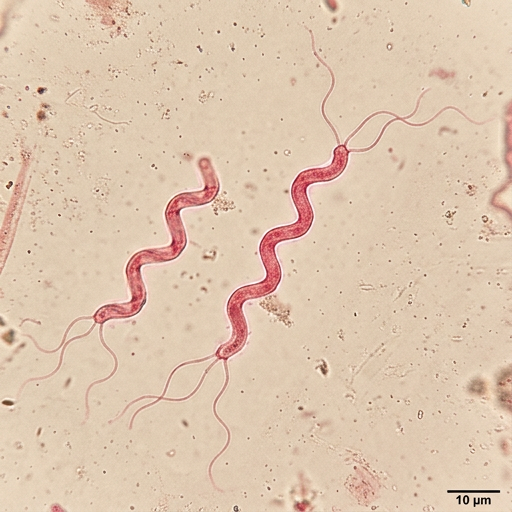
| Flagellar presence | Yes |
| Number of membranes | Not Available |
| Ecology, Host, and Life Cycle | |
|---|---|
| Oxygen requirements | Not Available |
| Optimal temperature | Not Available |
| Temperature range | Not Available |
| Habitat | Not Available |
| Biotic relationship | Not Available |
| Host(s) | Not Available |
| Cell arrangement | Not Available |
| Sporulation | Not Available |
| Energy source | Not Available |
| Pathogenicity | Not Available |
Genome Summary
Spirosoma oryzicola RHs26, Complete Genome
Gene Summary
Adenine Count
1431302 bp
Thymine Count
1434028 bp
Guanine Count
1425264 bp
Cytosine Count
1422474 bp
Genome Length
5713068 bp
Protein-coding Genes
4767 genes
Non-Coding Genes
56 genes
# of Chromosomes/Plasmids
10
Genes
| Name | Locus Tag | UniProt ID | Strand Orientation | Gene Start/End | Protein Molecular Weight |
|---|---|---|---|---|---|
| 23s ribosomal rna | Not Available | Not Available | Positive | 24614 - 27447 | Not Available |
| 5s ribosomal rna | Not Available | Not Available | Positive | 27569 - 27679 | Not Available |
| mur ligase domain-containing protein | LQ777_00120 | Q24ZG1 | Negative | 27932 - 29323 | 51639.7 |
| arginine decarboxylase | LQ777_00125 | A8G243 | Positive | 29568 - 31052 | 57179.7 |
| had family hydrolase | LQ777_00130 | Q9AGY5 | Negative | 31386 - 31904 | 19353.1 |
| valine--trna ligase | LQ777_00135 | A6LIG7 | Negative | 32092 - 34743 | 101303.0 |
| duf72 domain-containing protein | LQ777_00140 | Q8XCI6 | Positive | 34906 - 35817 | 34903.9 |
| imidazole glycerol phosphate synthase subunit hish | LQ777_00145 | Q64RT0 | Positive | 35999 - 36586 | 21716.0 |
| 1-(5-phosphoribosyl)-5-[(5- phosphoribosylamino)methylideneamino]imidazole-4- carboxamide isomerase | LQ777_00150 | Q11VM2 | Positive | 36649 - 37371 | 26715.9 |
| hypothetical protein | LQ777_00155 | Not Available | Positive | 37383 - 38036 | 25634.9 |
Pathways
0 pathways
No pathways found
No metabolic pathways have been associated with this bacterium yet.
Health Effects
No health effects information available for this bacterium.