Kingdom
Pseudomonadati
Phylum
Bacteroidota
Class
Cytophagia
Order
Cytophagales
Family
Cytophagaceae
Genus
Spirosoma
Description
Taxonomy
| Kingdom | Pseudomonadati |
|---|---|
| Phylum | Bacteroidota |
| Class | Cytophagia |
| Order | Cytophagales |
| Family | Cytophagaceae |
| Genus | Spirosoma |
| Species | Spirosoma oryzicola |
| Strain | RHs26 |
Profile
| Physiology | |
|---|---|
| Gram staining properties | Not Available |
| Shape | Not Available |
| Mobility | Not Available |
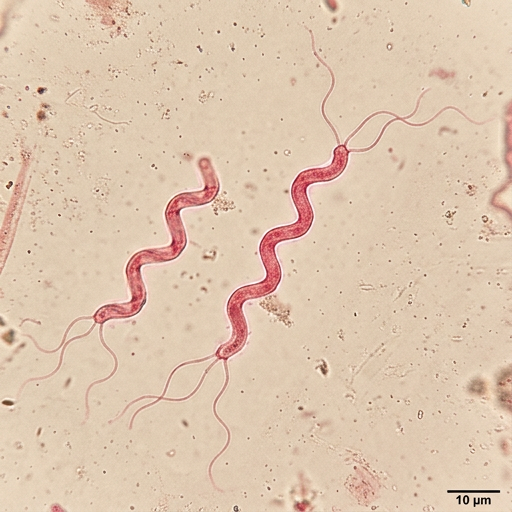
| Flagellar presence | Yes |
| Number of membranes | Not Available |
| Ecology, Host, and Life Cycle | |
|---|---|
| Oxygen requirements | Not Available |
| Optimal temperature | Not Available |
| Temperature range | Not Available |
| Habitat | Not Available |
| Biotic relationship | Not Available |
| Host(s) | Not Available |
| Cell arrangement | Not Available |
| Sporulation | Not Available |
| Energy source | Not Available |
| Pathogenicity | Not Available |
Genome Summary
Spirosoma oryzicola RHs26, Complete Genome
Gene Summary
Adenine Count
26007 bp
Thymine Count
26791 bp
Guanine Count
22104 bp
Cytosine Count
23605 bp
Genome Length
98507 bp
Protein-coding Genes
86 genes
Non-Coding Genes
0 genes
# of Chromosomes/Plasmids
10
Genes
| Name | Locus Tag | UniProt ID | Strand Orientation | Gene Start/End | Protein Molecular Weight |
|---|---|---|---|---|---|
| pyruvate dehydrogenase (acetyl-transferring) e1 component subunit alpha | LQ777_00010 | Q1RJX4 | Positive | 361 - 1419 | 39323.5 |
| ring-cleaving dioxygenase | LQ777_00015 | P96693 | Positive | 1580 - 2518 | 34955.1 |
| dienelactone hydrolase family protein | LQ777_00020 | Q6CJK6 | Positive | 2604 - 3236 | 23181.7 |
| muconolactone delta-isomerase family protein | LQ777_00025 | Not Available | Positive | 3264 - 3560 | 11416.1 |
| hypothetical protein | LQ777_00030 | Not Available | Positive | 3641 - 3835 | 7871.13 |
| hypothetical protein | LQ777_00035 | P00649 | Positive | 3899 - 4141 | 9435.79 |
| barstar family protein | LQ777_00040 | Not Available | Positive | 4138 - 4587 | 17328.2 |
| transcription-repair coupling factor | LQ777_00045 | P37474 | Positive | 4690 - 8043 | 127678.0 |
| sumf1/egtb/pvdo family nonheme iron enzyme | LQ777_00050 | Q8NBK3 | Positive | 8186 - 9448 | 47088.4 |
| comf family protein | LQ777_00055 | P31773 | Negative | 9510 - 10217 | 26346.0 |
Pathways
0 pathways
No pathways found
No metabolic pathways have been associated with this bacterium yet.
Health Effects
No health effects information available for this bacterium.