Bacillus thuringiensis strain MYBT18246

Gram-positiveRodMotileFacultative anaerobe

Kingdom

Bacillati

Phylum

Bacillota

Class

Bacilli

Order

Caryophanales

Family

Bacillaceae

Genus

Bacillus

Description

Bacillus thuringiensis strain MYBT18246 is a Gram-positive, rod-shaped bacterium that exhibits motility due to the presence of flagella. This strain is classified as a facultative anaerobe, allowing it to thrive in both aerobic and anaerobic environments. It is mesophilic, with an optimal growth temperature range conducive to various biological processes. This strain is free-living in nature, primarily associated with various hosts, including Homo sapiens, Triticum aestivum (wheat), Solanum lycopersicum (tomato), and several insect species such as Lepidoptera, Diptera, and Coleoptera, including Bombyx mori (silkworm) and Tribolium castaneum (red flour beetle). The diverse host range indicates its ecological versatility and potential role in agricultural systems, particularly in pest control. Bacillus thuringiensis strain MYBT18246 is known for its pathogenic effects on animals and insects, leading to conditions such as septicemia and pitted keratolysis in humans, as well as acute septicemia. The strain's ability to sporulate enhances its survival in various environments, contributing to its persistence and potential impact on host health. Given its pathogenicity to both insects and animals, B. thuringiensis strain MYBT18246 can be seen as a significant organism in ecological dynamics. Its interactions with a wide range of hosts underscore its role in the microbial community and its potential applications in biocontrol strategies, highlighting the importance of understanding such microorganisms in both health and agriculture.

Taxonomy

KingdomBacillati
PhylumBacillota
ClassBacilli
OrderCaryophanales
FamilyBacillaceae
GenusBacillus
SpeciesBacillus thuringiensis
Strainstrain MYBT18246

Profile

Physiology
Gram staining propertiesPositive
ShapeRod
MobilityYes
Flagellar presenceYes
Number of membranes1
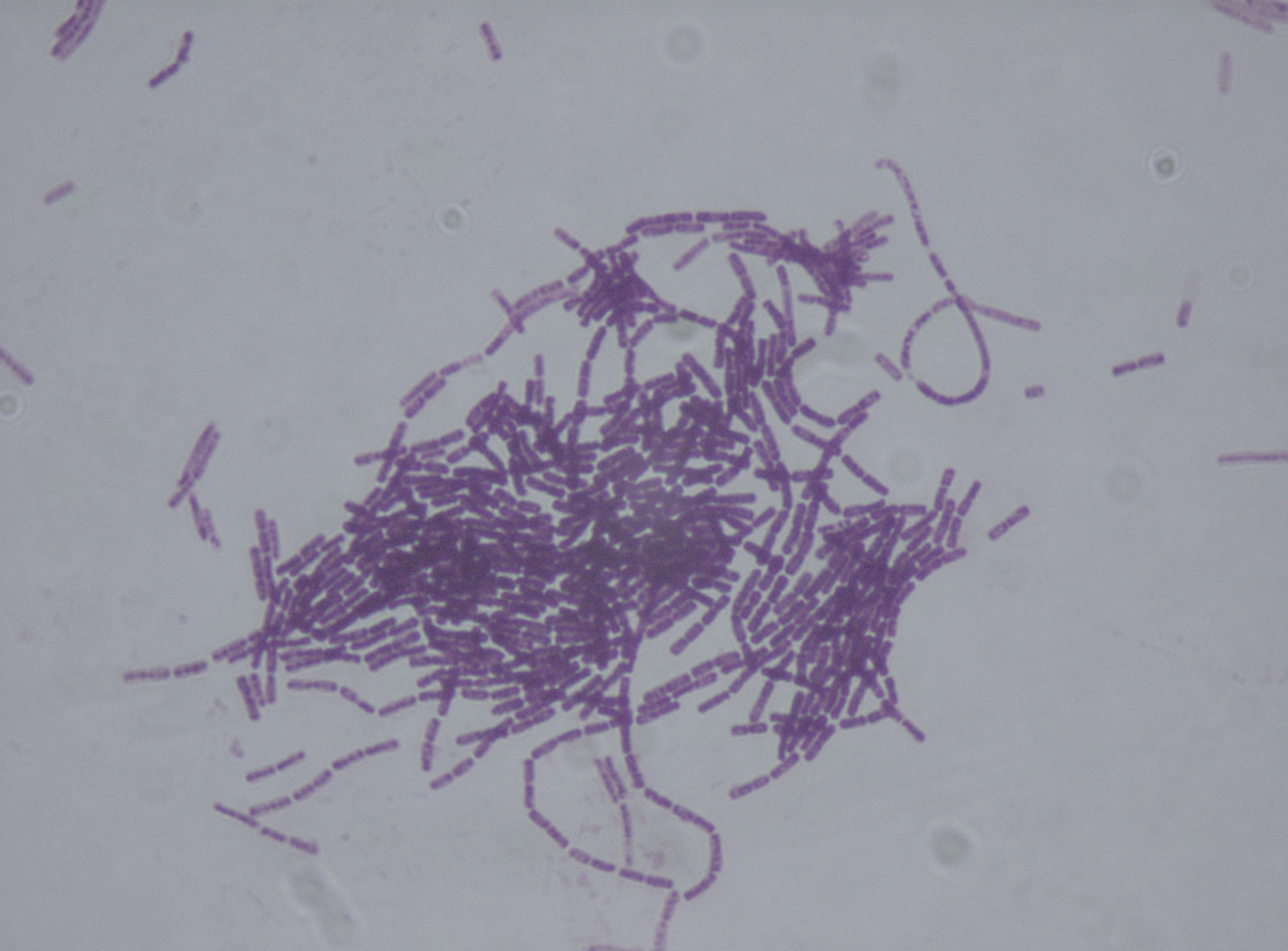
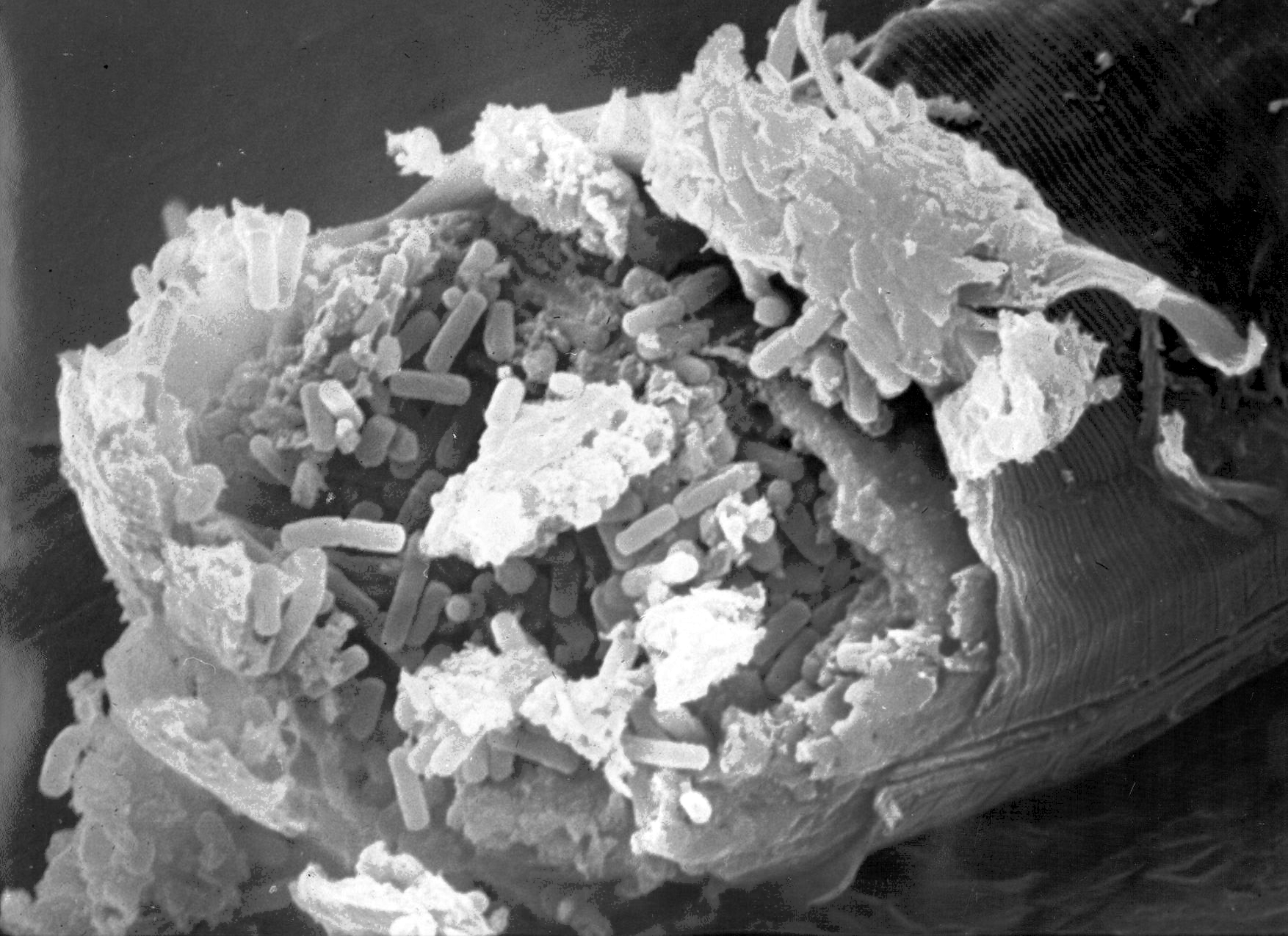
Image of Bacillus thuringiensis strain MYBT18246
Image source: Wikipedia/Wikimedia
Ecology, Host, and Life Cycle
Oxygen requirementsFacultative anaerobe
Optimal temperatureNot Available
Temperature rangeMesophilic
HabitatHostAssociated
Biotic relationshipFree living
Host(s)Homo sapiens, Viridiplantae, Triticum aestivum
Cell arrangementNot Available
SporulationSporulating
Energy sourceNot Available
PathogenicityAnimal; insects

Gene Summary

Adenine Count

47539 bp

Thymine Count

45228 bp

Guanine Count

25111 bp

Cytosine Count

24220 bp

Genome Length

142098 bp

Protein-coding Genes

156 genes

Non-Coding Genes

7 genes

# of Chromosomes/Plasmids

12

Genes

NameLocus TagUniProt IDStrand OrientationGene Start/EndProtein Molecular Weight
is3 family transposaseBT246_RS34050Not AvailablePositive1 - 49719616.6
recombinase family proteinBT246_RS34055Not AvailableNegative945 - 156524159.1
hypothetical proteinBT246_RS34060Not AvailablePositive1941 - 21538262.89
hypothetical proteinBT246_RS34065Not AvailablePositive2393 - 343640375.4
hypothetical proteinBT246_RS34070Not AvailablePositive3872 - 418912129.0
hypothetical proteinBT246_RS34075Not AvailablePositive4341 - 462811123.4
rpn family recombination-promoting nuclease/putative transposaseBT246_RS34080Not AvailableNegative4675 - 562837116.6
is3 family transposaseBT246_RS39240Not AvailableNegative6063 - 637011811.4
metalloregulator arsr/smtb family transcription factorBT246_RS34085Not AvailableNegative6438 - 674011825.5
is3 family transposaseBT246_RS37305Not AvailablePositive6895 - 71699957.33

Displaying genes 1 – 10 of 7217 in total

Pathways

0 pathways

No pathways found

No metabolic pathways have been associated with this bacterium yet.

Metabolites

8 records
Metabolite IDMetabolite nameStructureCAS number
BASm0001086scyllo-inososeC6H10O6Chemical structure of scyllo-inososeNot available
Average178.14Da
Monoisotopic178.0477381Da
BASm0001865diphosphateHO7P2Chemical structure of diphosphateNot available
Average174.95Da
Monoisotopic174.9213971Da
BASm00032223-(imidazol-5-yl)pyruvateC6H5N2O3Chemical structure of 3-(imidazol-5-yl)pyruvateNot available
Average153.118Da
Monoisotopic153.0305656Da
BASm0003389NADP(+)C21H25N7O17P3Chemical structure of NADP(+)Not available
Average740.386Da
Monoisotopic740.053624107Da
BASm00034561-(5-phospho-beta-D-ribosyl)-5-[(5-phospho-beta-D-ribosylamino)methylideneamino]imidazole-4-carboxamideC15H21N5O15P2Chemical structure of 1-(5-phospho-beta-D-ribosyl)-5-[(5-phospho-beta-D-ribosylamino)methylideneamino]imidazole-4-carboxamideNot available
Average573.2993Da
Monoisotopic573.0509381Da
BASm00035255-[(5-phospho-1-deoxy-D-ribulos-1-ylimino)methylamino]-1-(5-phospho-beta-D-ribosyl)imidazole-4-carboxamideC15H21N5O15P2Chemical structure of 5-[(5-phospho-1-deoxy-D-ribulos-1-ylimino)methylamino]-1-(5-phospho-beta-D-ribosyl)imidazole-4-carboxamideNot available
Average573.303Da
Monoisotopic573.0531333Da
BASm00066944,4'-diaponeurosporenoateC30H39O2Chemical structure of 4,4'-diaponeurosporenoateNot available
Average431.641Da
Monoisotopic431.2955541Da
BASm00066954,4'-diaponeurosporenalC30H40OChemical structure of 4,4'-diaponeurosporenalNot available
Average416.649Da
Monoisotopic416.3079159Da

Displaying 1–8 of 8 metabolites

Health Effects

Health ConditionRelationReference
Pitted keratolysisCausesPMC11939757
Acute septicemiaCausesPMC8549738
SepticemiaCausesPMC8549738
Food poisoningCausesPMC9716716

Displaying health effects 1 – 4 of 4 in total