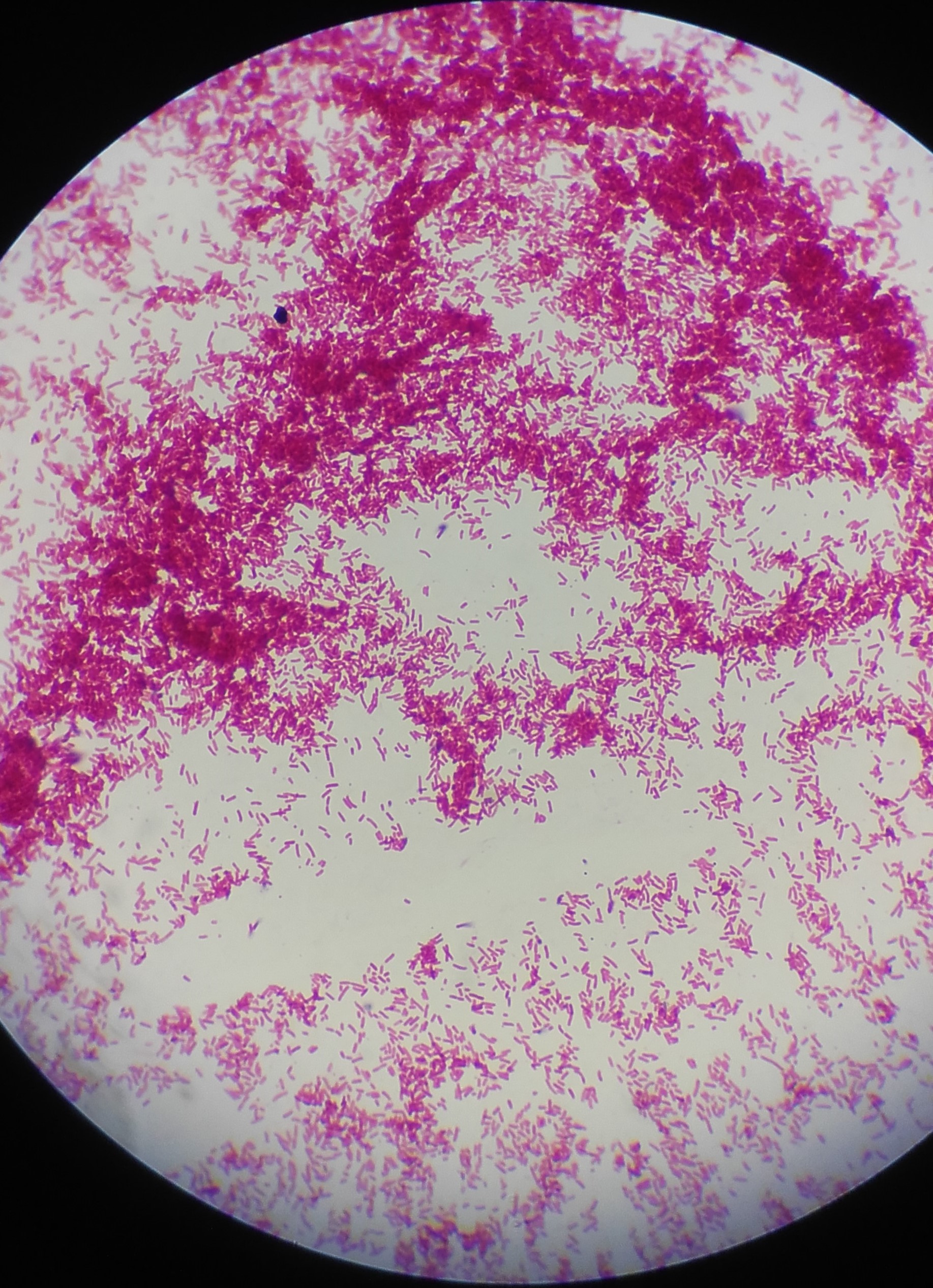
Lactobacillus crispatus strain VMC3

Gram-positiveRodNon-motileFacultative anaerobe

Kingdom

Bacillati

Phylum

Bacillota

Class

Bacilli

Order

Lactobacillales

Family

Lactobacillaceae

Genus

Lactobacillus

Description

Lactobacillus crispatus strain VMC3 is a Gram-positive, facultative anaerobic bacterium characterized by its rod shape and chain-like cell arrangement. This strain is non-motile, lacking flagella, which indicates a reliance on passive transport mechanisms within its habitats. VMC3 thrives at an optimal temperature of 37°C, categorizing it within the mesophilic range, indicative of its preference for moderate temperatures typical of warm-blooded hosts. This strain is associated with various biological hosts, including Homo sapiens (humans), Gallus gallus (domestic chickens), Aves (birds), and Olea europaea (olive trees). Its presence in both animal and plant species suggests a versatile ecological role, possibly contributing to fermentation processes in the gastrointestinal tracts of animals or influencing plant health and development. Lactobacillus crispatus VMC3 is free-living and non-sporulating, with a single replicon and a single membrane, which may reflect its adaptation to specific ecological niches. Its ability to inhabit diverse environments highlights its potential significance in microbial ecosystems, particularly in the gastrointestinal microbiota of animals where it may play a role in maintaining gut health or influencing fermentation processes. The ecological insight from this strain's diverse host associations suggests that Lactobacillus crispatus VMC3 may be integral in establishing beneficial microbiomes in both animal and plant systems. This underscores the importance of understanding such microorganisms in developing strategies for health and disease management in agriculture and human health contexts.

Taxonomy

KingdomBacillati
PhylumBacillota
ClassBacilli
OrderLactobacillales
FamilyLactobacillaceae
GenusLactobacillus
SpeciesLactobacillus crispatus
Strainstrain VMC3

Profile

Physiology
Gram staining propertiesPositive
ShapeRod
MobilityNo
Flagellar presenceYes
Number of membranes1
Image of Lactobacillus crispatus strain VMC3
Image source: Wikipedia/Wikimedia
Ecology, Host, and Life Cycle
Oxygen requirementsFacultative anaerobe
Optimal temperature37
Temperature rangeMesophilic
HabitatHostAssociated
Biotic relationshipFree living
Host(s)Homo sapiens, Gallus gallus, Aves
Cell arrangementChains
SporulationNonsporulating
Energy sourceNot Available
PathogenicityNot Available

Genome Summary

Lactobacillus crispatus strain VMC3


Gene Summary

Adenine Count

696210 bp

Thymine Count

700440 bp

Guanine Count

392958 bp

Cytosine Count

411855 bp

Genome Length

2201463 bp

Protein-coding Genes

520 genes

Non-Coding Genes

9 genes

# of Chromosomes/Plasmids

1

Genes

NameLocus TagUniProt IDStrand OrientationGene Start/EndProtein Molecular Weight
5s ribosomal rnaNot AvailableNot AvailablePositive118 - 234Not Available
23s ribosomal rnaNot AvailableNot AvailablePositive304 - 3215Not Available
hypothetical proteinAEL95_08045Not AvailableNegative72 - 78828029.1
hypothetical proteinAEL95_08050Not AvailablePositive971 - 141115981.1
cell division protein ftskAEL95_08055Not AvailablePositive1429 - 198021092.8
cell division protein ftskAEL95_08060Not AvailablePositive1970 - 276429631.6
hypothetical proteinAEL95_08065Not AvailablePositive2851 - 367231523.7
hypothetical proteinAEL95_08070Not AvailablePositive3672 - 405514941.7
hypothetical proteinAEL95_08075Not AvailablePositive4057 - 42367014.51
integraseAEL95_08080Not AvailablePositive4282 - 551147814.6

Displaying genes 1 – 10 of 529 in total

Pathways

0 pathways

No pathways found

No metabolic pathways have been associated with this bacterium yet.

Metabolites

8 records
Metabolite IDMetabolite nameStructureCAS number
BASm0000387(6R)-5,10-methylene-5,6,7,8-tetrahydrofolateC20H21N7O6Chemical structure of (6R)-5,10-methylene-5,6,7,8-tetrahydrofolateNot available
Average455.432Da
Monoisotopic455.1564286Da
BASm0000400(R)-10-hydroxyoctadecanoateC18H35O3Chemical structure of (R)-10-hydroxyoctadecanoateNot available
Average299.476Da
Monoisotopic299.2591686Da
BASm0001775(9Z)-octadecenoateC18H33O2Chemical structure of (9Z)-octadecenoateNot available
Average281.4534Da
Monoisotopic281.2480553Da
BASm0001833(9Z)-hexadecenoateC16H29O2Chemical structure of (9Z)-hexadecenoateNot available
Average253.4003Da
Monoisotopic253.2167552Da
BASm00027107,8-dihydrofolateC19H19N7O6Chemical structure of 7,8-dihydrofolateNot available
Average441.405Da
Monoisotopic441.1407785Da
BASm0003789S-sulfanylglutathioneC10H17N3O6S2Chemical structure of S-sulfanylglutathioneNot available
Average339.38Da
Monoisotopic339.0558776Da
BASm0004875Fe-coproporphyrin IIIC36H32FeN4O8Not availableNot available
Average704.519Da
Monoisotopic704.159144Da
BASm0010887(4R,5S)-dethiobiotinC10H18N2O3Chemical structure of (4R,5S)-dethiobiotin533-48-2
Average214.2615Da
Monoisotopic214.1317425Da

Displaying 1–8 of 8 metabolites

Health Effects

No health effects information available for this bacterium.