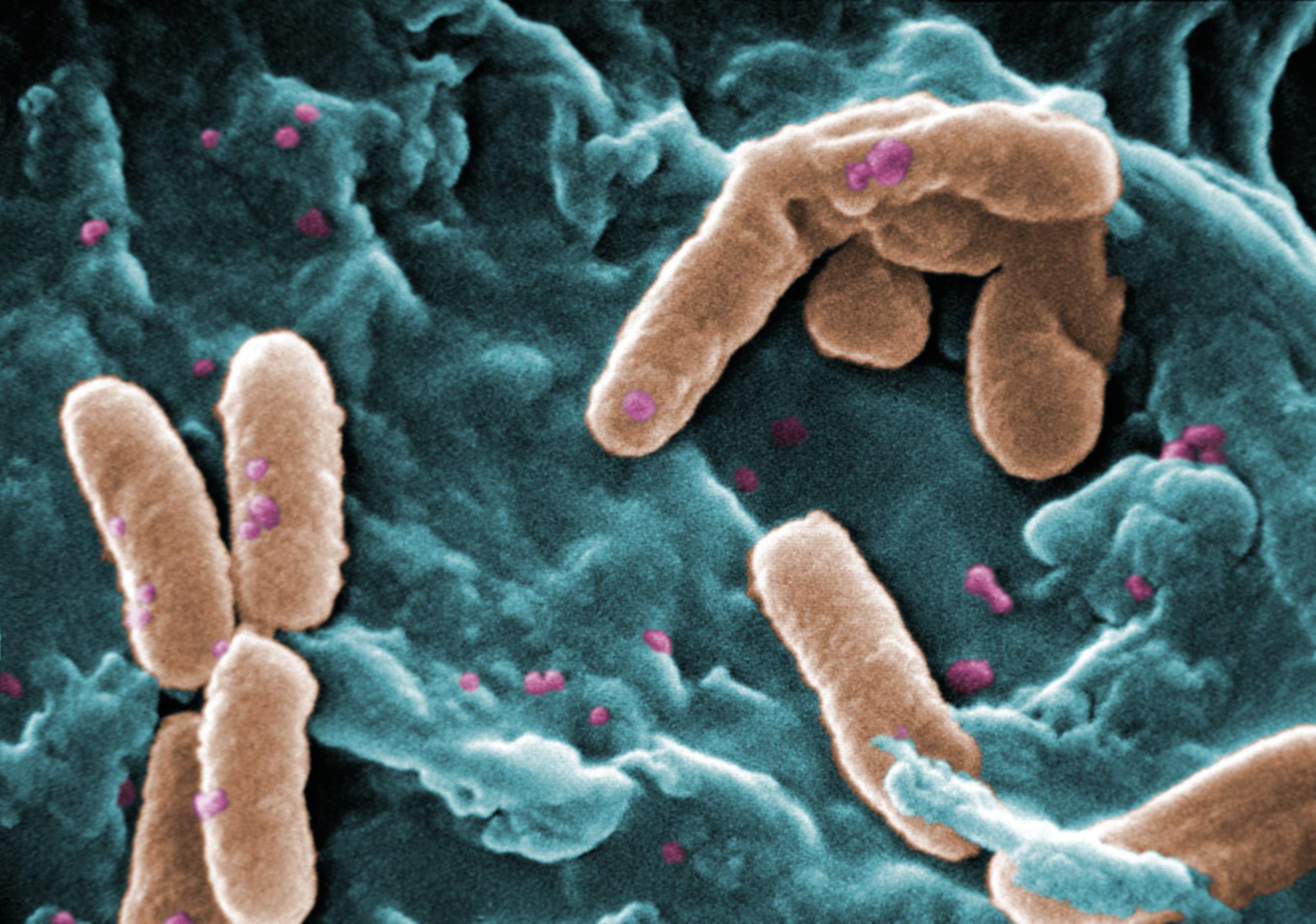
Pseudomonas saudiphocaensis

Kingdom

Pseudomonadati

Phylum

Pseudomonadota

Class

Gammaproteobacteria

Order

Pseudomonadales

Family

Pseudomonadaceae

Genus

Pseudomonas

Description

Pseudomonas saudiphocaensis is a bacterial species characterized by its possession of two replicons. This trait is significant as it may contribute to the organism's genetic diversity and adaptability, which are typical features of the Pseudomonas genus. The organism has been cataloged under two distinct accessions: NZ_CCSF01000001.1 and RHQU00000000.1, indicating that it has been sequenced and is available for further research and analysis. The presence of multiple replicons in Pseudomonas saudiphocaensis suggests potential advantages in metabolic versatility and resilience to environmental stresses, which are common attributes within the Pseudomonas genus. Members of this genus are often known for their ability to thrive in diverse environments, including soil and water, and for their roles in bioremediation and plant growth promotion. From an ecological perspective, the ability to harbor multiple replicons may allow Pseudomonas saudiphocaensis to adapt to various ecological niches, possibly enhancing its survival and competitiveness in diverse habitats. This adaptability can play a significant role in its interactions within microbial communities and its capacity to respond to environmental changes. Overall, the genetic structure of Pseudomonas saudiphocaensis, particularly its dual-replicon system, highlights its potential ecological significance and adaptability in various environments.

Taxonomy

KingdomPseudomonadati
PhylumPseudomonadota
ClassGammaproteobacteria
OrderPseudomonadales
FamilyPseudomonadaceae
GenusPseudomonas
SpeciesPseudomonas saudiphocaensis
StrainNo strain

Profile

Physiology
Gram staining propertiesNot Available
ShapeNot Available
MobilityNot Available
Flagellar presenceNot Available
Number of membranesNot Available
Image of Pseudomonas saudiphocaensis
Image source: Wikipedia/Wikimedia
Ecology, Host, and Life Cycle
Oxygen requirementsNot Available
Optimal temperatureNot Available
Temperature rangeNot Available
HabitatNot Available
Biotic relationshipNot Available
Host(s)Not Available
Cell arrangementNot Available
SporulationNot Available
Energy sourceNot Available
PathogenicityNot Available

Genome Summary

Pseudomonas saudiphocaensis


Gene Summary

Adenine Count

714021 bp

Thymine Count

710017 bp

Guanine Count

1124605 bp

Cytosine Count

1125116 bp

Genome Length

3673759 bp

Protein-coding Genes

3355 genes

Non-Coding Genes

99 genes

# of Chromosomes/Plasmids

2

Genes

NameLocus TagUniProt IDStrand OrientationGene Start/EndProtein Molecular Weight
AttlNot AvailableNot AvailablePositive891298 - 891332Not Available
IntegraseBN1079_RS04205Not AvailableNegative891481 - 89204421356.9
hypothetical proteinBN1079_RS17560Not AvailablePositive891968 - 8922349206.98
Tail proteinBN1079_RS04210Not AvailableNegative892240 - 89268316376.9
Tail tape measure proteinBN1079_RS04215Not AvailableNegative892696 - 89517385394.2
Gpe familygtail proteinBN1079_RS17240Not AvailableNegative895145 - 8952855524.63
Phage tail protein eBN1079_RS04220Not AvailableNegative895294 - 89559910678.9
Major tail tube proteinBN1079_RS04225Not AvailableNegative895657 - 89616517821.9
Tail sheath proteinBN1079_RS04230Not AvailableNegative896213 - 89738541962.8
O-polysaccharide acetyltransferase proteinBN1079_RS04235Not AvailablePositive897599 - 89948870256.4

Displaying genes 1 – 10 of 6892 in total

Pathways

0 pathways

No pathways found

No metabolic pathways have been associated with this bacterium yet.

Metabolites

23 records
Metabolite IDMetabolite nameStructureCAS number
BASm0000387(6R)-5,10-methylene-5,6,7,8-tetrahydrofolateC20H21N7O6Chemical structure of (6R)-5,10-methylene-5,6,7,8-tetrahydrofolateNot available
Average455.432Da
Monoisotopic455.1564286Da
BASm0000401(S)-2-succinylamino-6-oxoheptanedioateC11H12NO8Chemical structure of (S)-2-succinylamino-6-oxoheptanedioateNot available
Average286.218Da
Monoisotopic286.0579371Da
BASm00005275-oxopentanoateC5H7O3Chemical structure of 5-oxopentanoateNot available
Average115.109Da
Monoisotopic115.040067665Da
BASm0000950L-xyluloseC5H10O5Chemical structure of L-xylulose527-50-4
Average150.1299Da
Monoisotopic150.05282343Da
BASm0001691hydrogenselenideHSeChemical structure of hydrogenselenideNot available
Average79.98Da
Monoisotopic80.924896Da
BASm0001865diphosphateHO7P2Chemical structure of diphosphateNot available
Average174.95Da
Monoisotopic174.9213971Da
BASm00021577-cyano-7-deazaguanineC7H5N5OChemical structure of 7-cyano-7-deazaguanineNot available
Average175.1475Da
Monoisotopic175.0494098Da
BASm00027107,8-dihydrofolateC19H19N7O6Chemical structure of 7,8-dihydrofolateNot available
Average441.405Da
Monoisotopic441.1407785Da
BASm0002715(6S)-5-formyl-5,6,7,8-tetrahydrofolateC20H21N7O7Chemical structure of (6S)-5-formyl-5,6,7,8-tetrahydrofolateNot available
Average471.431Da
Monoisotopic471.1513432Da
BASm0002826(2R)-3-phospho-glyceroyl phosphateC3H4O10P2Chemical structure of (2R)-3-phospho-glyceroyl phosphateNot available
Average262.005Da
Monoisotopic261.9301646Da

Displaying 1–10 of 23 metabolites

Health Effects

No health effects information available for this bacterium.