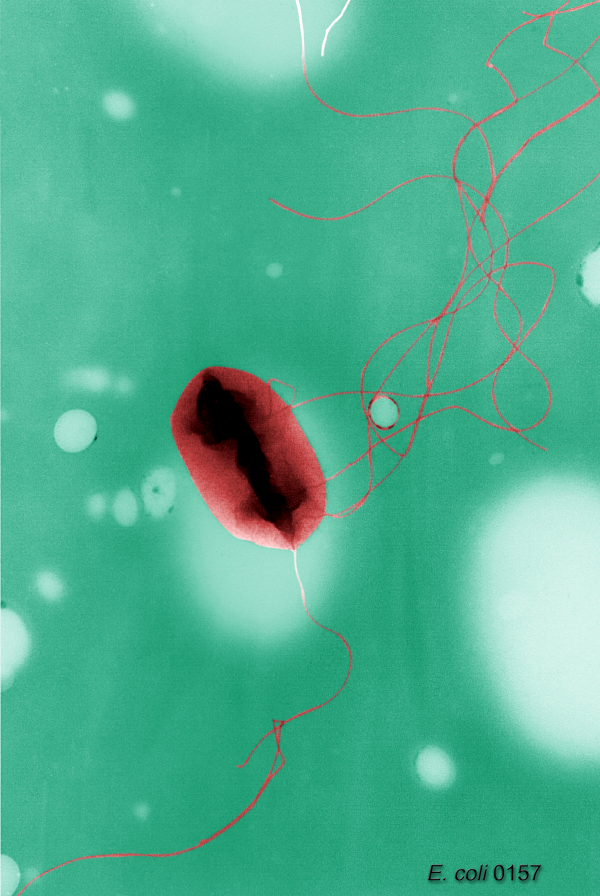
Escherichia coli 1303

Gram-negativeRodMotileFacultative anaerobe

Kingdom

Pseudomonadati

Phylum

Pseudomonadota

Class

Gammaproteobacteria

Order

Enterobacterales

Family

Enterobacteriaceae

Genus

Escherichia

Description

Escherichia coli 1303 is a species of bacteria that belongs to the genus Escherichia, which is a part of the family Enterobacteriaceae. This microbe is a heterotroph, meaning it relies on external energy sources to survive, and its metabolism is chemotrophic, as it uses chemical energy to produce its own food. E. coli 1303 is a facultative anaerobe, meaning it can survive with or without the presence of oxygen, but it grows faster in the presence of oxygen. The strain is gram-negative, which means that it has a cell wall that is lacking in peptidoglycan, a critical component of the bacterial cell wall. E. coli 1303 is a rod-shaped bacterium, also known as a bacillus, with a typical size range of 2-5 μm in length and 0.5-1 μm in width. This microbe can be found in various body sites across different species, including the human gut, where it is a normal inhabitant. It is also commonly found in soil, water, and animal feces. In terms of temperature preference, E. coli 1303 thrives in a range of temperatures, from 7°C to 45°C, with an optimal growth temperature of around 37°C. The energy production process of E. coli 1303 is aerobic, meaning it requires oxygen to produce energy, and it produces energy through the process of cellular respiration. One of the most notable aspects of E. coli 1303 is its significance in molecular biology. It has been extensively studied due to its ability to be easily genetically engineered and its relatively simple genetic makeup, making it an ideal model organism for studying gene expression, protein synthesis, and other biological processes. Its ability to undergo genetic transformation has also made it a popular choice for various biotechnological applications, such as the production of recombinant proteins and the development of novel vaccines.

Taxonomy

KingdomPseudomonadati
PhylumPseudomonadota
ClassGammaproteobacteria
OrderEnterobacterales
FamilyEnterobacteriaceae
GenusEscherichia
SpeciesEscherichia coli
Strain1303

Profile

Physiology
Gram staining propertiesNegative
ShapeRod
MobilityYes
Flagellar presenceYes
Number of membranes2
Image of Escherichia coli 1303
Image source: Wikipedia/Wikimedia
Ecology, Host, and Life Cycle
Oxygen requirementsFacultative anaerobe
Optimal temperature37
Temperature rangeMesophilic
HabitatHostAssociated
Biotic relationshipFree living
Host(s)Not Available
Cell arrangementPairs - Singles
SporulationNot Available
Energy sourceNot Available
PathogenicityNot Available

Genome Summary

Escherichia coli 1303


Gene Summary

Adenine Count

24714 bp

Thymine Count

24588 bp

Guanine Count

22606 bp

Cytosine Count

23051 bp

Genome Length

94959 bp

Protein-coding Genes

11 genes

Non-Coding Genes

106 genes

# of Chromosomes/Plasmids

4

Genes

NameLocus TagUniProt IDStrand OrientationGene Start/EndProtein Molecular Weight
AttlNot AvailableNot AvailablePositive1317324 - 1317338Not Available
Hypothetical proteinEC1303_RS06315Not AvailablePositive1318408 - 131887517199.7
IntegraseEC1303_RS06320Not AvailableNegative1318952 - 132007042635.3
excisionaseEC1303_RS06325Not AvailableNegative1320039 - 132030810185.4
EndodeoxyribonucleaseEC1303_RS06330Not AvailableNegative1320370 - 132284192335.3
duf1482 family proteinEC1303_RS06335Not AvailableNegative1322934 - 13231256791.32
cell division inhibition protein dicbEC1303_RS06340Not AvailableNegative1323128 - 13233106914.56
hypothetical proteinEC1303_RS06355Not AvailablePositive1324008 - 132445416628.4
Hypothetical proteinEC1303_RS06360Not AvailableNegative1324533 - 132490714215.0
Hypothetical proteinEC1303_RS06365Not AvailableNegative1324919 - 13250715593.49

Displaying genes 1 – 10 of 5010 in total

Metabolites

4785 records
Metabolite IDMetabolite nameStructureCAS number
BASm0000173(R)-3-Hydroxybutyric acidC4H8O3Chemical structure of (R)-3-Hydroxybutyric acid625-72-3
Average104.0473Da
Monoisotopic104.047344122Da
BASm0000217alpha-ribazoleC14H18N2O4Chemical structure of alpha-ribazoleNot available
Average278.3037Da
Monoisotopic278.126657074Da
BASm0000237(R)-4'-phosphopantothenateC9H18NO8PChemical structure of (R)-4'-phosphopantothenateNot available
Average299.2149Da
Monoisotopic299.0770031Da
BASm0000238(R)-3-phenyllactateC9H9O3Chemical structure of (R)-3-phenyllactateNot available
Average165.169Da
Monoisotopic165.05571773Da
BASm00002482,3-dihydroxy-3-methylbutanoateC5H10O4Chemical structure of 2,3-dihydroxy-3-methylbutanoate1756-18-9
Average134.1305Da
Monoisotopic134.0579088Da
BASm00002502,5-didehydro-D-gluconateC6H7O7Chemical structure of 2,5-didehydro-D-gluconate53736-12-2
Average191.1156Da
Monoisotopic191.019177578Da
BASm00002512-dehydropantoateC6H9O4Chemical structure of 2-dehydropantoateNot available
Average145.1333Da
Monoisotopic145.050083776Da
BASm00002532-oxopent-4-enoateC5H5O3Chemical structure of 2-oxopent-4-enoateNot available
Average113.093Da
Monoisotopic113.024417601Da
BASm00002593alpha,12alpha-dihydroxy-7-oxo-5beta-cholanateC24H37O5Chemical structure of 3alpha,12alpha-dihydroxy-7-oxo-5beta-cholanateNot available
Average405.556Da
Monoisotopic405.264647871Da
BASm00002603alpha,7alpha-dihydroxy-12-oxo-5beta-cholanateC24H37O5Chemical structure of 3alpha,7alpha-dihydroxy-12-oxo-5beta-cholanateNot available
Average405.556Da
Monoisotopic405.264647871Da

Displaying 1–10 of 4785 metabolites

Health Effects

No health effects information available for this bacterium.