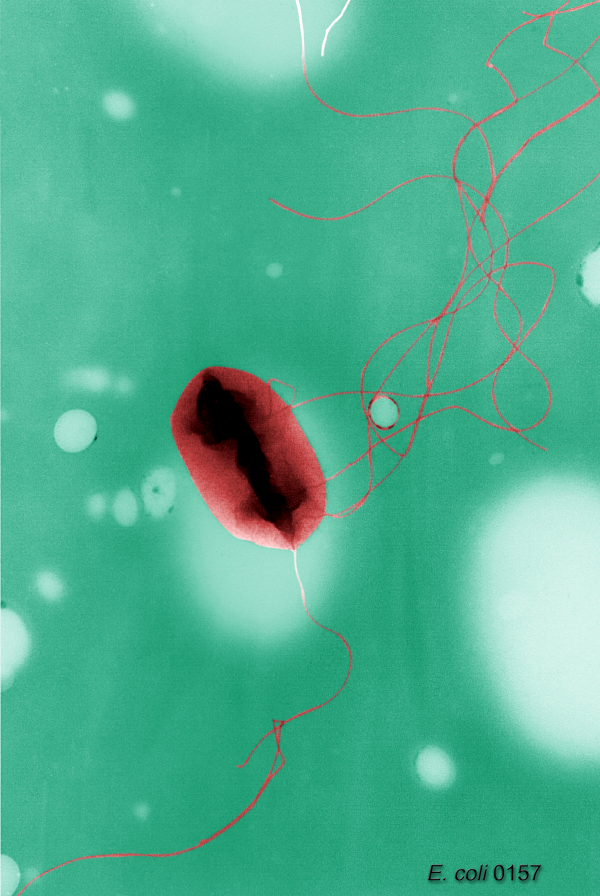
Escherichia coli IAI39

Gram-negativeRodNon-motileFacultative anaerobe

Kingdom

Pseudomonadati

Phylum

Pseudomonadota

Class

Gammaproteobacteria

Order

Enterobacterales

Family

Enterobacteriaceae

Genus

Escherichia

Description

Escherichia coli IAI39 is a gram-negative, rod-shaped bacterium classified as a facultative anaerobe, thriving optimally at mesophilic temperatures (20-45°C). This strain, a variant of the common E. coli, belongs to the Enterobacteriaceae family and is primarily characterized by its ability to ferment lactose, producing gas and acid. As a heterotroph, E. coli IAI39 utilizes organic compounds as its primary source of energy and carbon, making it highly versatile in various environments, including soil, water, and the gastrointestinal tracts of warm-blooded animals. The gram-negative structure of E. coli IAI39 is defined by a thin peptidoglycan layer and an outer membrane composed of lipopolysaccharides. This outer membrane is significant for its role in pathogenicity, as it can resist certain antibiotics and allow the bacterium to evade the host's immune response. As a facultative anaerobe, E. coli IAI39 can switch between aerobic respiration and fermentation, enabling it to thrive in environments with or without oxygen, which is essential for its survival in diverse ecological niches. In addition to its ubiquitous presence in human and animal intestines, E. coli IAI39 has been studied for its ability to act as a model organism, contributing to our understanding of bacterial genetics, physiology, and pathogenicity. Its genomic flexibility allows it to acquire traits that can enhance its adaptability, including antibiotic resistance mechanisms. Moreover, this strain has been investigated for its potential role in bioremediation, leveraging its metabolic capabilities to degrade environmental pollutants, further showcasing its ecological importance and versatility.

Taxonomy

KingdomPseudomonadati
PhylumPseudomonadota
ClassGammaproteobacteria
OrderEnterobacterales
FamilyEnterobacteriaceae
GenusEscherichia
SpeciesEscherichia coli
StrainIAI39

Profile

Physiology
Gram staining propertiesNegative
ShapeRod
MobilityNo
Flagellar presenceYes
Number of membranes2
Image of Escherichia coli IAI39
Image source: Wikipedia/Wikimedia
Ecology, Host, and Life Cycle
Oxygen requirementsFacultative anaerobe
Optimal temperature37
Temperature rangeMesophilic
HabitatMultiple
Biotic relationshipFree living
Host(s)Not Available
Cell arrangementPairs - Singles
SporulationNonsporulating
Energy sourceNot Available
PathogenicityYes

Genome Summary

Escherichia coli IAI39


Gene Summary

Adenine Count

1268010 bp

Thymine Count

1265665 bp

Guanine Count

1292707 bp

Cytosine Count

1305686 bp

Genome Length

5132068 bp

Protein-coding Genes

4474 genes

Non-Coding Genes

548 genes

# of Chromosomes/Plasmids

1

Genes

NameLocus TagUniProt IDStrand OrientationGene Start/EndProtein Molecular Weight
AttlNot AvailableNot AvailablePositive532535 - 532581Not Available
IntegraseECIAI39_RS02515Not AvailableNegative532595 - 53285810000.9
Putative transposase orfbECIAI39_RS02520Not AvailableNegative532898 - 53411146183.0
IntegraseECIAI39_RS02525Not AvailablePositive534202 - 53507733562.8
Transcriptional regulatorECIAI39_RS02530Not AvailablePositive535079 - 5353068838.95
hypothetical proteinECIAI39_RS02535Not AvailableNegative535376 - 53591220550.5
ylci/ynfo family proteinECIAI39_RS02540Not AvailableNegative536263 - 53656510873.0
host cell division inhibitor icd-like proteinECIAI39_RS02545Not AvailablePositive536774 - 53713913842.6
hypothetical proteinECIAI39_RS02550Not AvailablePositive537132 - 5373568358.82
duf4222 domain-containing proteinECIAI39_RS02555Not AvailablePositive537359 - 53764610961.3

Displaying genes 1 – 10 of 5022 in total

Metabolites

5137 records
Metabolite IDMetabolite nameStructureCAS number
BASm0000173(R)-3-Hydroxybutyric acidC4H8O3Chemical structure of (R)-3-Hydroxybutyric acid625-72-3
Average104.0473Da
Monoisotopic104.047344122Da
BASm0000217alpha-ribazoleC14H18N2O4Chemical structure of alpha-ribazoleNot available
Average278.3037Da
Monoisotopic278.126657074Da
BASm0000237(R)-4'-phosphopantothenateC9H18NO8PChemical structure of (R)-4'-phosphopantothenateNot available
Average299.2149Da
Monoisotopic299.0770031Da
BASm0000238(R)-3-phenyllactateC9H9O3Chemical structure of (R)-3-phenyllactateNot available
Average165.169Da
Monoisotopic165.05571773Da
BASm00002482,3-dihydroxy-3-methylbutanoateC5H10O4Chemical structure of 2,3-dihydroxy-3-methylbutanoate1756-18-9
Average134.1305Da
Monoisotopic134.0579088Da
BASm00002502,5-didehydro-D-gluconateC6H7O7Chemical structure of 2,5-didehydro-D-gluconate53736-12-2
Average191.1156Da
Monoisotopic191.019177578Da
BASm00002512-dehydropantoateC6H9O4Chemical structure of 2-dehydropantoateNot available
Average145.1333Da
Monoisotopic145.050083776Da
BASm00002532-oxopent-4-enoateC5H5O3Chemical structure of 2-oxopent-4-enoateNot available
Average113.093Da
Monoisotopic113.024417601Da
BASm00002593alpha,12alpha-dihydroxy-7-oxo-5beta-cholanateC24H37O5Chemical structure of 3alpha,12alpha-dihydroxy-7-oxo-5beta-cholanateNot available
Average405.556Da
Monoisotopic405.264647871Da
BASm00002603alpha,7alpha-dihydroxy-12-oxo-5beta-cholanateC24H37O5Chemical structure of 3alpha,7alpha-dihydroxy-12-oxo-5beta-cholanateNot available
Average405.556Da
Monoisotopic405.264647871Da

Displaying 1–10 of 5137 metabolites

Health Effects

No health effects information available for this bacterium.