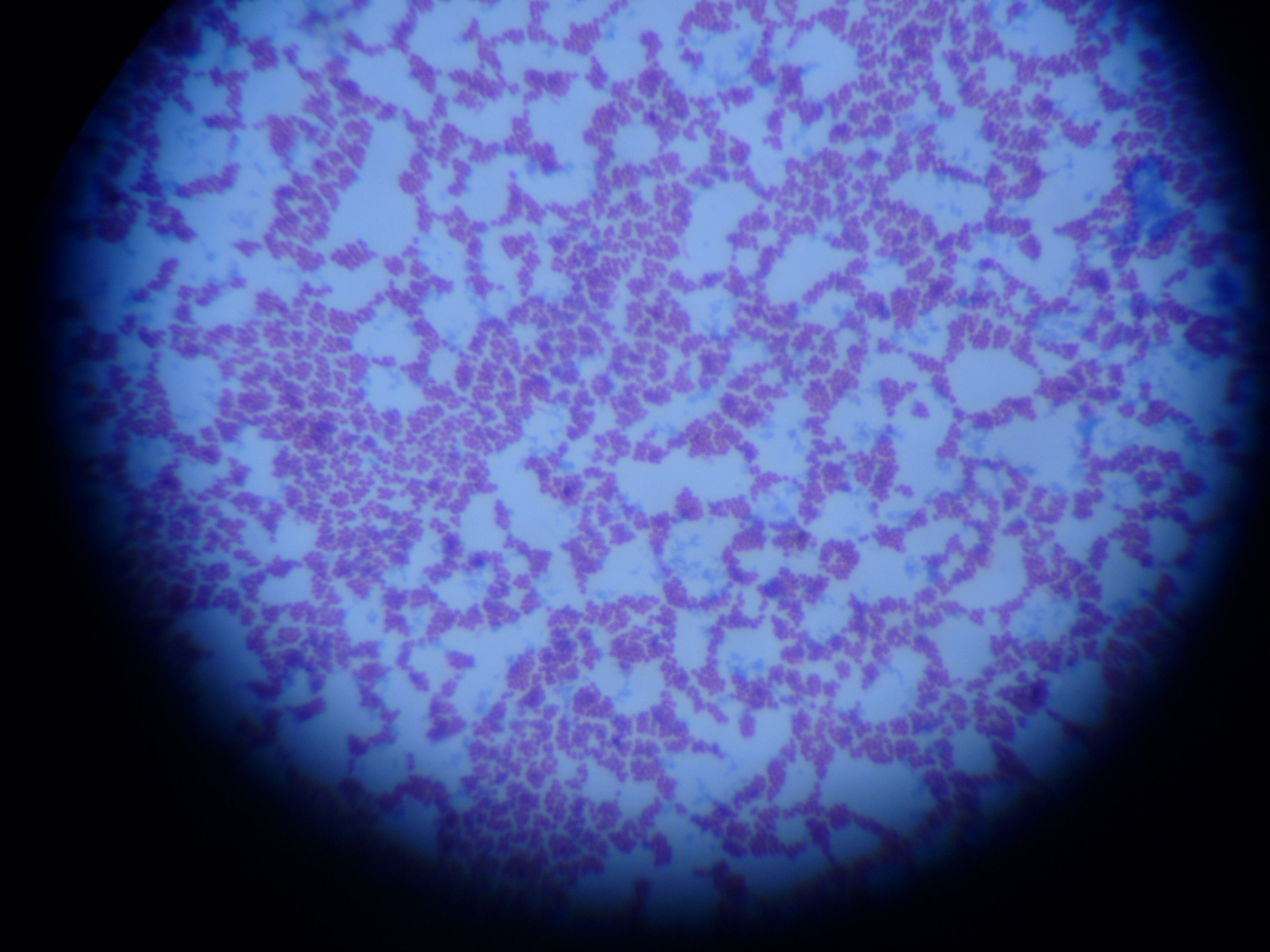
Streptococcus equi subsp. zooepidemicus

Gram-positiveCocciNon-motileFacultative

Kingdom

Bacillati

Phylum

Bacillota

Class

Bacilli

Order

Lactobacillales

Family

Streptococcaceae

Genus

Streptococcus

Description

Streptococci are non-motile, Gram-positive cocci with widely varying pathogenic potential that occur in pairs or chains. S.equi is the causative agent of strangles, the most common respiratory infectious disease of horses. It is characterized by prominent swelling of the throat lymph nodes and impaired breathing. The symptoms are severe, complications are common and, at present, there is no effective treatment or vaccine for the disease. The virulent strain 4047 (ST-179 by MLST) was isolated from a horse with strangles in the New Forest, England in 1990, and compared with another equine-isolated bacterium S.zooepidemicus H70.In comparison with S.zooepidemicus, the equine-restricted S.equi appears to have lost ancestral functions, including some involved in catabolic metabolism, transport and the cell envelope, and gained some new functions via mobile genetic elements (MGE) to be able to exploit a new environmental niche. 16.4% of the S.equi genome is composed of MGE while only 7.5% of the S.zooepidemicus is MGE. These MGEs encode virulence factors including 4 prophages that are more related to those found in the human pathogen S.pyogenes than they are to each other, suggesting a common phage pool among the Streptococci. One of the integrative conjugative elements in the S.equi genome could produce siderophores, which have been demonstrated to be required in S.equi for the production of a secreted molecule which enhances the ability of S.equi to acquire iron. This locus was present in a number of S.equi isolates, but in none of the diverse collection of S. zooepidemicus isolates examined. Given the importance of iron acquisition to other streptococcal pathogens, this acquisition may have contributed significantly to the increased pathogenesis of this Streptococcus (modified from PubMed 19325880). (HAMAP: STRE4)

Taxonomy

KingdomBacillati
PhylumBacillota
ClassBacilli
OrderLactobacillales
FamilyStreptococcaceae
GenusStreptococcus
SpeciesStreptococcus equi
StrainH70

Profile

Physiology
Gram staining propertiesPositive
ShapeCocci
MobilityNo
Flagellar presenceYes
Number of membranes1
Image of Streptococcus equi subsp. zooepidemicus
Image source: Wikipedia/Wikimedia
Ecology, Host, and Life Cycle
Oxygen requirementsFacultative
Optimal temperatureNot Available
Temperature rangeMesophilic
HabitatHostAssociated
Biotic relationshipFree living
Host(s)Homo sapiens, Ovis aries, Sus scrofa
Cell arrangementPairs-Chains
SporulationNonsporulating
Energy sourceNot Available
PathogenicityNo

Genome Summary

Streptococcus equi subsp. zooepidemicus, complete sequence.

Gene Summary

Adenine Count

625769 bp

Thymine Count

631207 bp

Guanine Count

447182 bp

Cytosine Count

445710 bp

Genome Length

2149868 bp

Protein-coding Genes

1956 genes

Non-Coding Genes

76 genes

# of Chromosomes/Plasmids

2

Genes

NameLocus TagUniProt IDStrand OrientationGene Start/EndProtein Molecular Weight
chromosomal replication initiator protein dnaaSZO_RS00005Not AvailablePositive1 - 135351482.4
dna polymerase iii subunit betaSZO_RS00010Not AvailablePositive1510 - 264641892.0
duf951 domain-containing proteinSZO_RS00015Not AvailablePositive2724 - 29217553.5
helix-turn-helix domain-containing proteinSZO_RS00020Not AvailablePositive3045 - 340713786.2
redox-regulated atpase ychfSZO_RS00025Not AvailablePositive3491 - 460641135.0
aminoacyl-trna hydrolaseSZO_RS00030Not AvailablePositive4764 - 533321155.8
transcription-repair coupling factorSZO_RS00035Not AvailablePositive5336 - 8830132839.0
oligosaccharide flippase family proteinSZO_RS00040Not AvailablePositive8799 - 1031055683.3
rna-binding s4 domain-containing proteinSZO_RS00045Not AvailablePositive10341 - 1061310326.7
septum formation initiator family proteinSZO_RS00050Not AvailablePositive10600 - 1097114794.2

Displaying genes 1 – 10 of 4140 in total

Metabolites

302 records
Metabolite IDMetabolite nameStructureCAS number
BASm0000173(R)-3-Hydroxybutyric acidC4H8O3Chemical structure of (R)-3-Hydroxybutyric acid625-72-3
Average104.0473Da
Monoisotopic104.047344122Da
BASm0000237(R)-4'-phosphopantothenateC9H18NO8PChemical structure of (R)-4'-phosphopantothenateNot available
Average299.2149Da
Monoisotopic299.0770031Da
BASm00002512-dehydropantoateC6H9O4Chemical structure of 2-dehydropantoateNot available
Average145.1333Da
Monoisotopic145.050083776Da
BASm00002603alpha,7alpha-dihydroxy-12-oxo-5beta-cholanateC24H37O5Chemical structure of 3alpha,7alpha-dihydroxy-12-oxo-5beta-cholanateNot available
Average405.556Da
Monoisotopic405.264647871Da
BASm0000274aldehydo-D-galacturonateC6H9O7Chemical structure of aldehydo-D-galacturonateNot available
Average193.132Da
Monoisotopic193.0353762Da
BASm0000387(6R)-5,10-methylene-5,6,7,8-tetrahydrofolateC20H21N7O6Chemical structure of (6R)-5,10-methylene-5,6,7,8-tetrahydrofolateNot available
Average455.432Da
Monoisotopic455.1564286Da
BASm00004283-oxoadipateC6H6O5Chemical structure of 3-oxoadipateNot available
Average158.11Da
Monoisotopic158.022620453Da
BASm0000592(S)-1-phenylethanolC8H10OChemical structure of (S)-1-phenylethanolNot available
Average122.1644Da
Monoisotopic122.0731649Da
BASm0000893crotonobetaineC7H13NO2Chemical structure of crotonobetaine927-89-9
Average143.1836Da
Monoisotopic143.0946287Da
BASm0000989GlycerolC3H8O3Chemical structure of Glycerol56-81-5
Average92.0938Da
Monoisotopic92.04734412Da

Displaying 1–10 of 302 metabolites

Health Effects

Health ConditionRelationReference
Clinical mastitisCausesPMC120234
Upper respiratory tract diseasesCausesPMC5021838
Upper respiratory diseaseCausesPMC5021838
Mild respiratory diseasesCausesPMC5021838
Necrotizing myositisCausesPMC5312586
Respiratory tract infectionsCausesPMC5312586
MastitisCausesPMC5312586
MeningitisCausesPMC5312586
Post-streptococcal glomerulonephritisCausesPMC5312586
NstiCausesPMC5312586

Displaying health effects 1 – 10 of 10 in total