Kingdom
Pseudomonadati
Phylum
Pseudomonadota
Class
Betaproteobacteria
Order
Neisseriales
Family
Neisseriaceae
Genus
Neisseria
Description
Taxonomy
| Kingdom | Pseudomonadati |
|---|---|
| Phylum | Pseudomonadota |
| Class | Betaproteobacteria |
| Order | Neisseriales |
| Family | Neisseriaceae |
| Genus | Neisseria |
| Species | Neisseria meningitidis |
| Strain | No strain |
Profile
| Physiology | |
|---|---|
| Gram staining properties | Negative |
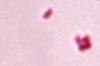
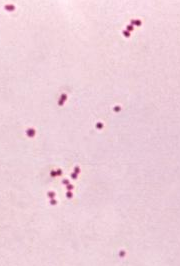
| Shape | Cocci |
| Mobility | No |
| Flagellar presence | Yes |
| Number of membranes | 2 |

Image source: Wikipedia/Wikimedia
| Ecology, Host, and Life Cycle | |
|---|---|
| Oxygen requirements | Aerobe |
| Optimal temperature | 35 |
| Temperature range | Mesophilic |
| Habitat | HostAssociated |
| Biotic relationship | Free living |
| Host(s) | Homo sapiens |
| Cell arrangement | Pairs |
| Sporulation | Not Available |
| Energy source | Not Available |
| Pathogenicity | Human |
Genome Summary
Neisseria meningitidis genome assembly 6714_1#1, scaffold
Gene Summary
Adenine Count
500829 bp
Thymine Count
493977 bp
Guanine Count
537251 bp
Cytosine Count
543300 bp
Genome Length
2075515 bp
Protein-coding Genes
1935 genes
Non-Coding Genes
94 genes
# of Chromosomes/Plasmids
8
Genes
| Name | Locus Tag | UniProt ID | Strand Orientation | Gene Start/End | Protein Molecular Weight |
|---|---|---|---|---|---|
| putative peroxidase | ERS040961_00094 | Q8XBI9 | Positive | 88070 - 89158 | 39127.3 |
| exodeoxyribonuclease v subunit beta | ERS040961_00095 | P45157 | Positive | 89391 - 93005 | 134742.0 |
| putative phage shock protein e | ERS040961_00096 | Not Available | Positive | 93044 - 93403 | 12938.4 |
| protein crcb | ERS040961_00097 | Not Available | Positive | 93535 - 94014 | 17078.7 |
| dna repair protein rada | ERS040961_00098 | P96963 | Negative | 94290 - 95669 | 49608.1 |
| uroporphyrinogen decarboxylase | ERS040961_00099 | Q9JV52 | Negative | 95855 - 96919 | 39195.2 |
| hemy protein | ERS040961_00100 | Not Available | Negative | 96994 - 98211 | 45240.0 |
| uroporphyrin-iii c-methyltransferase | ERS040961_00101 | Not Available | Negative | 98208 - 99542 | 48531.3 |
| uroporphyrinogen-iii synthase | ERS040961_00102 | Not Available | Negative | 99557 - 100318 | 28092.7 |
| secreted protein | ERS040961_00103 | Not Available | Negative | 100336 - 100758 | 15695.6 |
Pathways
22 pathways
No pathways found
No metabolic pathways have been associated with this bacterium yet.
Health Effects
| Health Condition | Relation | Reference |
|---|---|---|
| Meningitis | Causes | PMC11116026 |
| Invasive meningococcal disease (imd) | Causes | PMC12054086 |
| Meningococcal meningitis | Causes | PMC1538595 |
| Meningococcal septicemia | Causes | PMC1538595 |
| Meningococcal disease | Causes | PMC3125835 |
| Bacterial meningitis | Causes | PMC3943661 |
| Meningococcal disease | Causes | PMC3943661 |
| Bacterial meningitis | Causes | PMC4364741 |
| Severe sepsis | Causes | PMC4364741 |
| Acute bacterial meningitis | Causes | PMC6306750 |