Kingdom
Pseudomonadati
Phylum
Pseudomonadota
Class
Betaproteobacteria
Order
Neisseriales
Family
Neisseriaceae
Genus
Neisseria
Description
Taxonomy
| Kingdom | Pseudomonadati |
|---|---|
| Phylum | Pseudomonadota |
| Class | Betaproteobacteria |
| Order | Neisseriales |
| Family | Neisseriaceae |
| Genus | Neisseria |
| Species | Neisseria meningitidis |
| Strain | No strain |
Profile
| Physiology | |
|---|---|
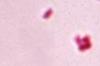
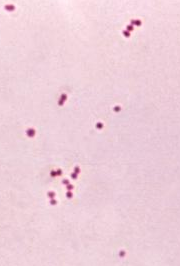
| Gram staining properties | Negative |
| Shape | Cocci |
| Mobility | No |
| Flagellar presence | Yes |
| Number of membranes | 2 |

Image source: Wikipedia/Wikimedia
| Ecology, Host, and Life Cycle | |
|---|---|
| Oxygen requirements | Aerobe |
| Optimal temperature | 35 |
| Temperature range | Mesophilic |
| Habitat | HostAssociated |
| Biotic relationship | Free living |
| Host(s) | Homo sapiens |
| Cell arrangement | Pairs |
| Sporulation | Not Available |
| Energy source | Not Available |
| Pathogenicity | Human |
Genome Summary
Neisseria meningitidis genome assembly 6714_1#1, scaffold
Gene Summary
Adenine Count
500829 bp
Thymine Count
493977 bp
Guanine Count
537251 bp
Cytosine Count
543300 bp
Genome Length
2075515 bp
Protein-coding Genes
1935 genes
Non-Coding Genes
94 genes
# of Chromosomes/Plasmids
8
Genes
| Name | Locus Tag | UniProt ID | Strand Orientation | Gene Start/End | Protein Molecular Weight |
|---|---|---|---|---|---|
| aspartate carbamoyltransferase | ERS040961_01236 | P65615 | Positive | 1265521 - 1266441 | 34207.0 |
| aspartate carbamoyltransferase | ERS040961_01237 | Q9JWY6 | Positive | 1266451 - 1266909 | 16898.4 |
| putative inner membrane protein | ERS040961_01238 | Not Available | Positive | 1266980 - 1267639 | 24462.7 |
| putative peptidoglycan-binding periplasmic protein | ERS040961_01239 | Not Available | Negative | 1267702 - 1268919 | 45569.4 |
| peptide deformylase | ERS040961_01240 | A9M464 | Positive | 1269103 - 1269606 | 19116.2 |
| methionyl-trna formyltransferase | ERS040961_01241 | Q9JWY9 | Positive | 1269693 - 1270619 | 32904.9 |
| 16s rna methyltransferase | ERS040961_01242 | Q9I7A9 | Positive | 1270698 - 1271957 | 46302.5 |
| uncharacterised protein | ERS040961_01243 | Not Available | Positive | 1271923 - 1272522 | 21973.4 |
| two-component system sensor kinase | ERS040961_01244 | Q04850 | Positive | 1272522 - 1274642 | 76507.5 |
| nitrogen assimilation regulatory protein ntrx | ERS040961_01245 | Q04849 | Positive | 1274635 - 1275912 | 46364.6 |
Pathways
1122 pathways
Health Effects
| Health Condition | Relation | Reference |
|---|---|---|
| Meningitis | Causes | PMC11116026 |
| Invasive meningococcal disease (imd) | Causes | PMC12054086 |
| Meningococcal meningitis | Causes | PMC1538595 |
| Meningococcal septicemia | Causes | PMC1538595 |
| Meningococcal disease | Causes | PMC3125835 |
| Bacterial meningitis | Causes | PMC3943661 |
| Meningococcal disease | Causes | PMC3943661 |
| Bacterial meningitis | Causes | PMC4364741 |
| Severe sepsis | Causes | PMC4364741 |
| Acute bacterial meningitis | Causes | PMC6306750 |