
Kingdom
Bacillati
Phylum
Bacillota
Class
Bacilli
Order
Caryophanales
Family
Listeriaceae
Genus
Listeria
Description
Taxonomy
| Kingdom | Bacillati |
|---|---|
| Phylum | Bacillota |
| Class | Bacilli |
| Order | Caryophanales |
| Family | Listeriaceae |
| Genus | Listeria |
| Species | Listeria monocytogenes |
| Strain | 21 |
Profile
| Physiology | |
|---|---|
| Gram staining properties | Positive |
| Shape | Rod |
| Mobility | No |
| Flagellar presence | Yes |
| Number of membranes | Not Available |
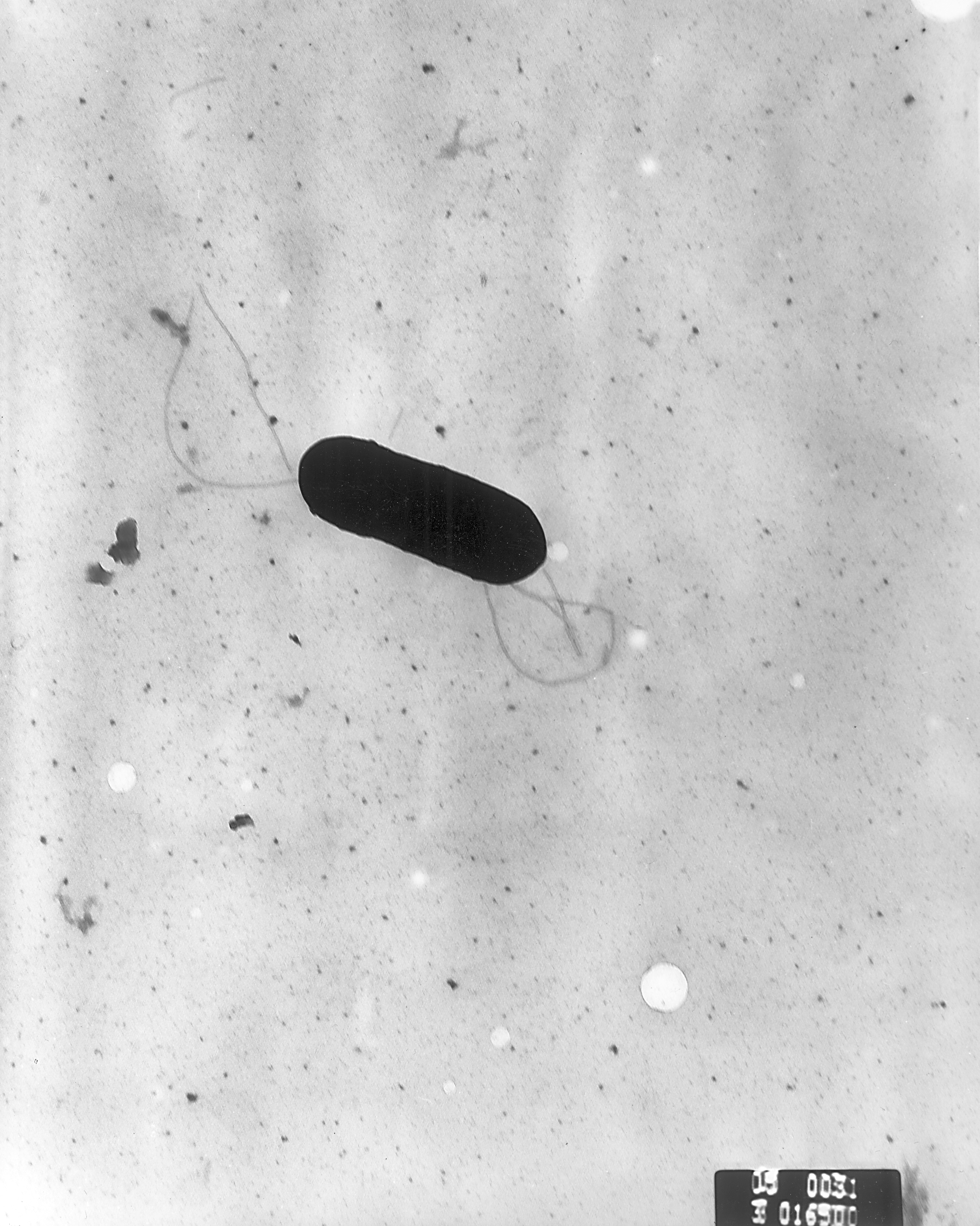
Image source: Wikipedia/Wikimedia
| Ecology, Host, and Life Cycle | |
|---|---|
| Oxygen requirements | Facultative anaerobe |
| Optimal temperature | 30 |
| Temperature range | Mesophilic |
| Habitat | Not Available |
| Biotic relationship | Free living |
| Host(s) | Not Available |
| Cell arrangement | Chains - Singles |
| Sporulation | Not Available |
| Energy source | Chemoorganotroph |
| Pathogenicity | Not Available |
Gene Summary
Adenine Count
919024 bp
Thymine Count
911314 bp
Guanine Count
558110 bp
Cytosine Count
563357 bp
Genome Length
2951805 bp
Protein-coding Genes
2853 genes
Non-Coding Genes
101 genes
# of Chromosomes/Plasmids
3
Genes
| Name | Locus Tag | UniProt ID | Strand Orientation | Gene Start/End | Protein Molecular Weight |
|---|---|---|---|---|---|
| zinc metallopeptidase | FA029_04455 | O05248 | Positive | 888380 - 889063 | 24794.6 |
| nad(p)/fad-dependent oxidoreductase | FA029_04460 | Q795R8 | Positive | 889173 - 890438 | 45997.9 |
| formate c-acetyltransferase | FA029_04465 | Q59934 | Negative | 890486 - 892765 | 85511.5 |
| beta-lactamase family protein | FA029_04470 | B5F0K5 | Negative | 892997 - 894004 | 37852.3 |
| nad-dependent malic enzyme | FA029_04475 | O34389 | Negative | 894007 - 895650 | 60053.1 |
| eal domain-containing protein | FA029_04480 | P75995 | Negative | 895761 - 896444 | 26802.6 |
| glycoside transferase | FA029_04485 | O31486 | Negative | 896463 - 897467 | 38702.8 |
| ggdef domain-containing protein | FA029_04490 | Q73RG3 | Negative | 897464 - 898591 | 42917.3 |
| ggdef domain-containing protein | FA029_04495 | P75908 | Negative | 898617 - 899753 | 42492.4 |
| fad-binding oxidoreductase | FA029_04500 | O32159 | Positive | 900073 - 901179 | 39735.4 |
Pathways
0 pathways
No pathways found
No metabolic pathways have been associated with this bacterium yet.
Health Effects
No health effects information available for this bacterium.


