
Kingdom
Bacillati
Phylum
Bacillota
Class
Bacilli
Order
Caryophanales
Family
Listeriaceae
Genus
Listeria
Description
Taxonomy
| Kingdom | Bacillati |
|---|---|
| Phylum | Bacillota |
| Class | Bacilli |
| Order | Caryophanales |
| Family | Listeriaceae |
| Genus | Listeria |
| Species | Listeria monocytogenes |
| Strain | 21 |
Profile
| Physiology | |
|---|---|
| Gram staining properties | Positive |
| Shape | Rod |
| Mobility | No |
| Flagellar presence | Yes |
| Number of membranes | Not Available |
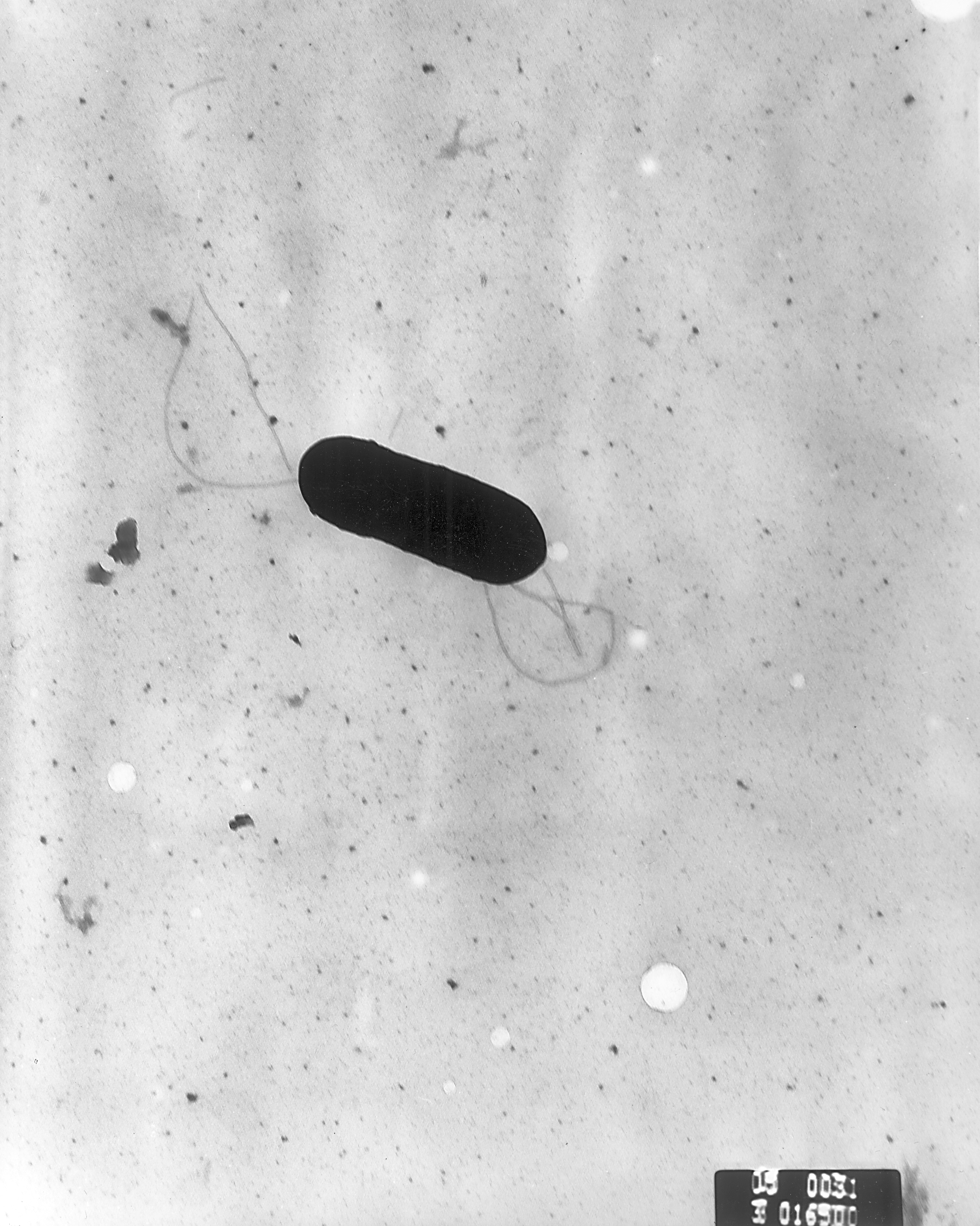
Image source: Wikipedia/Wikimedia
| Ecology, Host, and Life Cycle | |
|---|---|
| Oxygen requirements | Facultative anaerobe |
| Optimal temperature | 30 |
| Temperature range | Mesophilic |
| Habitat | Not Available |
| Biotic relationship | Free living |
| Host(s) | Not Available |
| Cell arrangement | Chains - Singles |
| Sporulation | Not Available |
| Energy source | Chemoorganotroph |
| Pathogenicity | Not Available |
Gene Summary
Adenine Count
919024 bp
Thymine Count
911314 bp
Guanine Count
558110 bp
Cytosine Count
563357 bp
Genome Length
2951805 bp
Protein-coding Genes
2853 genes
Non-Coding Genes
101 genes
# of Chromosomes/Plasmids
3
Genes
| Name | Locus Tag | UniProt ID | Strand Orientation | Gene Start/End | Protein Molecular Weight |
|---|---|---|---|---|---|
| 16s ribosomal rna | Not Available | Not Available | Positive | 432718 - 434275 | Not Available |
| Trna-ile | Not Available | Not Available | Positive | 434397 - 434470 | Not Available |
| Trna-ala | Not Available | Not Available | Positive | 434517 - 434592 | Not Available |
| 23s ribosomal rna | Not Available | Not Available | Positive | 434763 - 437698 | Not Available |
| 5s ribosomal rna | Not Available | Not Available | Positive | 437774 - 437889 | Not Available |
| Trna-asn | Not Available | Not Available | Positive | 437900 - 437975 | Not Available |
| Trna-ser | Not Available | Not Available | Positive | 437982 - 438070 | Not Available |
| Trna-glu | Not Available | Not Available | Positive | 438104 - 438175 | Not Available |
| Trna-val | Not Available | Not Available | Positive | 438233 - 438308 | Not Available |
| Trna-met | Not Available | Not Available | Positive | 438330 - 438403 | Not Available |
Pathways
0 pathways
No pathways found
No metabolic pathways have been associated with this bacterium yet.
Health Effects
No health effects information available for this bacterium.


