
Kingdom
Bacillati
Phylum
Bacillota
Class
Bacilli
Order
Caryophanales
Family
Listeriaceae
Genus
Listeria
Description
Taxonomy
| Kingdom | Bacillati |
|---|---|
| Phylum | Bacillota |
| Class | Bacilli |
| Order | Caryophanales |
| Family | Listeriaceae |
| Genus | Listeria |
| Species | Listeria monocytogenes |
| Strain | 21 |
Profile
| Physiology | |
|---|---|
| Gram staining properties | Positive |
| Shape | Rod |
| Mobility | No |
| Flagellar presence | Yes |
| Number of membranes | Not Available |
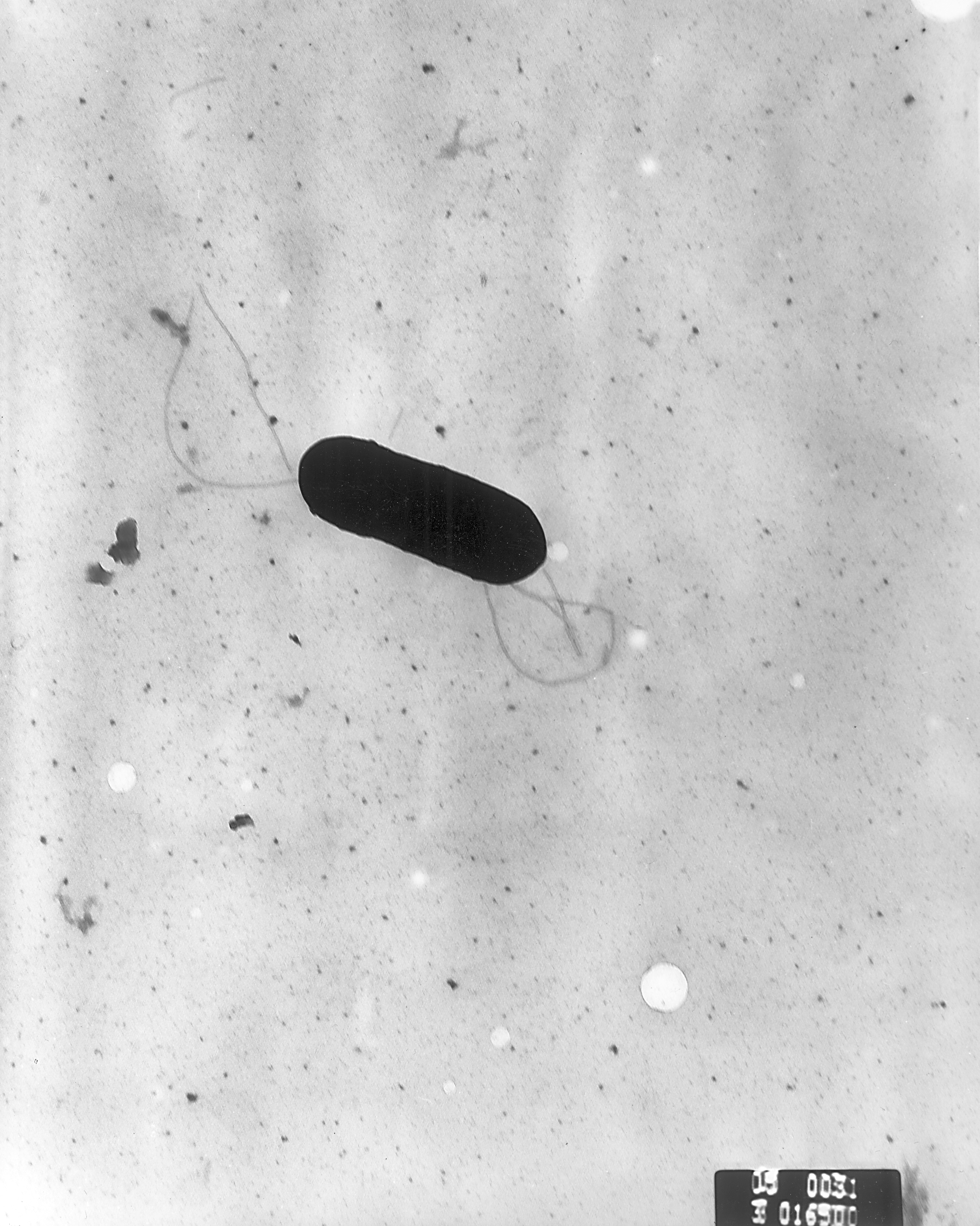
Image source: Wikipedia/Wikimedia
| Ecology, Host, and Life Cycle | |
|---|---|
| Oxygen requirements | Facultative anaerobe |
| Optimal temperature | 30 |
| Temperature range | Mesophilic |
| Habitat | Not Available |
| Biotic relationship | Free living |
| Host(s) | Not Available |
| Cell arrangement | Chains - Singles |
| Sporulation | Not Available |
| Energy source | Chemoorganotroph |
| Pathogenicity | Not Available |
Gene Summary
Adenine Count
919024 bp
Thymine Count
911314 bp
Guanine Count
558110 bp
Cytosine Count
563357 bp
Genome Length
2951805 bp
Protein-coding Genes
2853 genes
Non-Coding Genes
101 genes
# of Chromosomes/Plasmids
3
Genes
| Name | Locus Tag | UniProt ID | Strand Orientation | Gene Start/End | Protein Molecular Weight |
|---|---|---|---|---|---|
| hypothetical protein | FA029_00580 | Not Available | Negative | 125014 - 125367 | 13694.5 |
| nitroreductase family protein | FA029_00585 | Q96VH4 | Positive | 125561 - 126160 | 22238.0 |
| thioredoxin family protein | FA029_00590 | Q8KEA4 | Negative | 126218 - 126538 | 11938.5 |
| beta-phosphoglucomutase | FA029_00595 | P77366 | Negative | 126661 - 127323 | 23926.7 |
| glycerate kinase | FA029_00600 | P42100 | Negative | 127320 - 128441 | 38861.8 |
| glycoside hydrolase family 65 protein | FA029_00605 | P77154 | Negative | 128438 - 130615 | 82213.6 |
| gfo/idh/moca family oxidoreductase | FA029_00610 | P77503 | Negative | 130612 - 131643 | 37593.9 |
| sugar phosphate isomerase/epimerase | FA029_00615 | P76044 | Negative | 131700 - 132494 | 29720.2 |
| zinc-binding alcohol dehydrogenase | FA029_00620 | P76043 | Negative | 132507 - 133559 | 38360.8 |
| carbohydrate abc transporter permease | FA029_00625 | P77716 | Negative | 133578 - 134429 | 31625.6 |
Pathways
0 pathways
No pathways found
No metabolic pathways have been associated with this bacterium yet.
Health Effects
No health effects information available for this bacterium.


