
Kingdom
Bacillati
Phylum
Bacillota
Class
Bacilli
Order
Caryophanales
Family
Listeriaceae
Genus
Listeria
Description
Taxonomy
| Kingdom | Bacillati |
|---|---|
| Phylum | Bacillota |
| Class | Bacilli |
| Order | Caryophanales |
| Family | Listeriaceae |
| Genus | Listeria |
| Species | Listeria monocytogenes |
| Strain | 21 |
Profile
| Physiology | |
|---|---|
| Gram staining properties | Positive |
| Shape | Rod |
| Mobility | No |
| Flagellar presence | Yes |
| Number of membranes | Not Available |
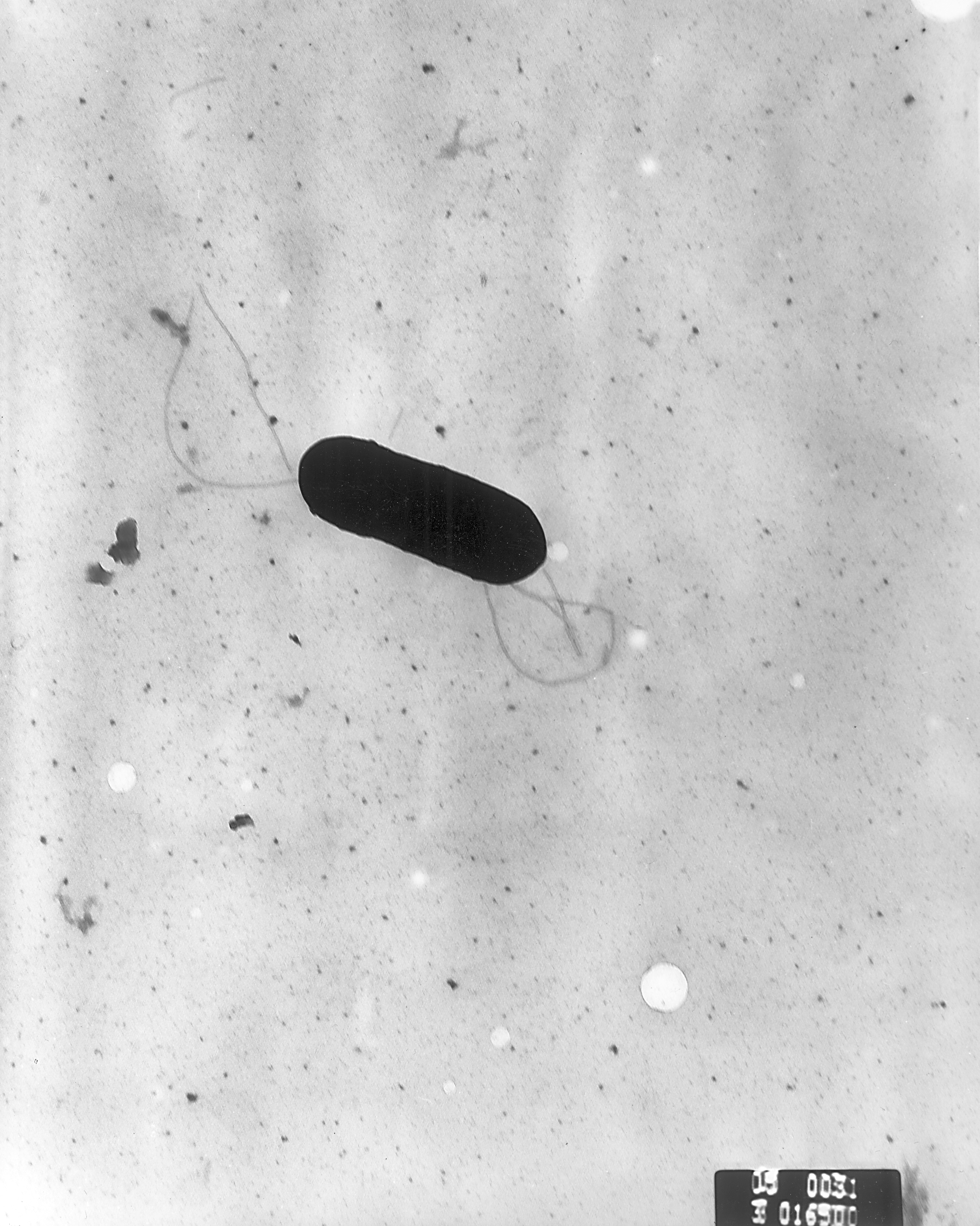
Image source: Wikipedia/Wikimedia
| Ecology, Host, and Life Cycle | |
|---|---|
| Oxygen requirements | Facultative anaerobe |
| Optimal temperature | 30 |
| Temperature range | Mesophilic |
| Habitat | Not Available |
| Biotic relationship | Free living |
| Host(s) | Not Available |
| Cell arrangement | Chains - Singles |
| Sporulation | Not Available |
| Energy source | Chemoorganotroph |
| Pathogenicity | Not Available |
Gene Summary
Adenine Count
919024 bp
Thymine Count
911314 bp
Guanine Count
558110 bp
Cytosine Count
563357 bp
Genome Length
2951805 bp
Protein-coding Genes
2853 genes
Non-Coding Genes
101 genes
# of Chromosomes/Plasmids
3
Genes
| Name | Locus Tag | UniProt ID | Strand Orientation | Gene Start/End | Protein Molecular Weight |
|---|---|---|---|---|---|
| pts galactitol transporter subunit iia | ATE45_13165 | P69814 | Negative | 2663348 - 2663815 | 18078.8 |
| transcription antiterminator | ATE45_13170 | P46321 | Negative | 2663823 - 2665829 | 77994.5 |
| gntr family transcriptional regulator | ATE45_13175 | P96681 | Negative | 2666010 - 2667455 | 54138.0 |
| pyridoxal biosynthesis protein | ATE45_13180 | C1KX53 | Positive | 2667579 - 2668466 | 31674.6 |
| glutamine amidotransferase | ATE45_13185 | Q71XR2 | Positive | 2668468 - 2669034 | 20560.9 |
| phosphotransacetylase | ATE45_13190 | P39646 | Negative | 2669073 - 2670050 | 34415.4 |
| iron transporter feoa | ATE45_13195 | Not Available | Positive | 2670370 - 2670597 | 8395.42 |
| ferrous iron transporter b | ATE45_13200 | Q6G6C4 | Positive | 2670594 - 2672588 | 72846.2 |
| hypothetical protein | ATE45_13205 | Not Available | Positive | 2672595 - 2672777 | 6747.34 |
| serine/threonine protein phosphatase | ATE45_13210 | Q9PP77 | Negative | 2672807 - 2673661 | 31762.2 |
Pathways
0 pathways
No pathways found
No metabolic pathways have been associated with this bacterium yet.
Health Effects
No health effects information available for this bacterium.


