
Kingdom
Bacillati
Phylum
Bacillota
Class
Bacilli
Order
Caryophanales
Family
Listeriaceae
Genus
Listeria
Description
Taxonomy
| Kingdom | Bacillati |
|---|---|
| Phylum | Bacillota |
| Class | Bacilli |
| Order | Caryophanales |
| Family | Listeriaceae |
| Genus | Listeria |
| Species | Listeria monocytogenes |
| Strain | 21 |
Profile
| Physiology | |
|---|---|
| Gram staining properties | Positive |
| Shape | Rod |
| Mobility | No |
| Flagellar presence | Yes |
| Number of membranes | Not Available |
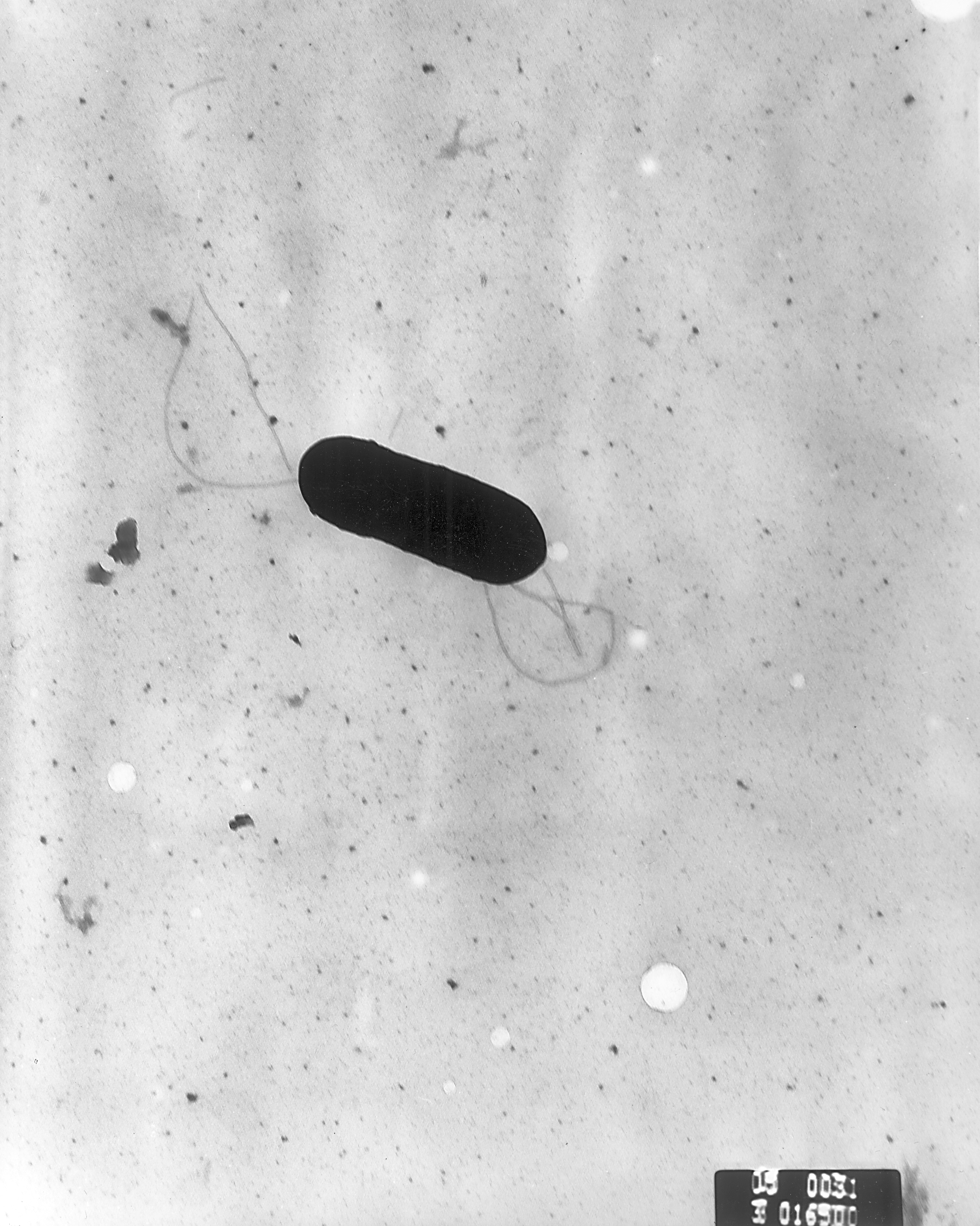
Image source: Wikipedia/Wikimedia
| Ecology, Host, and Life Cycle | |
|---|---|
| Oxygen requirements | Facultative anaerobe |
| Optimal temperature | 30 |
| Temperature range | Mesophilic |
| Habitat | Not Available |
| Biotic relationship | Free living |
| Host(s) | Not Available |
| Cell arrangement | Chains - Singles |
| Sporulation | Not Available |
| Energy source | Chemoorganotroph |
| Pathogenicity | Not Available |
Gene Summary
Adenine Count
919024 bp
Thymine Count
911314 bp
Guanine Count
558110 bp
Cytosine Count
563357 bp
Genome Length
2951805 bp
Protein-coding Genes
2853 genes
Non-Coding Genes
101 genes
# of Chromosomes/Plasmids
3
Genes
| Name | Locus Tag | UniProt ID | Strand Orientation | Gene Start/End | Protein Molecular Weight |
|---|---|---|---|---|---|
| 30s ribosomal protein s14 | ATE45_12060 | Q71YD4 | Negative | 2433788 - 2434057 | 10461.7 |
| chitinase | ATE45_12065 | Q838S2 | Negative | 2434180 - 2435238 | 37932.7 |
| xanthine permease | ATE45_12070 | P42086 | Negative | 2435430 - 2436737 | 45853.9 |
| xanthine phosphoribosyltransferase | ATE45_12075 | Q71YD1 | Negative | 2436744 - 2437322 | 20917.4 |
| carboxypeptidase | ATE45_12080 | P50848 | Negative | 2437550 - 2439073 | 57827.5 |
| rna methyltransferase | ATE45_12085 | P50840 | Negative | 2439078 - 2440226 | 43040.6 |
| hypothetical protein | ATE45_12090 | Not Available | Negative | 2440302 - 2440586 | 11043.1 |
| cell division protein gpsb | ATE45_12095 | C1KWI8 | Negative | 2440806 - 2441147 | 12884.0 |
| hypothetical protein | ATE45_12100 | C1KWI9 | Negative | 2441279 - 2441824 | 20746.5 |
| hypothetical protein | ATE45_12105 | P50833 | Negative | 2441821 - 2442186 | 14518.3 |
Pathways
0 pathways
No pathways found
No metabolic pathways have been associated with this bacterium yet.
Health Effects
No health effects information available for this bacterium.


