
Kingdom
Bacillati
Phylum
Bacillota
Class
Bacilli
Order
Caryophanales
Family
Listeriaceae
Genus
Listeria
Description
Taxonomy
| Kingdom | Bacillati |
|---|---|
| Phylum | Bacillota |
| Class | Bacilli |
| Order | Caryophanales |
| Family | Listeriaceae |
| Genus | Listeria |
| Species | Listeria monocytogenes |
| Strain | 21 |
Profile
| Physiology | |
|---|---|
| Gram staining properties | Positive |
| Shape | Rod |
| Mobility | No |
| Flagellar presence | Yes |
| Number of membranes | Not Available |
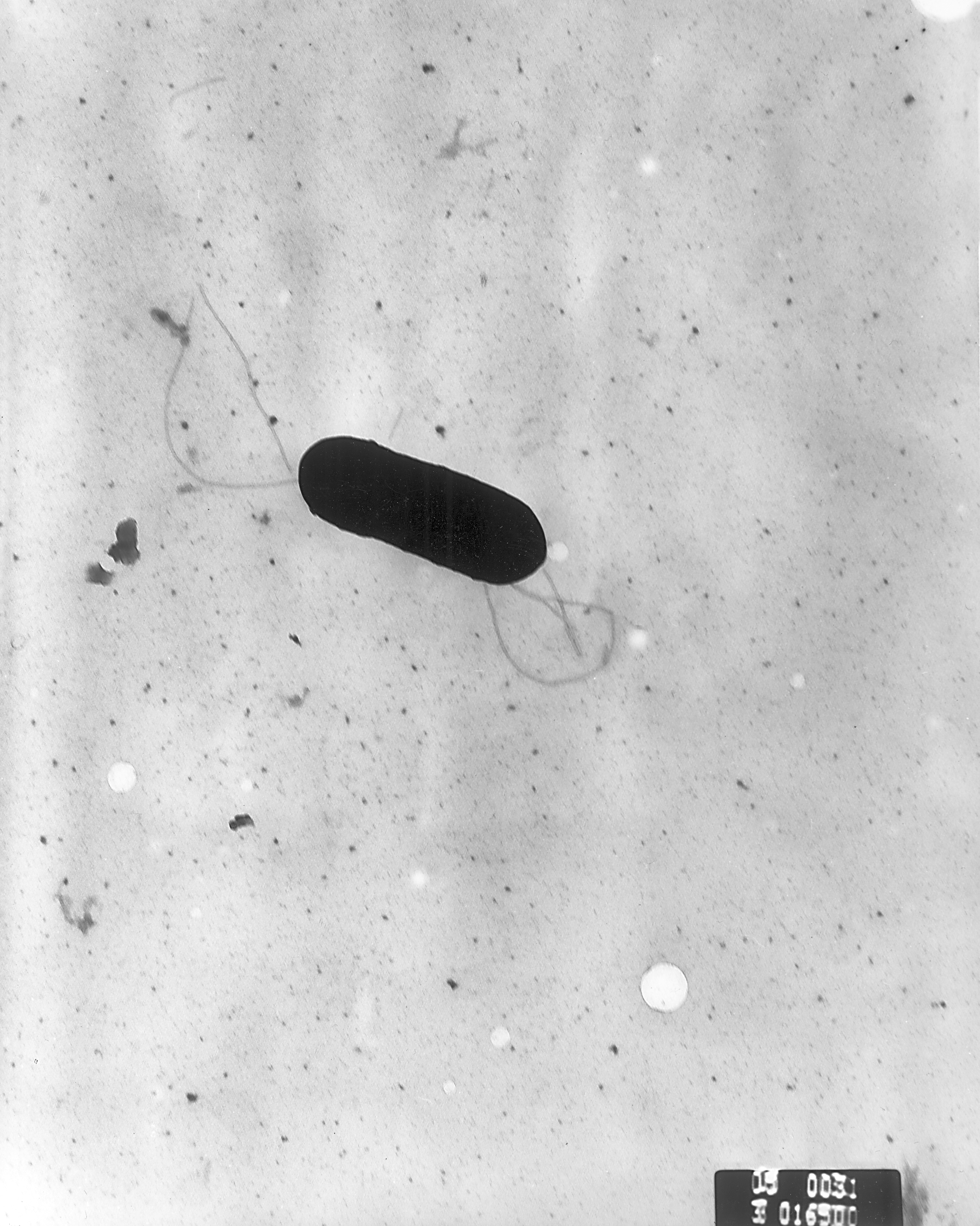
Image source: Wikipedia/Wikimedia
| Ecology, Host, and Life Cycle | |
|---|---|
| Oxygen requirements | Facultative anaerobe |
| Optimal temperature | 30 |
| Temperature range | Mesophilic |
| Habitat | Not Available |
| Biotic relationship | Free living |
| Host(s) | Not Available |
| Cell arrangement | Chains - Singles |
| Sporulation | Not Available |
| Energy source | Chemoorganotroph |
| Pathogenicity | Not Available |
Gene Summary
Adenine Count
919024 bp
Thymine Count
911314 bp
Guanine Count
558110 bp
Cytosine Count
563357 bp
Genome Length
2951805 bp
Protein-coding Genes
2853 genes
Non-Coding Genes
101 genes
# of Chromosomes/Plasmids
3
Genes
| Name | Locus Tag | UniProt ID | Strand Orientation | Gene Start/End | Protein Molecular Weight |
|---|---|---|---|---|---|
| nad-dependent dehydratase | ATE45_11355 | Q9SA52 | Negative | 2290707 - 2291582 | 32754.8 |
| two-component system response regulator | ATE45_11360 | Q9K621 | Negative | 2291652 - 2292329 | 26415.9 |
| abc transporter permease | ATE45_11365 | O34741 | Negative | 2292392 - 2294371 | 75724.7 |
| bacitracin abc transporter atp-binding protein | ATE45_11370 | O34697 | Negative | 2294361 - 2295128 | 28028.0 |
| hypothetical protein | ATE45_11375 | Not Available | Negative | 2295257 - 2295766 | 19431.2 |
| shikimate kinase | ATE45_11380 | Q834S1 | Positive | 2295990 - 2296463 | 17657.1 |
| molybdate metabolism regulator | ATE45_11385 | P78271 | Negative | 2296494 - 2297048 | 21007.8 |
| rna methyltransferase | ATE45_11390 | Q71YR7 | Negative | 2297383 - 2298744 | 50552.1 |
| hypothetical protein | ATE45_11395 | Not Available | Negative | 2298768 - 2299523 | 28526.1 |
| lipid kinase | ATE45_11400 | O31502 | Negative | 2299671 - 2300603 | 34026.1 |
Pathways
0 pathways
No pathways found
No metabolic pathways have been associated with this bacterium yet.
Health Effects
No health effects information available for this bacterium.


