
Kingdom
Bacillati
Phylum
Bacillota
Class
Bacilli
Order
Caryophanales
Family
Listeriaceae
Genus
Listeria
Description
Taxonomy
| Kingdom | Bacillati |
|---|---|
| Phylum | Bacillota |
| Class | Bacilli |
| Order | Caryophanales |
| Family | Listeriaceae |
| Genus | Listeria |
| Species | Listeria monocytogenes |
| Strain | 21 |
Profile
| Physiology | |
|---|---|
| Gram staining properties | Positive |
| Shape | Rod |
| Mobility | No |
| Flagellar presence | Yes |
| Number of membranes | Not Available |
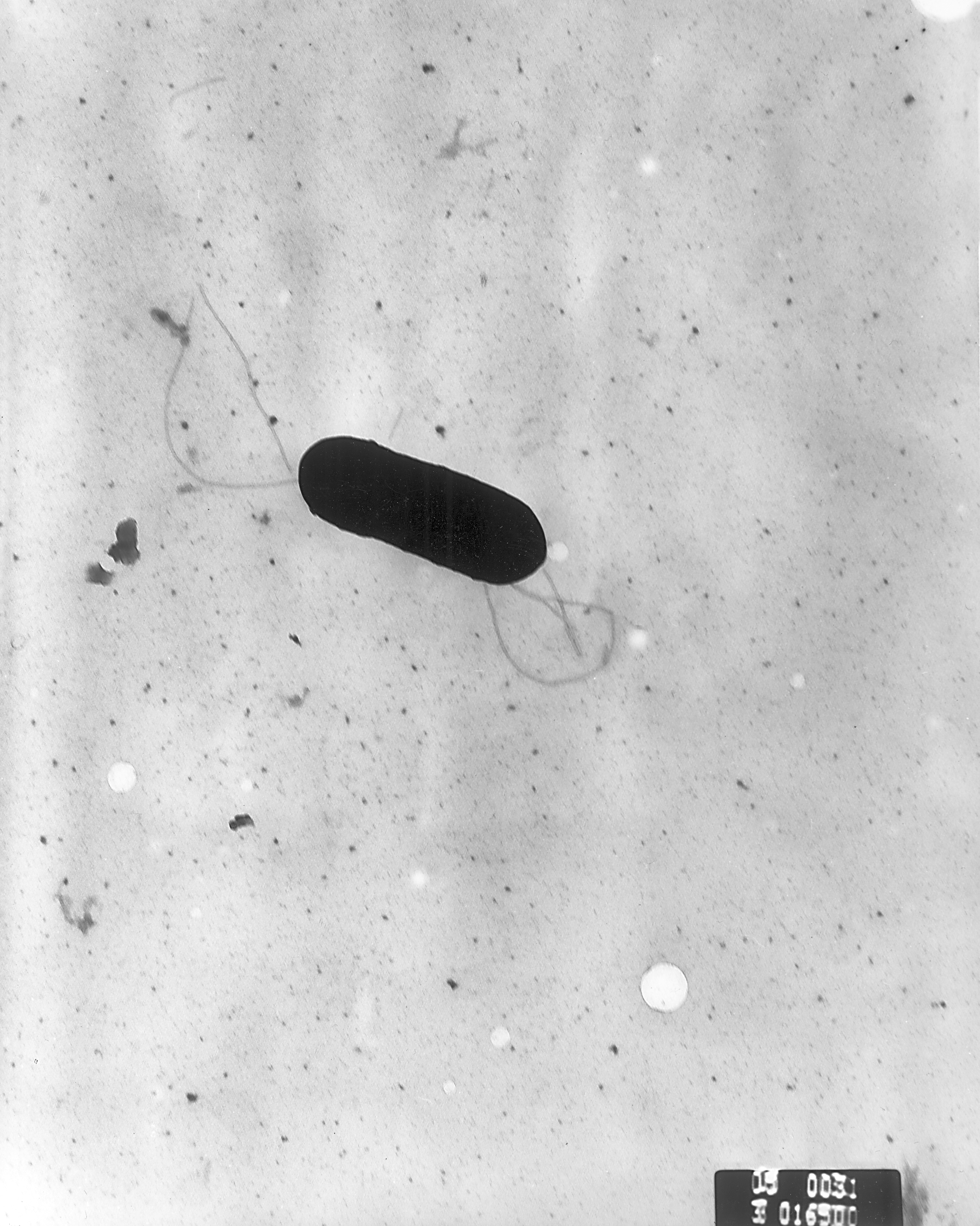
Image source: Wikipedia/Wikimedia
| Ecology, Host, and Life Cycle | |
|---|---|
| Oxygen requirements | Facultative anaerobe |
| Optimal temperature | 30 |
| Temperature range | Mesophilic |
| Habitat | Not Available |
| Biotic relationship | Free living |
| Host(s) | Not Available |
| Cell arrangement | Chains - Singles |
| Sporulation | Not Available |
| Energy source | Chemoorganotroph |
| Pathogenicity | Not Available |
Gene Summary
Adenine Count
919024 bp
Thymine Count
911314 bp
Guanine Count
558110 bp
Cytosine Count
563357 bp
Genome Length
2951805 bp
Protein-coding Genes
2853 genes
Non-Coding Genes
101 genes
# of Chromosomes/Plasmids
3
Genes
| Name | Locus Tag | UniProt ID | Strand Orientation | Gene Start/End | Protein Molecular Weight |
|---|---|---|---|---|---|
| molybdopterin synthase sulfur carrier subunit | ATE45_07845 | Q7A441 | Positive | 1574806 - 1575054 | 9098.01 |
| cyclic pyranopterin monophosphate synthase accessory protein | ATE45_07850 | C1L1W7 | Positive | 1575067 - 1575549 | 17338.2 |
| cyclic pyranopterin phosphate synthase moaa | ATE45_07855 | Q721B9 | Positive | 1575578 - 1576579 | 37927.1 |
| molybdenum cofactor biosynthesis protein b | ATE45_07860 | Q816R0 | Negative | 1576614 - 1577102 | 17628.3 |
| molybdopterin biosynthesis protein moeb | ATE45_07865 | O31702 | Negative | 1577114 - 1578112 | 37450.1 |
| hypothetical protein | ATE45_07870 | P96682 | Positive | 1578244 - 1578798 | 20406.1 |
| peptide deformylase | ATE45_07875 | C1L1X2 | Negative | 1578847 - 1579398 | 20672.7 |
| pyruvate dehydrogenase (acetyl-transferring) e1 component subunit alpha | ATE45_07880 | P21881 | Positive | 1580232 - 1581347 | 41270.4 |
| 2-oxoisovalerate dehydrogenase | ATE45_07885 | P21882 | Positive | 1581350 - 1582327 | 35299.5 |
| dihydrolipoamide acetyltransferase | ATE45_07890 | P65635 | Positive | 1582438 - 1584072 | 58357.6 |
Pathways
0 pathways
No pathways found
No metabolic pathways have been associated with this bacterium yet.
Health Effects
No health effects information available for this bacterium.


