
Kingdom
Bacillati
Phylum
Bacillota
Class
Bacilli
Order
Caryophanales
Family
Listeriaceae
Genus
Listeria
Description
Taxonomy
| Kingdom | Bacillati |
|---|---|
| Phylum | Bacillota |
| Class | Bacilli |
| Order | Caryophanales |
| Family | Listeriaceae |
| Genus | Listeria |
| Species | Listeria monocytogenes |
| Strain | 21 |
Profile
| Physiology | |
|---|---|
| Gram staining properties | Positive |
| Shape | Rod |
| Mobility | No |
| Flagellar presence | Yes |
| Number of membranes | Not Available |
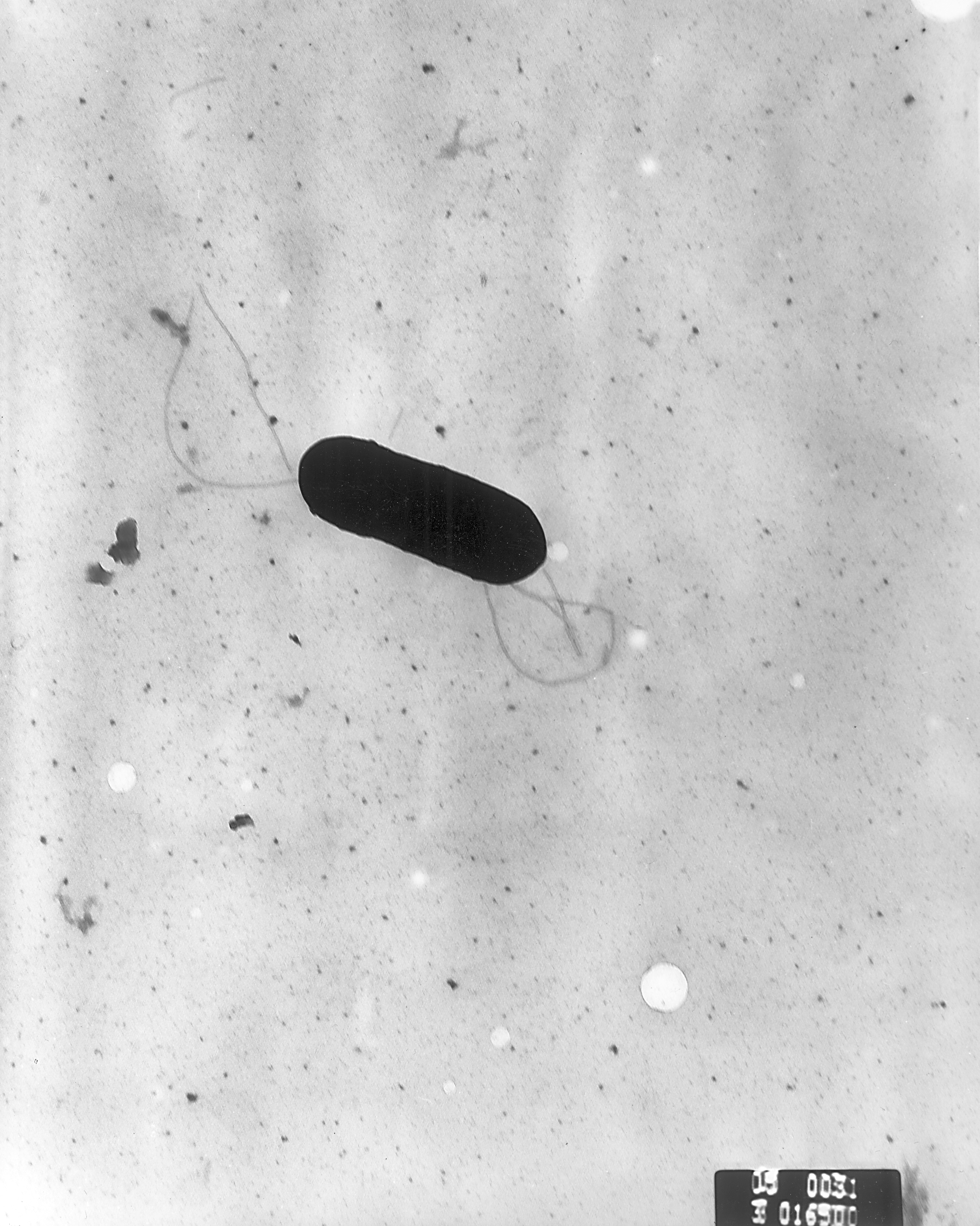
Image source: Wikipedia/Wikimedia
| Ecology, Host, and Life Cycle | |
|---|---|
| Oxygen requirements | Facultative anaerobe |
| Optimal temperature | 30 |
| Temperature range | Mesophilic |
| Habitat | Not Available |
| Biotic relationship | Free living |
| Host(s) | Not Available |
| Cell arrangement | Chains - Singles |
| Sporulation | Not Available |
| Energy source | Chemoorganotroph |
| Pathogenicity | Not Available |
Gene Summary
Adenine Count
919024 bp
Thymine Count
911314 bp
Guanine Count
558110 bp
Cytosine Count
563357 bp
Genome Length
2951805 bp
Protein-coding Genes
2853 genes
Non-Coding Genes
101 genes
# of Chromosomes/Plasmids
3
Genes
| Name | Locus Tag | UniProt ID | Strand Orientation | Gene Start/End | Protein Molecular Weight |
|---|---|---|---|---|---|
| hypothetical protein | ATE45_07445 | Not Available | Negative | 1499669 - 1500136 | 17341.4 |
| gtp pyrophosphokinase | ATE45_07450 | O31611 | Positive | 1500295 - 1500963 | 26139.5 |
| nad kinase | ATE45_07455 | Q721J8 | Positive | 1500995 - 1501789 | 29905.8 |
| rna pseudouridine synthase | ATE45_07460 | O31613 | Positive | 1501808 - 1502698 | 33820.8 |
| enoyl-acp reductase | ATE45_07465 | Q81GI3 | Positive | 1502776 - 1503564 | 28325.8 |
| d-alanyl-lipoteichoic acid biosynthesis protein dltd | ATE45_07470 | P55154 | Negative | 1503592 - 1504866 | 48590.1 |
| d-alanine--poly(phosphoribitol) ligase subunit 2 | ATE45_07475 | C1L1P3 | Negative | 1504866 - 1505102 | 9010.75 |
| d-alanyl-lipoteichoic acid biosynthesis protein dltb | ATE45_07480 | P39580 | Negative | 1505128 - 1506312 | 46382.8 |
| d-alanine--poly(phosphoribitol) ligase | ATE45_07485 | Q721J2 | Negative | 1506309 - 1507841 | 57616.2 |
| cytochrome c | ATE45_07490 | C0H3T3 | Negative | 1507878 - 1508024 | 5747.26 |
Pathways
0 pathways
No pathways found
No metabolic pathways have been associated with this bacterium yet.
Health Effects
No health effects information available for this bacterium.


