
Kingdom
Bacillati
Phylum
Bacillota
Class
Bacilli
Order
Caryophanales
Family
Listeriaceae
Genus
Listeria
Description
Taxonomy
| Kingdom | Bacillati |
|---|---|
| Phylum | Bacillota |
| Class | Bacilli |
| Order | Caryophanales |
| Family | Listeriaceae |
| Genus | Listeria |
| Species | Listeria monocytogenes |
| Strain | 21 |
Profile
| Physiology | |
|---|---|
| Gram staining properties | Positive |
| Shape | Rod |
| Mobility | No |
| Flagellar presence | Yes |
| Number of membranes | Not Available |
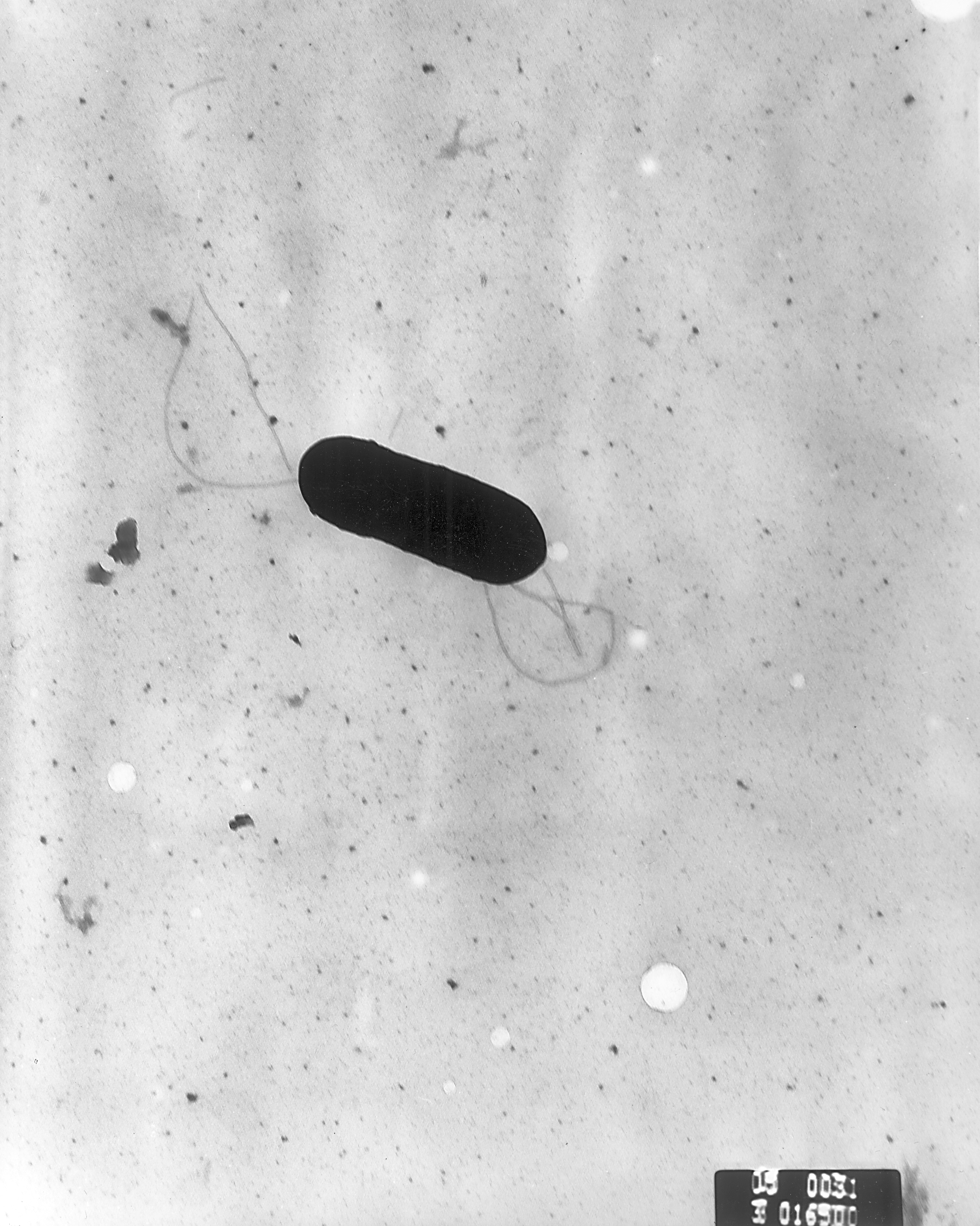
Image source: Wikipedia/Wikimedia
| Ecology, Host, and Life Cycle | |
|---|---|
| Oxygen requirements | Facultative anaerobe |
| Optimal temperature | 30 |
| Temperature range | Mesophilic |
| Habitat | Not Available |
| Biotic relationship | Free living |
| Host(s) | Not Available |
| Cell arrangement | Chains - Singles |
| Sporulation | Not Available |
| Energy source | Chemoorganotroph |
| Pathogenicity | Not Available |
Gene Summary
Adenine Count
919024 bp
Thymine Count
911314 bp
Guanine Count
558110 bp
Cytosine Count
563357 bp
Genome Length
2951805 bp
Protein-coding Genes
2853 genes
Non-Coding Genes
101 genes
# of Chromosomes/Plasmids
3
Genes
| Name | Locus Tag | UniProt ID | Strand Orientation | Gene Start/End | Protein Molecular Weight |
|---|---|---|---|---|---|
| trna methyltransferase | ATE45_07295 | Q721N0 | Positive | 1474465 - 1474974 | 19602.0 |
| nadph-dependent oxidoreductase | ATE45_07300 | P39605 | Positive | 1474987 - 1475727 | 27411.7 |
| hypothetical protein | ATE45_07305 | Not Available | Negative | 1475777 - 1475938 | 5972.08 |
| protein tyrosine phosphatase | ATE45_07310 | O35016 | Negative | 1476026 - 1476484 | 16937.3 |
| smi1 / knr4 family protein | ATE45_07315 | Not Available | Negative | 1476497 - 1477243 | 29019.7 |
| hypothetical protein | ATE45_07320 | Not Available | Negative | 1477339 - 1478307 | 37184.4 |
| molecular chaperone htpg | ATE45_07325 | A6QBI2 | Negative | 1478319 - 1480124 | 68433.7 |
| dna starvation/stationary phase protection protein | ATE45_07330 | Q8Y8G1 | Positive | 1480327 - 1480797 | 18048.6 |
| hypothetical protein | ATE45_07335 | Q45063 | Positive | 1481030 - 1481332 | 11723.5 |
| mbl fold metallo-hydrolase | ATE45_07340 | P39695 | Positive | 1481445 - 1482575 | 41157.4 |
Pathways
0 pathways
No pathways found
No metabolic pathways have been associated with this bacterium yet.
Health Effects
No health effects information available for this bacterium.


