
Kingdom
Bacillati
Phylum
Bacillota
Class
Bacilli
Order
Caryophanales
Family
Listeriaceae
Genus
Listeria
Description
Taxonomy
| Kingdom | Bacillati |
|---|---|
| Phylum | Bacillota |
| Class | Bacilli |
| Order | Caryophanales |
| Family | Listeriaceae |
| Genus | Listeria |
| Species | Listeria monocytogenes |
| Strain | 21 |
Profile
| Physiology | |
|---|---|
| Gram staining properties | Positive |
| Shape | Rod |
| Mobility | No |
| Flagellar presence | Yes |
| Number of membranes | Not Available |
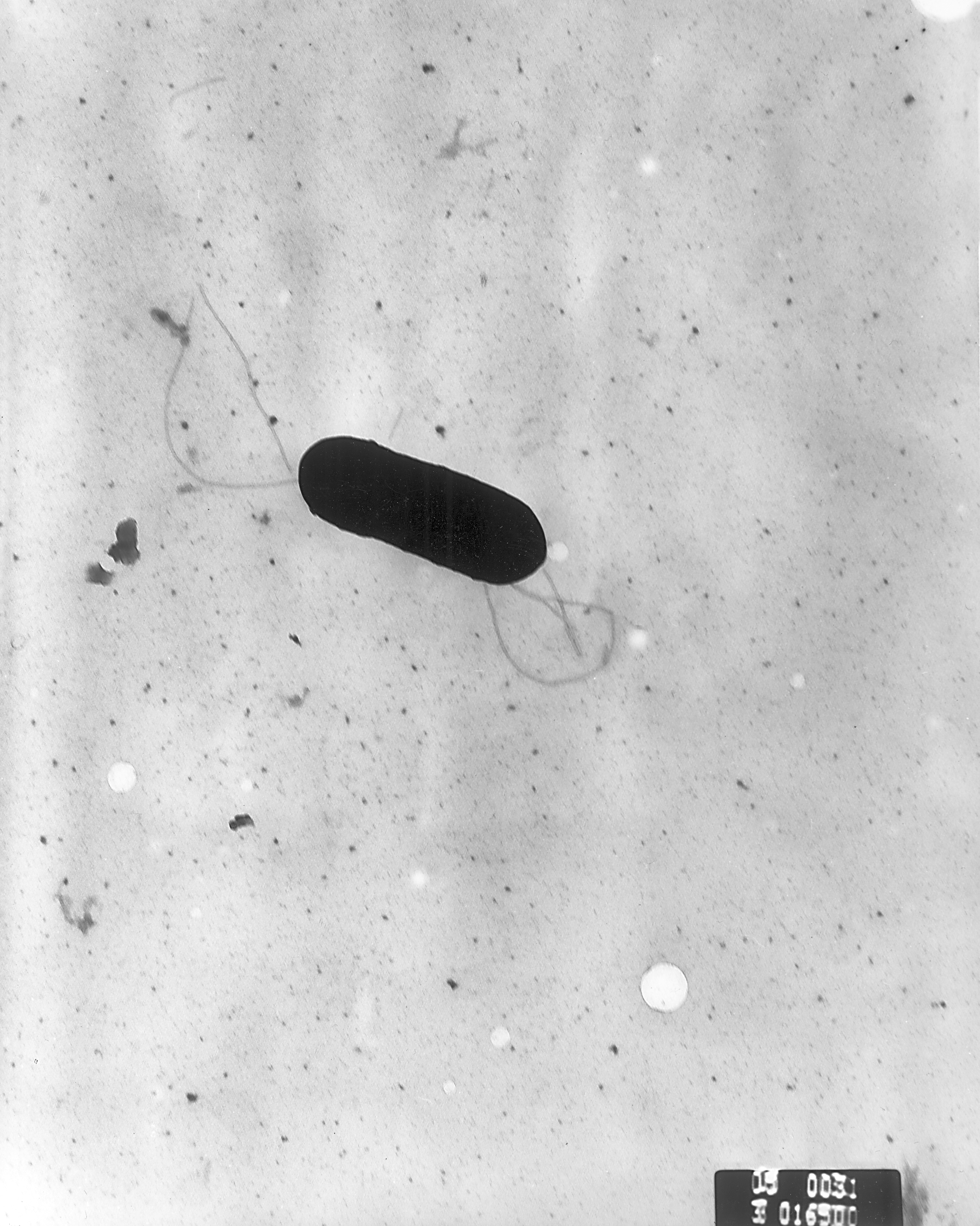
Image source: Wikipedia/Wikimedia
| Ecology, Host, and Life Cycle | |
|---|---|
| Oxygen requirements | Facultative anaerobe |
| Optimal temperature | 30 |
| Temperature range | Mesophilic |
| Habitat | Not Available |
| Biotic relationship | Free living |
| Host(s) | Not Available |
| Cell arrangement | Chains - Singles |
| Sporulation | Not Available |
| Energy source | Chemoorganotroph |
| Pathogenicity | Not Available |
Gene Summary
Adenine Count
919024 bp
Thymine Count
911314 bp
Guanine Count
558110 bp
Cytosine Count
563357 bp
Genome Length
2951805 bp
Protein-coding Genes
2853 genes
Non-Coding Genes
101 genes
# of Chromosomes/Plasmids
3
Genes
| Name | Locus Tag | UniProt ID | Strand Orientation | Gene Start/End | Protein Molecular Weight |
|---|---|---|---|---|---|
| myocilin | ATE45_06190 | Not Available | Positive | 1251327 - 1251755 | 16400.6 |
| flagellar biosynthesis protein flgk | ATE45_06195 | P0A1J6 | Positive | 1251775 - 1253295 | 54215.7 |
| flagellar biosynthesis protein flgl | ATE45_06200 | P29744 | Positive | 1253307 - 1254182 | 31687.2 |
| flagellar cap protein flid | ATE45_06205 | Q9K3C5 | Positive | 1254194 - 1255483 | 46352.4 |
| flagellar protein flis | ATE45_06210 | Not Available | Positive | 1255502 - 1255888 | 15228.3 |
| hypothetical protein | ATE45_06215 | Not Available | Positive | 1255860 - 1256141 | 10666.7 |
| flagellar biosynthesis protein flgb | ATE45_06220 | P52608 | Positive | 1256162 - 1256563 | 14218.2 |
| flagellar basal-body rod protein flgc | ATE45_06225 | P24501 | Positive | 1256575 - 1256985 | 14599.2 |
| flagellar hook-basal body protein flie | ATE45_06230 | Q92DU2 | Positive | 1257002 - 1257298 | 10385.3 |
| flagellar m-ring protein flif | ATE45_06235 | Q04954 | Positive | 1257366 - 1259018 | 60031.9 |
Pathways
0 pathways
No pathways found
No metabolic pathways have been associated with this bacterium yet.
Health Effects
No health effects information available for this bacterium.


