
Kingdom
Bacillati
Phylum
Bacillota
Class
Bacilli
Order
Caryophanales
Family
Listeriaceae
Genus
Listeria
Description
Taxonomy
| Kingdom | Bacillati |
|---|---|
| Phylum | Bacillota |
| Class | Bacilli |
| Order | Caryophanales |
| Family | Listeriaceae |
| Genus | Listeria |
| Species | Listeria monocytogenes |
| Strain | 21 |
Profile
| Physiology | |
|---|---|
| Gram staining properties | Positive |
| Shape | Rod |
| Mobility | No |
| Flagellar presence | Yes |
| Number of membranes | Not Available |
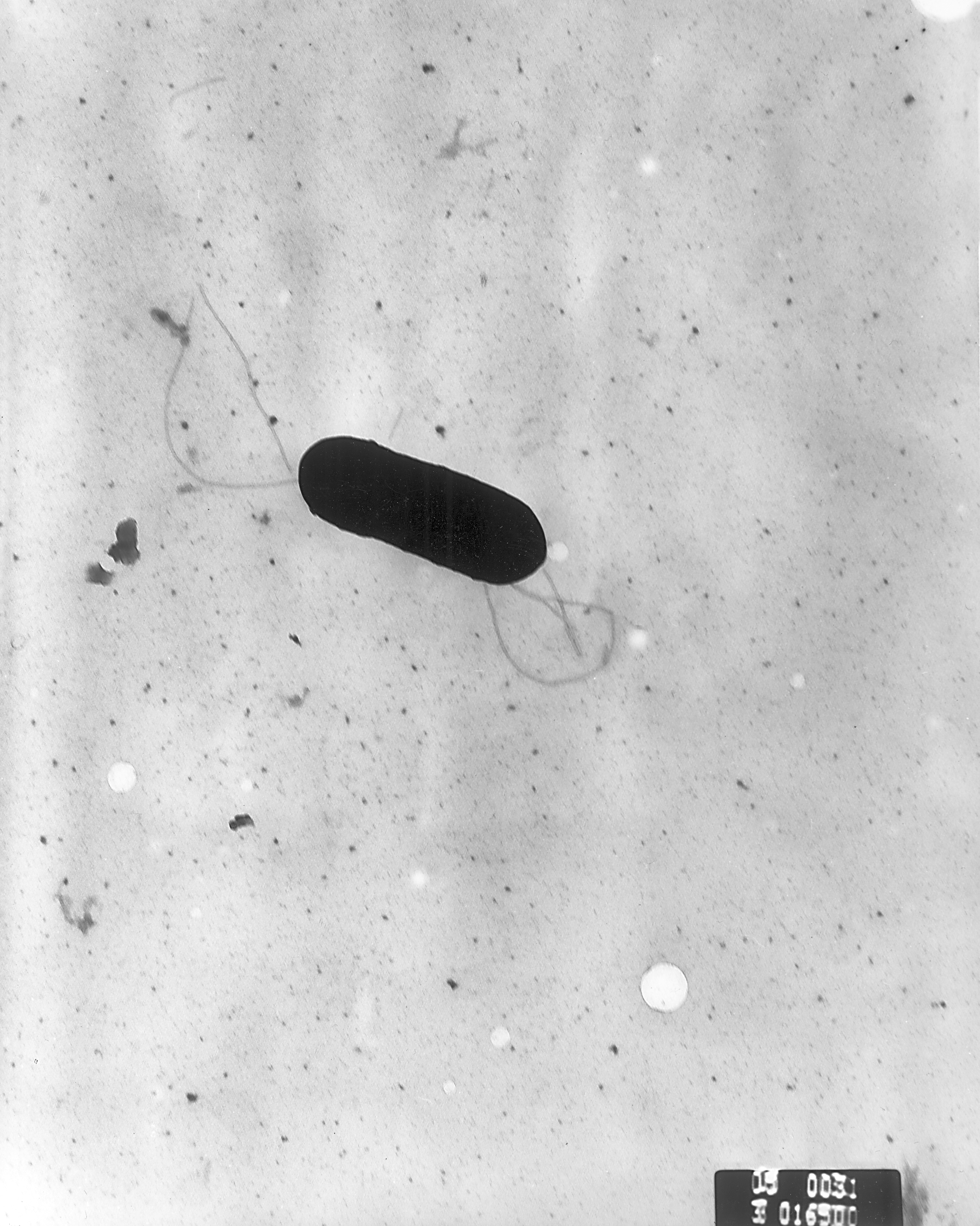
Image source: Wikipedia/Wikimedia
| Ecology, Host, and Life Cycle | |
|---|---|
| Oxygen requirements | Facultative anaerobe |
| Optimal temperature | 30 |
| Temperature range | Mesophilic |
| Habitat | Not Available |
| Biotic relationship | Free living |
| Host(s) | Not Available |
| Cell arrangement | Chains - Singles |
| Sporulation | Not Available |
| Energy source | Chemoorganotroph |
| Pathogenicity | Not Available |
Gene Summary
Adenine Count
919024 bp
Thymine Count
911314 bp
Guanine Count
558110 bp
Cytosine Count
563357 bp
Genome Length
2951805 bp
Protein-coding Genes
2853 genes
Non-Coding Genes
101 genes
# of Chromosomes/Plasmids
3
Genes
| Name | Locus Tag | UniProt ID | Strand Orientation | Gene Start/End | Protein Molecular Weight |
|---|---|---|---|---|---|
| hypothetical protein | ATE45_03575 | Q9ZIM1 | Positive | 713108 - 713386 | 10435.8 |
| cell division protein divic | ATE45_03580 | P37471 | Positive | 713615 - 714001 | 15029.5 |
| rna-binding protein s1 | ATE45_03585 | P37560 | Positive | 714152 - 714580 | 15647.7 |
| hypoxanthine phosphoribosyltransferase | ATE45_03590 | Q724J4 | Positive | 716094 - 716633 | 20230.3 |
| cell division protein ftsh | ATE45_03595 | P37476 | Positive | 716980 - 719043 | 75698.0 |
| type iii pantothenate kinase | ATE45_03600 | C1KYF4 | Positive | 719159 - 719938 | 28182.3 |
| heat-shock protein hsp33 | ATE45_03605 | Q724J1 | Positive | 719954 - 720838 | 31914.7 |
| cysteine synthase | ATE45_03610 | P37887 | Positive | 720954 - 721880 | 32205.6 |
| dihydropteroate synthase | ATE45_03615 | Q05621 | Positive | 722812 - 723597 | 28511.6 |
| dihydroneopterin aldolase | ATE45_03620 | P28823 | Positive | 723611 - 723985 | 13703.5 |
Pathways
0 pathways
No pathways found
No metabolic pathways have been associated with this bacterium yet.
Health Effects
No health effects information available for this bacterium.


