
Kingdom
Bacillati
Phylum
Bacillota
Class
Bacilli
Order
Caryophanales
Family
Listeriaceae
Genus
Listeria
Description
Taxonomy
| Kingdom | Bacillati |
|---|---|
| Phylum | Bacillota |
| Class | Bacilli |
| Order | Caryophanales |
| Family | Listeriaceae |
| Genus | Listeria |
| Species | Listeria monocytogenes |
| Strain | 21 |
Profile
| Physiology | |
|---|---|
| Gram staining properties | Positive |
| Shape | Rod |
| Mobility | No |
| Flagellar presence | Yes |
| Number of membranes | Not Available |
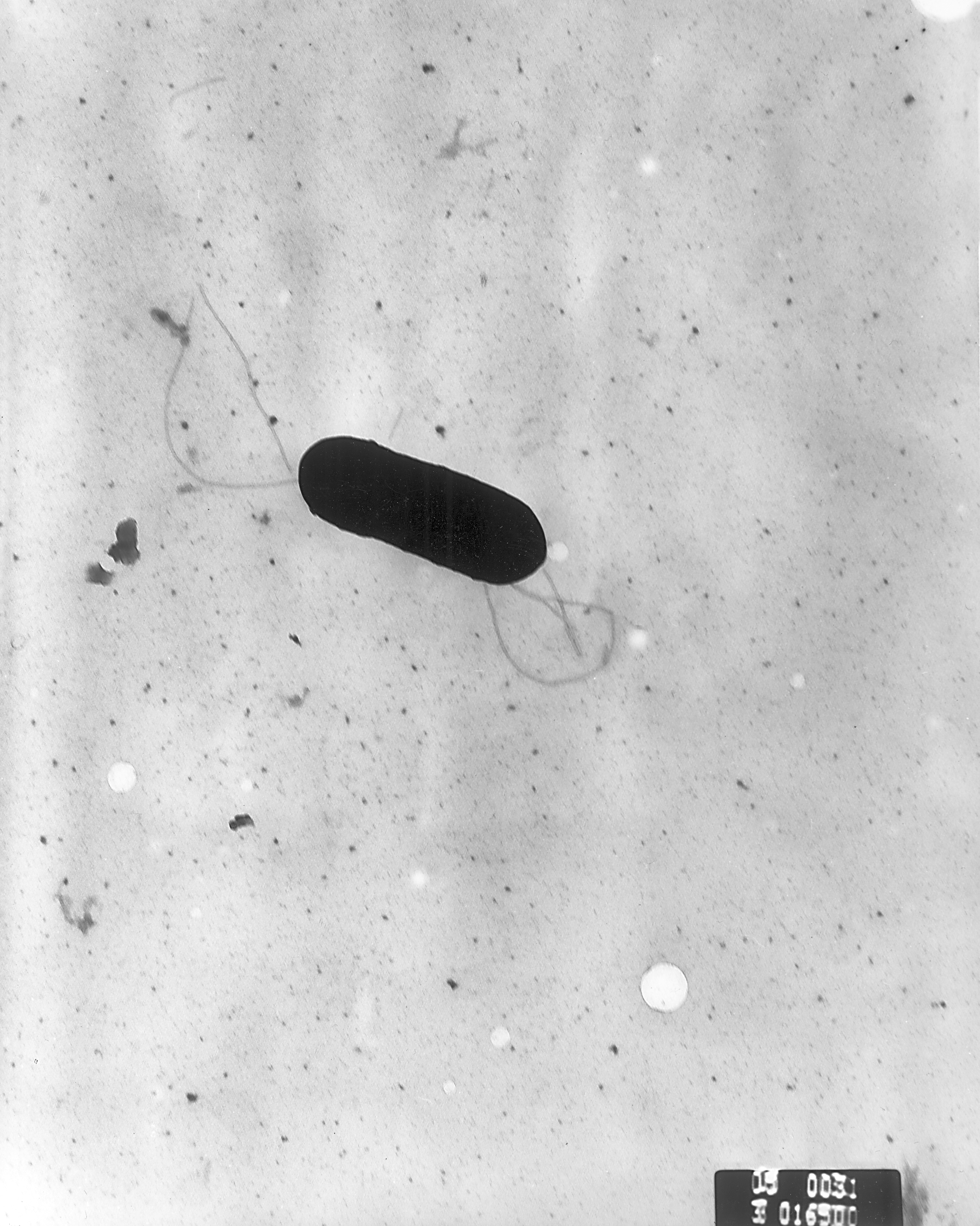
Image source: Wikipedia/Wikimedia
| Ecology, Host, and Life Cycle | |
|---|---|
| Oxygen requirements | Facultative anaerobe |
| Optimal temperature | 30 |
| Temperature range | Mesophilic |
| Habitat | Not Available |
| Biotic relationship | Free living |
| Host(s) | Not Available |
| Cell arrangement | Chains - Singles |
| Sporulation | Not Available |
| Energy source | Chemoorganotroph |
| Pathogenicity | Not Available |
Gene Summary
Adenine Count
919024 bp
Thymine Count
911314 bp
Guanine Count
558110 bp
Cytosine Count
563357 bp
Genome Length
2951805 bp
Protein-coding Genes
2853 genes
Non-Coding Genes
101 genes
# of Chromosomes/Plasmids
3
Genes
| Name | Locus Tag | UniProt ID | Strand Orientation | Gene Start/End | Protein Molecular Weight |
|---|---|---|---|---|---|
| pts ascorbate transporter subunit iic | ATE45_01385 | Q83II9 | Negative | 264352 - 265650 | 46113.8 |
| pts ascorbate transporter subunit iib | ATE45_01390 | Q9EXD8 | Negative | 265677 - 265949 | 9611.54 |
| pts sugar transporter subunit iia | ATE45_01395 | P69821 | Negative | 265952 - 266386 | 15542.4 |
| pts fructose transporter subunit iia | ATE45_01400 | P96574 | Negative | 266579 - 268645 | 78817.7 |
| elongation factor tu | ATE45_01405 | C1KZK6 | Negative | 268800 - 269987 | 43344.6 |
| elongation factor g | ATE45_01410 | C1KZK7 | Negative | 270096 - 272183 | 76854.2 |
| 30s ribosomal protein s7 | ATE45_01415 | P66612 | Negative | 272249 - 272719 | 17817.8 |
| 30s ribosomal protein s12 | ATE45_01420 | P66373 | Negative | 272750 - 273163 | 15184.6 |
| deoxyguanosinetriphosphate triphosphohydrolase | ATE45_01425 | Q8Y420 | Negative | 273356 - 274753 | 53475.6 |
| gnat family acetyltransferase | ATE45_01430 | P79081 | Negative | 274769 - 275248 | 18290.1 |
Pathways
0 pathways
No pathways found
No metabolic pathways have been associated with this bacterium yet.
Health Effects
No health effects information available for this bacterium.


