
Kingdom
Bacillati
Phylum
Bacillota
Class
Bacilli
Order
Caryophanales
Family
Listeriaceae
Genus
Listeria
Description
Taxonomy
| Kingdom | Bacillati |
|---|---|
| Phylum | Bacillota |
| Class | Bacilli |
| Order | Caryophanales |
| Family | Listeriaceae |
| Genus | Listeria |
| Species | Listeria monocytogenes |
| Strain | 21 |
Profile
| Physiology | |
|---|---|
| Gram staining properties | Positive |
| Shape | Rod |
| Mobility | No |
| Flagellar presence | Yes |
| Number of membranes | Not Available |
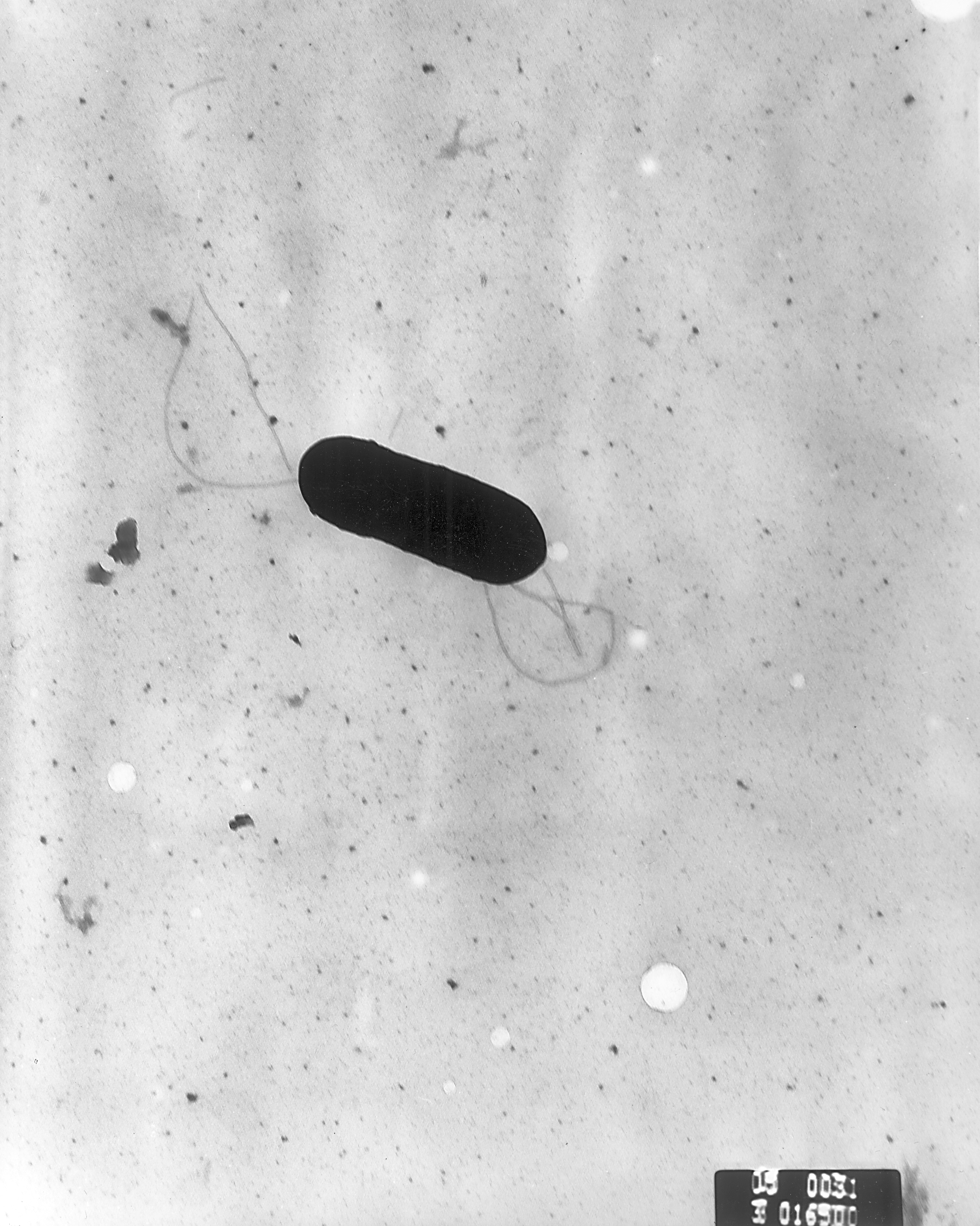
Image source: Wikipedia/Wikimedia
| Ecology, Host, and Life Cycle | |
|---|---|
| Oxygen requirements | Facultative anaerobe |
| Optimal temperature | 30 |
| Temperature range | Mesophilic |
| Habitat | Not Available |
| Biotic relationship | Free living |
| Host(s) | Not Available |
| Cell arrangement | Chains - Singles |
| Sporulation | Not Available |
| Energy source | Chemoorganotroph |
| Pathogenicity | Not Available |
Gene Summary
Adenine Count
919024 bp
Thymine Count
911314 bp
Guanine Count
558110 bp
Cytosine Count
563357 bp
Genome Length
2951805 bp
Protein-coding Genes
2853 genes
Non-Coding Genes
101 genes
# of Chromosomes/Plasmids
3
Genes
| Name | Locus Tag | UniProt ID | Strand Orientation | Gene Start/End | Protein Molecular Weight |
|---|---|---|---|---|---|
| cell division protein, ftsw/roda/spove family | LMOATCC19117_2696 | P39604 | Negative | 2769906 - 2771009 | 40344.9 |
| cell cycle protein | LMOATCC19117_2697 | O07639 | Negative | 2771006 - 2772136 | 41329.2 |
| magnesium-translocating p-type atpase | LMOATCC19117_2698 | P22036 | Negative | 2772137 - 2774707 | 94895.8 |
| transcriptional regulator, tetr family | LMOATCC19117_2699 | O34643 | Negative | 2775261 - 2775827 | 21509.2 |
| n-acetylmuramoyl-l-alanine amidase, family 4, lysm domain | LMOATCC19117_2700 | P39046 | Positive | 2775989 - 2777764 | 63782.9 |
| hypothetical protein | LMOATCC19117_2701 | P37538 | Negative | 2777995 - 2778324 | 11814.2 |
| thymidylate kinase | LMOATCC19117_2702 | C1KZP7 | Negative | 2778433 - 2779059 | 23098.9 |
| orn/lys/arg decarboxylase | LMOATCC19117_2703 | P37536 | Negative | 2779112 - 2780491 | 51379.9 |
| dihydroxyacetone kinase, dak1 subunit | LMOATCC19117_2704 | Q927E6 | Positive | 2780675 - 2781664 | 34885.1 |
| dihydroxyacetone kinase, dak2 subunit | LMOATCC19117_2705 | Q927E5 | Positive | 2781686 - 2782282 | 21514.5 |
Pathways
0 pathways
No pathways found
No metabolic pathways have been associated with this bacterium yet.
Health Effects
No health effects information available for this bacterium.


