
Kingdom
Bacillati
Phylum
Bacillota
Class
Bacilli
Order
Caryophanales
Family
Listeriaceae
Genus
Listeria
Description
Taxonomy
| Kingdom | Bacillati |
|---|---|
| Phylum | Bacillota |
| Class | Bacilli |
| Order | Caryophanales |
| Family | Listeriaceae |
| Genus | Listeria |
| Species | Listeria monocytogenes |
| Strain | 21 |
Profile
| Physiology | |
|---|---|
| Gram staining properties | Positive |
| Shape | Rod |
| Mobility | No |
| Flagellar presence | Yes |
| Number of membranes | Not Available |
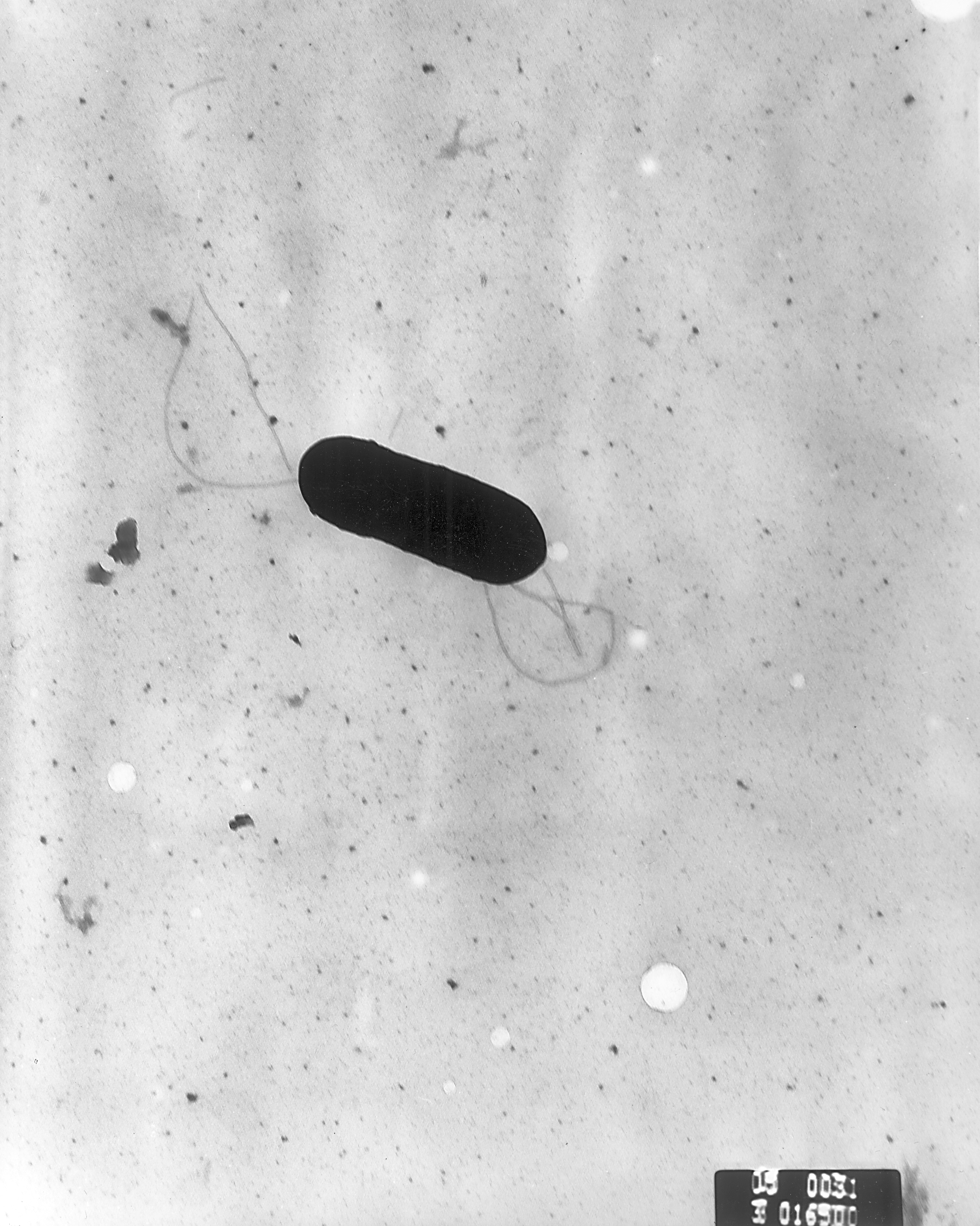
Image source: Wikipedia/Wikimedia
| Ecology, Host, and Life Cycle | |
|---|---|
| Oxygen requirements | Facultative anaerobe |
| Optimal temperature | 30 |
| Temperature range | Mesophilic |
| Habitat | Not Available |
| Biotic relationship | Free living |
| Host(s) | Not Available |
| Cell arrangement | Chains - Singles |
| Sporulation | Not Available |
| Energy source | Chemoorganotroph |
| Pathogenicity | Not Available |
Gene Summary
Adenine Count
919024 bp
Thymine Count
911314 bp
Guanine Count
558110 bp
Cytosine Count
563357 bp
Genome Length
2951805 bp
Protein-coding Genes
2853 genes
Non-Coding Genes
101 genes
# of Chromosomes/Plasmids
3
Genes
| Name | Locus Tag | UniProt ID | Strand Orientation | Gene Start/End | Protein Molecular Weight |
|---|---|---|---|---|---|
| dna-directed rna polymerase, alpha subunit | LMOATCC19117_2616 | P66700 | Negative | 2701122 - 2702066 | 34907.7 |
| ribosomal protein s11 | LMOATCC19117_2617 | P66353 | Negative | 2702176 - 2702565 | 13786.7 |
| ribosomal protein s13 | LMOATCC19117_2618 | P66384 | Negative | 2702588 - 2702953 | 13709.8 |
| ribosomal protein l36 | LMOATCC19117_2619 | P66291 | Negative | 2702972 - 2703085 | 4323.66 |
| translation initiation factor if-1 | LMOATCC19117_2620 | P65111 | Negative | 2703189 - 2703407 | 8218.06 |
| adenylate kinase | LMOATCC19117_2621 | C1KZF9 | Negative | 2703794 - 2704441 | 24234.0 |
| preprotein translocase, secy subunit | LMOATCC19117_2622 | Q05207 | Negative | 2704501 - 2705796 | 46876.7 |
| ribosomal protein l15 | LMOATCC19117_2623 | C1KZG1 | Negative | 2705796 - 2706236 | 15782.0 |
| ribosomal protein l30 | LMOATCC19117_2624 | Q7ANU8 | Negative | 2706292 - 2706471 | 6493.16 |
| ribosomal protein s5 | LMOATCC19117_2625 | Q71WG3 | Negative | 2706488 - 2706991 | 17457.2 |
Pathways
0 pathways
No pathways found
No metabolic pathways have been associated with this bacterium yet.
Health Effects
No health effects information available for this bacterium.


