
Kingdom
Bacillati
Phylum
Bacillota
Class
Bacilli
Order
Caryophanales
Family
Listeriaceae
Genus
Listeria
Description
Taxonomy
| Kingdom | Bacillati |
|---|---|
| Phylum | Bacillota |
| Class | Bacilli |
| Order | Caryophanales |
| Family | Listeriaceae |
| Genus | Listeria |
| Species | Listeria monocytogenes |
| Strain | 21 |
Profile
| Physiology | |
|---|---|
| Gram staining properties | Positive |
| Shape | Rod |
| Mobility | No |
| Flagellar presence | Yes |
| Number of membranes | Not Available |
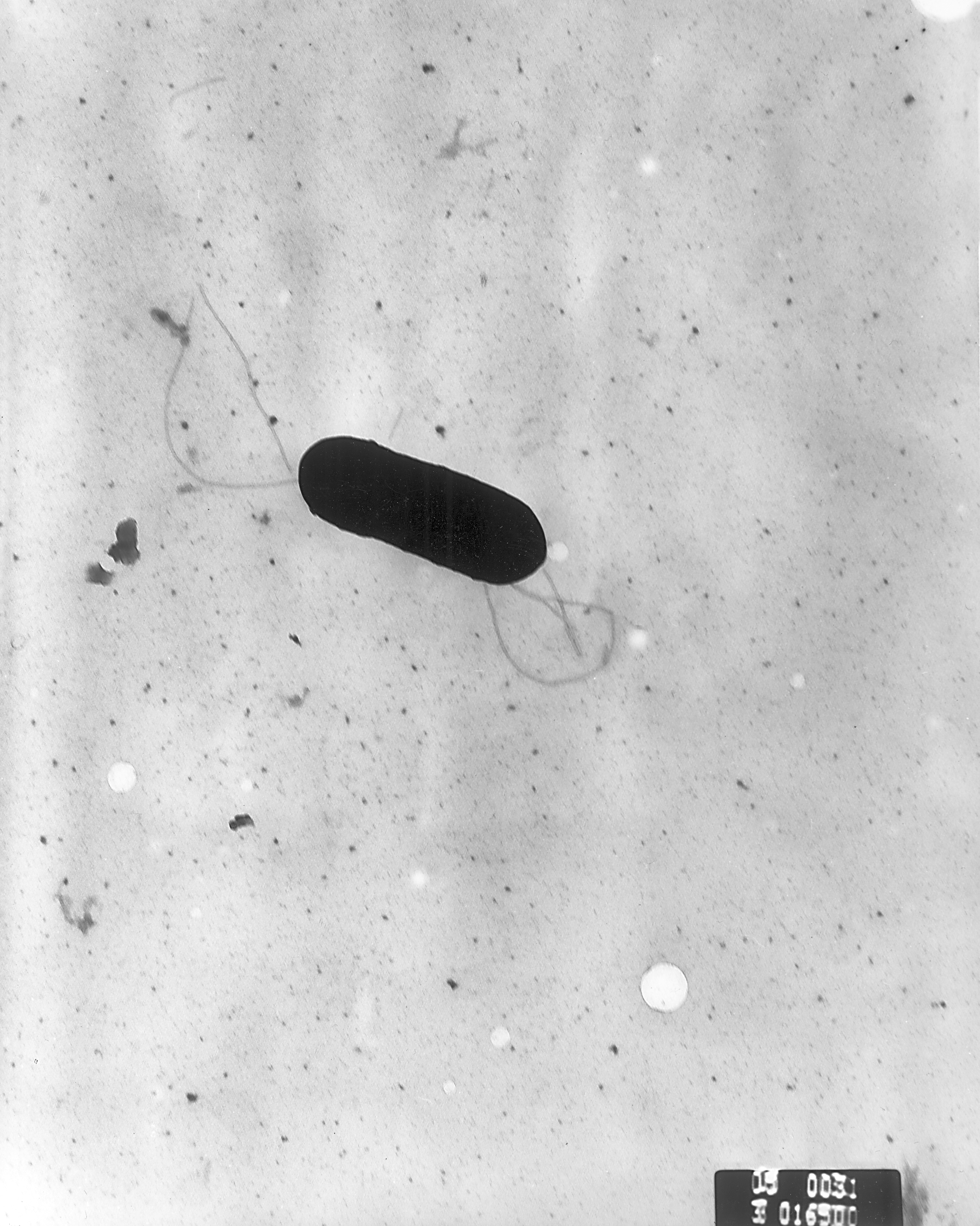
Image source: Wikipedia/Wikimedia
| Ecology, Host, and Life Cycle | |
|---|---|
| Oxygen requirements | Facultative anaerobe |
| Optimal temperature | 30 |
| Temperature range | Mesophilic |
| Habitat | Not Available |
| Biotic relationship | Free living |
| Host(s) | Not Available |
| Cell arrangement | Chains - Singles |
| Sporulation | Not Available |
| Energy source | Chemoorganotroph |
| Pathogenicity | Not Available |
Gene Summary
Adenine Count
919024 bp
Thymine Count
911314 bp
Guanine Count
558110 bp
Cytosine Count
563357 bp
Genome Length
2951805 bp
Protein-coding Genes
2853 genes
Non-Coding Genes
101 genes
# of Chromosomes/Plasmids
3
Genes
| Name | Locus Tag | UniProt ID | Strand Orientation | Gene Start/End | Protein Molecular Weight |
|---|---|---|---|---|---|
| pts system, fructose-specific, iiabc component | LMOATCC19117_2334 | P71012 | Negative | 2404882 - 2406780 | 66204.3 |
| fructose-1-phosphate kinase | LMOATCC19117_2335 | O31714 | Negative | 2406782 - 2407705 | 33121.1 |
| transcriptional regulator, deor family | LMOATCC19117_2336 | O31713 | Negative | 2407702 - 2408454 | 28128.9 |
| aminopeptidase c | LMOATCC19117_2337 | O69192 | Positive | 2408672 - 2409997 | 50620.2 |
| hypothetical protein | LMOATCC19117_2338 | Q45584 | Negative | 2409994 - 2410437 | 15715.2 |
| indigoidine synthase a like protein | LMOATCC19117_2339 | B1HV79 | Negative | 2410518 - 2411429 | 32559.3 |
| carbohydrate kinase, pfkb family | LMOATCC19117_2340 | P33020 | Negative | 2411426 - 2412544 | 40536.4 |
| ribosomal small subunit pseudouridine synthase a | LMOATCC19117_2341 | O32068 | Negative | 2412677 - 2413378 | 25868.0 |
| nitrilotriacetate monooxygenase, putative | LMOATCC19117_2342 | O34974 | Negative | 2413452 - 2414774 | 48939.1 |
| glutaredoxin family protein | LMOATCC19117_2343 | O34639 | Negative | 2414771 - 2415037 | 10221.2 |
Pathways
0 pathways
No pathways found
No metabolic pathways have been associated with this bacterium yet.
Health Effects
No health effects information available for this bacterium.


