
Kingdom
Bacillati
Phylum
Bacillota
Class
Bacilli
Order
Caryophanales
Family
Listeriaceae
Genus
Listeria
Description
Taxonomy
| Kingdom | Bacillati |
|---|---|
| Phylum | Bacillota |
| Class | Bacilli |
| Order | Caryophanales |
| Family | Listeriaceae |
| Genus | Listeria |
| Species | Listeria monocytogenes |
| Strain | 21 |
Profile
| Physiology | |
|---|---|
| Gram staining properties | Positive |
| Shape | Rod |
| Mobility | No |
| Flagellar presence | Yes |
| Number of membranes | Not Available |
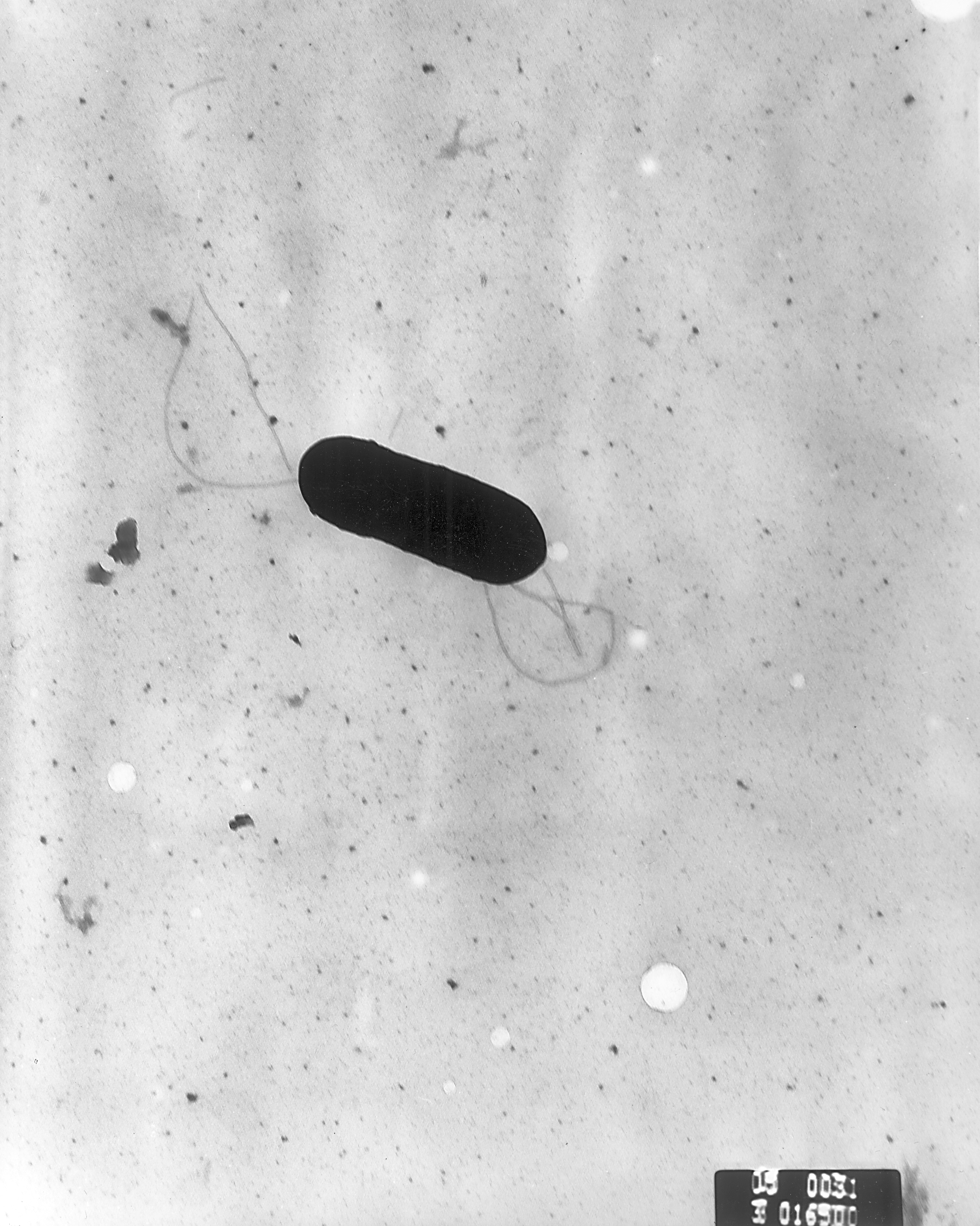
Image source: Wikipedia/Wikimedia
| Ecology, Host, and Life Cycle | |
|---|---|
| Oxygen requirements | Facultative anaerobe |
| Optimal temperature | 30 |
| Temperature range | Mesophilic |
| Habitat | Not Available |
| Biotic relationship | Free living |
| Host(s) | Not Available |
| Cell arrangement | Chains - Singles |
| Sporulation | Not Available |
| Energy source | Chemoorganotroph |
| Pathogenicity | Not Available |
Gene Summary
Adenine Count
919024 bp
Thymine Count
911314 bp
Guanine Count
558110 bp
Cytosine Count
563357 bp
Genome Length
2951805 bp
Protein-coding Genes
2853 genes
Non-Coding Genes
101 genes
# of Chromosomes/Plasmids
3
Genes
| Name | Locus Tag | UniProt ID | Strand Orientation | Gene Start/End | Protein Molecular Weight |
|---|---|---|---|---|---|
| heavy metal-binding protein | LMOATCC19117_1870 | P0C885 | Negative | 1920289 - 1920495 | 7204.43 |
| copper-translocating p-type atpase | LMOATCC19117_1871 | Q4A0G1 | Negative | 1920508 - 1922721 | 79967.1 |
| hypothetical protein | LMOATCC19117_1872 | O32222 | Negative | 1922736 - 1923029 | 11062.3 |
| d-alanyl-d-alanine carboxypeptidase | LMOATCC19117_1873 | O34866 | Negative | 1923154 - 1923978 | 31082.4 |
| purine nucleoside phosphorylase | LMOATCC19117_1874 | C1KWF5 | Negative | 1924036 - 1924737 | 25358.5 |
| hypothetical protein | LMOATCC19117_1875 | Q8Y643 | Negative | 1924749 - 1924982 | 9402.99 |
| oxidoreductase, gfo/idh/moca family | LMOATCC19117_1876 | P37168 | Negative | 1925045 - 1925950 | 34290.0 |
| peptide methionine-r-sulfoxide reductase | LMOATCC19117_1877 | C1KWF8 | Negative | 1926033 - 1926470 | 16494.1 |
| peptide methionine-l-sulfoxide reductase | LMOATCC19117_1878 | C1KWF9 | Negative | 1926477 - 1927010 | 19948.2 |
| secreted protein, putative | LMOATCC19117_1879 | P54179 | Negative | 1927046 - 1927660 | 23194.2 |
Pathways
0 pathways
No pathways found
No metabolic pathways have been associated with this bacterium yet.
Health Effects
No health effects information available for this bacterium.


