Kingdom
Pseudomonadati
Phylum
Pseudomonadota
Class
Alphaproteobacteria
Order
Hyphomicrobiales
Family
Rhizobiaceae
Genus
Sinorhizobium
Description
Taxonomy
| Kingdom | Pseudomonadati |
|---|---|
| Phylum | Pseudomonadota |
| Class | Alphaproteobacteria |
| Order | Hyphomicrobiales |
| Family | Rhizobiaceae |
| Genus | Sinorhizobium |
| Species | Sinorhizobium numidicum |
| Strain | No strain |
Profile
| Physiology | |
|---|---|
| Gram staining properties | Not Available |
| Shape | Not Available |
| Mobility | Not Available |
| Flagellar presence | Yes |
| Number of membranes | Not Available |
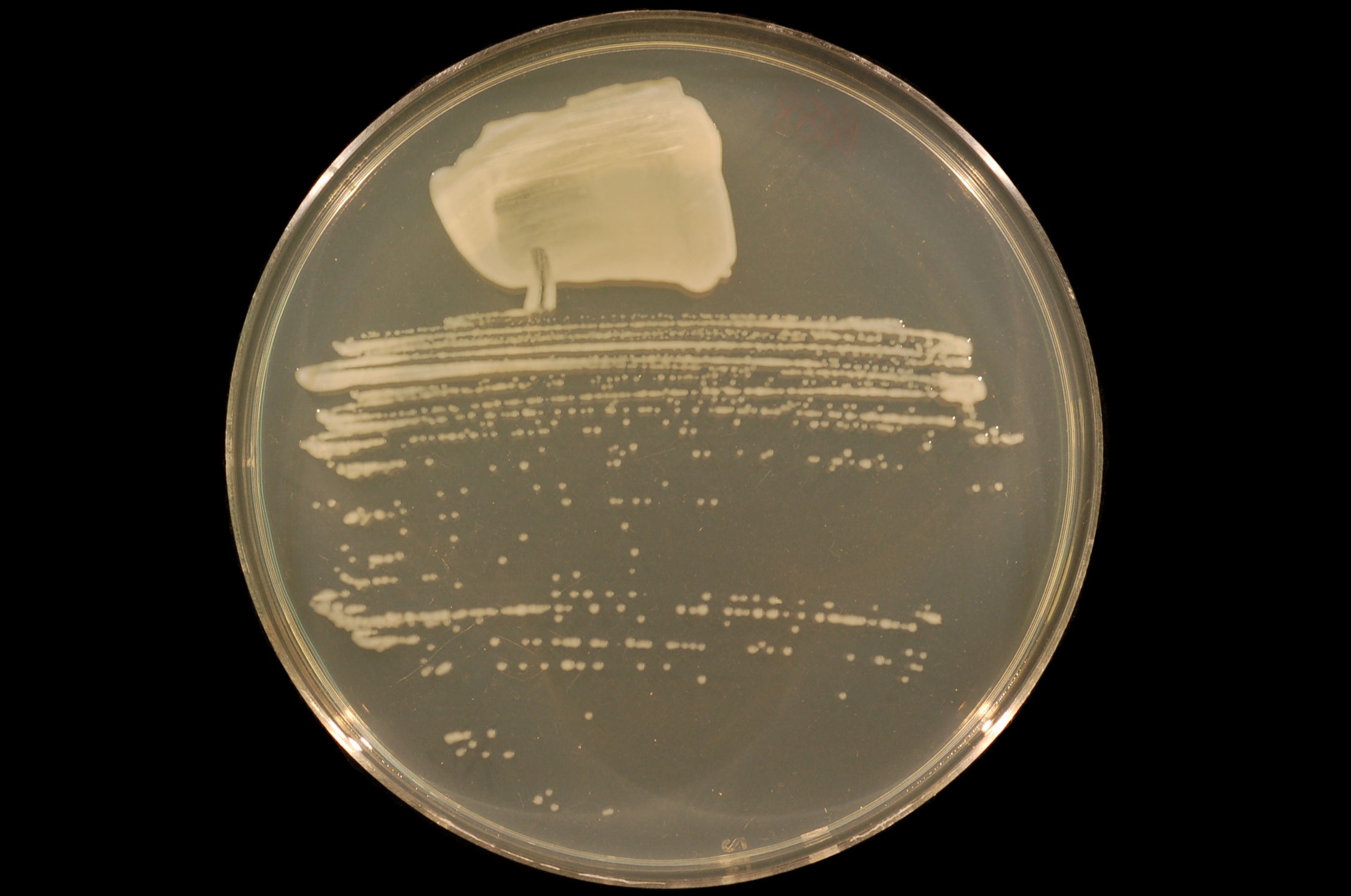
Image source: Wikipedia/Wikimedia
| Ecology, Host, and Life Cycle | |
|---|---|
| Oxygen requirements | Not Available |
| Optimal temperature | Not Available |
| Temperature range | Not Available |
| Habitat | Not Available |
| Biotic relationship | Not Available |
| Host(s) | Not Available |
| Cell arrangement | Not Available |
| Sporulation | Not Available |
| Energy source | Not Available |
| Pathogenicity | Not Available |
Gene Summary
Adenine Count
729492 bp
Thymine Count
731019 bp
Guanine Count
1151657 bp
Cytosine Count
1156351 bp
Genome Length
3768519 bp
Protein-coding Genes
3530 genes
Non-Coding Genes
90 genes
# of Chromosomes/Plasmids
3
Genes
| Name | Locus Tag | UniProt ID | Strand Orientation | Gene Start/End | Protein Molecular Weight |
|---|---|---|---|---|---|
| carbohydrate abc transporter permease | PYH37_001801 | P29824 | Negative | 1898612 - 1899433 | 30425.2 |
| sugar abc transporter permease | PYH37_001802 | P29823 | Negative | 1899430 - 1900329 | 33629.1 |
| extracellular solute-binding protein | PYH37_001803 | P29822 | Negative | 1900421 - 1901695 | 45681.9 |
| laci family dna-binding transcriptional regulator | PYH37_001804 | O34829 | Negative | 1901794 - 1902840 | 37815.5 |
| arac family transcriptional regulator | PYH37_001805 | O33813 | Negative | 1902910 - 1903851 | 34880.0 |
| alpha-glucosidase/alpha-galactosidase | PYH37_001806 | Q9X4Y0 | Positive | 1904049 - 1905521 | 54451.2 |
| abc transporter substrate-binding protein | PYH37_001807 | Q9X4Y1 | Positive | 1905705 - 1907786 | 77101.9 |
| abc transporter permease | PYH37_001808 | P42062 | Positive | 1907910 - 1908923 | 36679.3 |
| abc transporter permease | PYH37_001809 | P42063 | Positive | 1908956 - 1910047 | 39982.3 |
| abc transporter atp-binding protein | PYH37_001810 | P33916 | Positive | 1910059 - 1911729 | 62031.4 |
Pathways
0 pathways
No pathways found
No metabolic pathways have been associated with this bacterium yet.
Health Effects
No health effects information available for this bacterium.