Kingdom
Pseudomonadati
Phylum
Pseudomonadota
Class
Alphaproteobacteria
Order
Hyphomicrobiales
Family
Rhizobiaceae
Genus
Sinorhizobium
Description
Taxonomy
| Kingdom | Pseudomonadati |
|---|---|
| Phylum | Pseudomonadota |
| Class | Alphaproteobacteria |
| Order | Hyphomicrobiales |
| Family | Rhizobiaceae |
| Genus | Sinorhizobium |
| Species | Sinorhizobium numidicum |
| Strain | No strain |
Profile
| Physiology | |
|---|---|
| Gram staining properties | Not Available |
| Shape | Not Available |
| Mobility | Not Available |
| Flagellar presence | Yes |
| Number of membranes | Not Available |
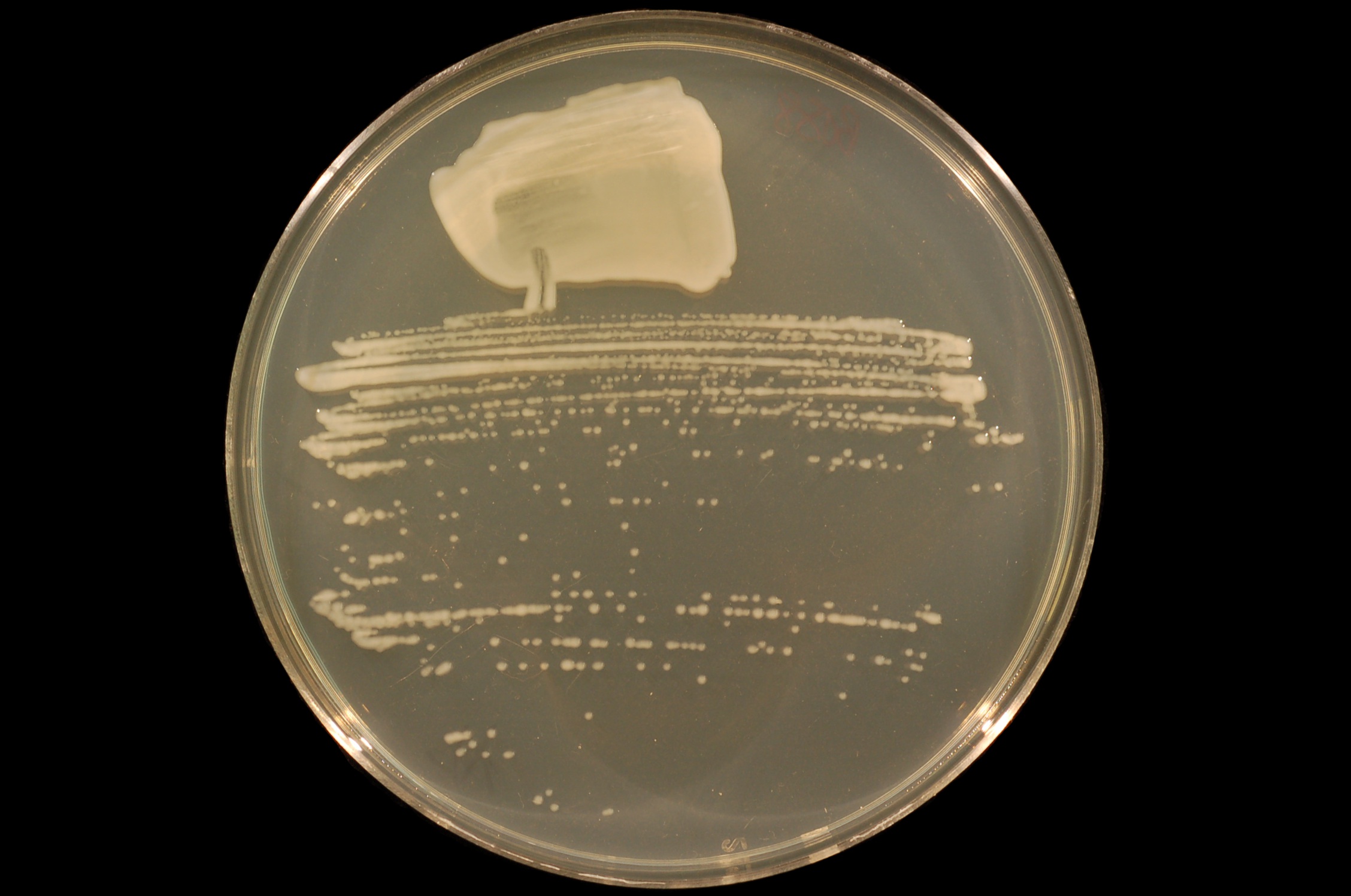
Image source: Wikipedia/Wikimedia
| Ecology, Host, and Life Cycle | |
|---|---|
| Oxygen requirements | Not Available |
| Optimal temperature | Not Available |
| Temperature range | Not Available |
| Habitat | Not Available |
| Biotic relationship | Not Available |
| Host(s) | Not Available |
| Cell arrangement | Not Available |
| Sporulation | Not Available |
| Energy source | Not Available |
| Pathogenicity | Not Available |
Gene Summary
Adenine Count
729492 bp
Thymine Count
731019 bp
Guanine Count
1151657 bp
Cytosine Count
1156351 bp
Genome Length
3768519 bp
Protein-coding Genes
3530 genes
Non-Coding Genes
90 genes
# of Chromosomes/Plasmids
3
Genes
| Name | Locus Tag | UniProt ID | Strand Orientation | Gene Start/End | Protein Molecular Weight |
|---|---|---|---|---|---|
| alpha/beta hydrolase | PYH37_001781 | P9WLC6 | Negative | 1872427 - 1873227 | 28879.9 |
| carotenoid oxygenase family protein | PYH37_001782 | Q99NF1 | Positive | 1873979 - 1875427 | 54072.2 |
| protein-l-isoaspartate(d-aspartate) o-methyltransferase | PYH37_001783 | Q12A85 | Negative | 1875782 - 1876453 | 24244.7 |
| adenylate/guanylate cyclase domain-containing protein | PYH37_001784 | Q9Z3Q0 | Negative | 1876698 - 1878458 | 65189.6 |
| hypothetical protein | PYH37_001785 | Not Available | Negative | 1878730 - 1879023 | 11147.8 |
| gntr family transcriptional regulator | PYH37_001786 | Q8GAL4 | Positive | 1879536 - 1880231 | 25657.8 |
| duf1989 domain-containing protein | PYH37_001787 | Q10082 | Positive | 1880265 - 1881125 | 31392.1 |
| Trna-sec(p) | Not Available | Not Available | Positive | 1881301 - 1881392 | Not Available |
| is110 family transposase | PYH37_001789 | Q46455 | Negative | 1881516 - 1883348 | 66076.4 |
| sel1 repeat family protein | PYH37_001790 | Not Available | Negative | 1883345 - 1884109 | 27237.7 |
Pathways
0 pathways
No pathways found
No metabolic pathways have been associated with this bacterium yet.
Health Effects
No health effects information available for this bacterium.