Kingdom
Pseudomonadati
Phylum
Pseudomonadota
Class
Alphaproteobacteria
Order
Hyphomicrobiales
Family
Rhizobiaceae
Genus
Sinorhizobium
Description
Taxonomy
| Kingdom | Pseudomonadati |
|---|---|
| Phylum | Pseudomonadota |
| Class | Alphaproteobacteria |
| Order | Hyphomicrobiales |
| Family | Rhizobiaceae |
| Genus | Sinorhizobium |
| Species | Sinorhizobium numidicum |
| Strain | No strain |
Profile
| Physiology | |
|---|---|
| Gram staining properties | Not Available |
| Shape | Not Available |
| Mobility | Not Available |
| Flagellar presence | Yes |
| Number of membranes | Not Available |
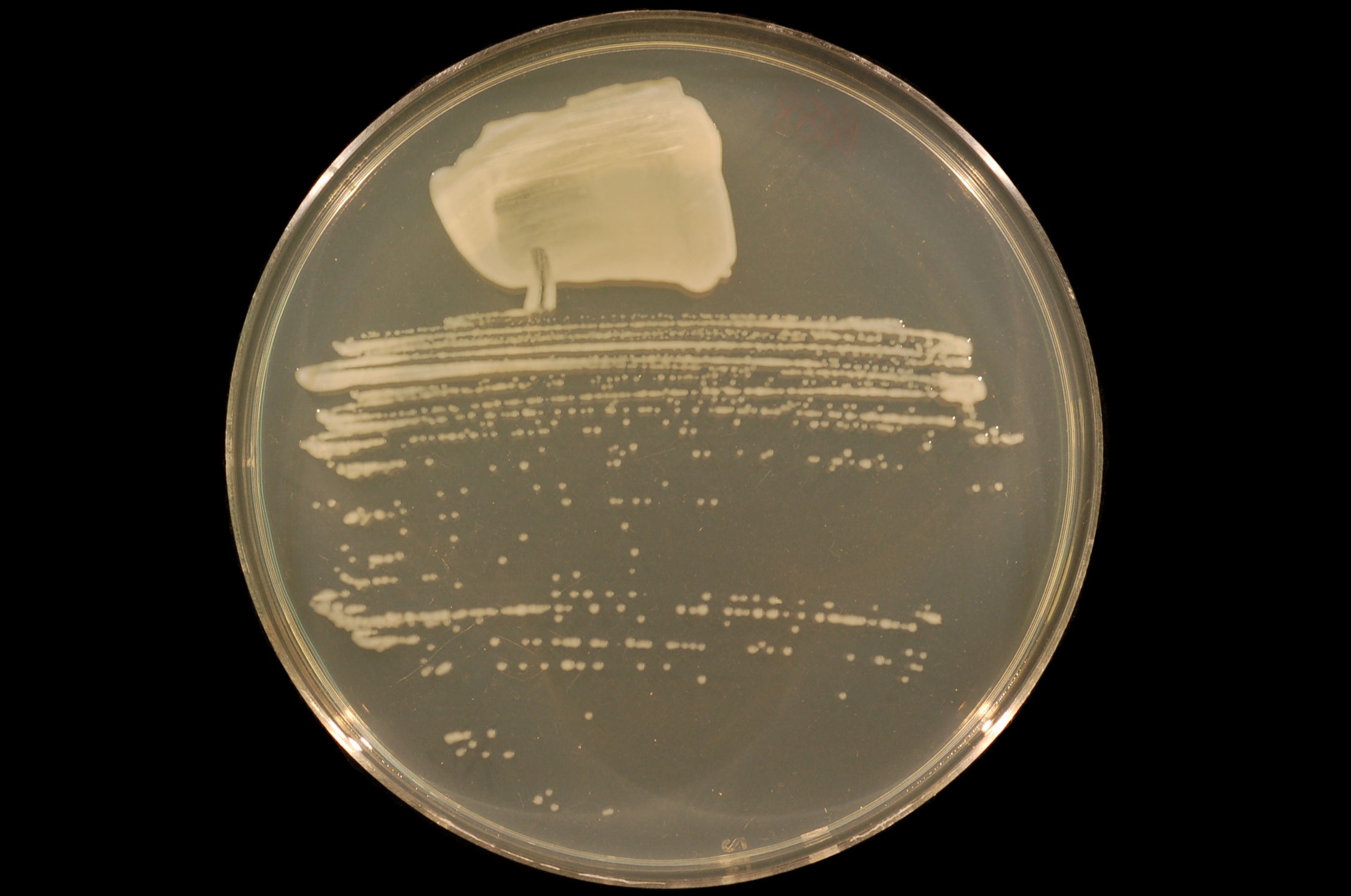
Image source: Wikipedia/Wikimedia
| Ecology, Host, and Life Cycle | |
|---|---|
| Oxygen requirements | Not Available |
| Optimal temperature | Not Available |
| Temperature range | Not Available |
| Habitat | Not Available |
| Biotic relationship | Not Available |
| Host(s) | Not Available |
| Cell arrangement | Not Available |
| Sporulation | Not Available |
| Energy source | Not Available |
| Pathogenicity | Not Available |
Gene Summary
Adenine Count
729492 bp
Thymine Count
731019 bp
Guanine Count
1151657 bp
Cytosine Count
1156351 bp
Genome Length
3768519 bp
Protein-coding Genes
3530 genes
Non-Coding Genes
90 genes
# of Chromosomes/Plasmids
3
Genes
| Name | Locus Tag | UniProt ID | Strand Orientation | Gene Start/End | Protein Molecular Weight |
|---|---|---|---|---|---|
| carbohydrate abc transporter permease | PYH37_001771 | O50501 | Negative | 1860843 - 1861943 | 40408.3 |
| sugar abc transporter permease | PYH37_001772 | O58968 | Negative | 1861945 - 1862898 | 35308.8 |
| extracellular solute-binding protein | PYH37_001773 | Q9V297 | Negative | 1862974 - 1864347 | 50008.4 |
| laci family dna-binding transcriptional regulator | PYH37_001774 | O87590 | Positive | 1864460 - 1865482 | 36265.9 |
| glycerophosphodiester phosphodiesterase family protein | PYH37_001775 | O07592 | Positive | 1865520 - 1866329 | 29390.2 |
| hypothetical protein | PYH37_001776 | P54926 | Positive | 1866386 - 1866664 | 10362.6 |
| sulfatase | PYH37_001777 | T2KM04 | Positive | 1866722 - 1868239 | 58447.0 |
| carbohydrate abc transporter permease | PYH37_001778 | Q9KEE9 | Negative | 1868453 - 1869850 | 51277.4 |
| sugar abc transporter permease | PYH37_001779 | P29823 | Negative | 1869853 - 1870944 | 40130.0 |
| extracellular solute-binding protein | PYH37_001780 | Q578M8 | Negative | 1871013 - 1872233 | 43647.7 |
Pathways
0 pathways
No pathways found
No metabolic pathways have been associated with this bacterium yet.
Health Effects
No health effects information available for this bacterium.