Kingdom
Pseudomonadati
Phylum
Pseudomonadota
Class
Alphaproteobacteria
Order
Hyphomicrobiales
Family
Rhizobiaceae
Genus
Sinorhizobium
Description
Taxonomy
| Kingdom | Pseudomonadati |
|---|---|
| Phylum | Pseudomonadota |
| Class | Alphaproteobacteria |
| Order | Hyphomicrobiales |
| Family | Rhizobiaceae |
| Genus | Sinorhizobium |
| Species | Sinorhizobium numidicum |
| Strain | No strain |
Profile
| Physiology | |
|---|---|
| Gram staining properties | Not Available |
| Shape | Not Available |
| Mobility | Not Available |
| Flagellar presence | Yes |
| Number of membranes | Not Available |
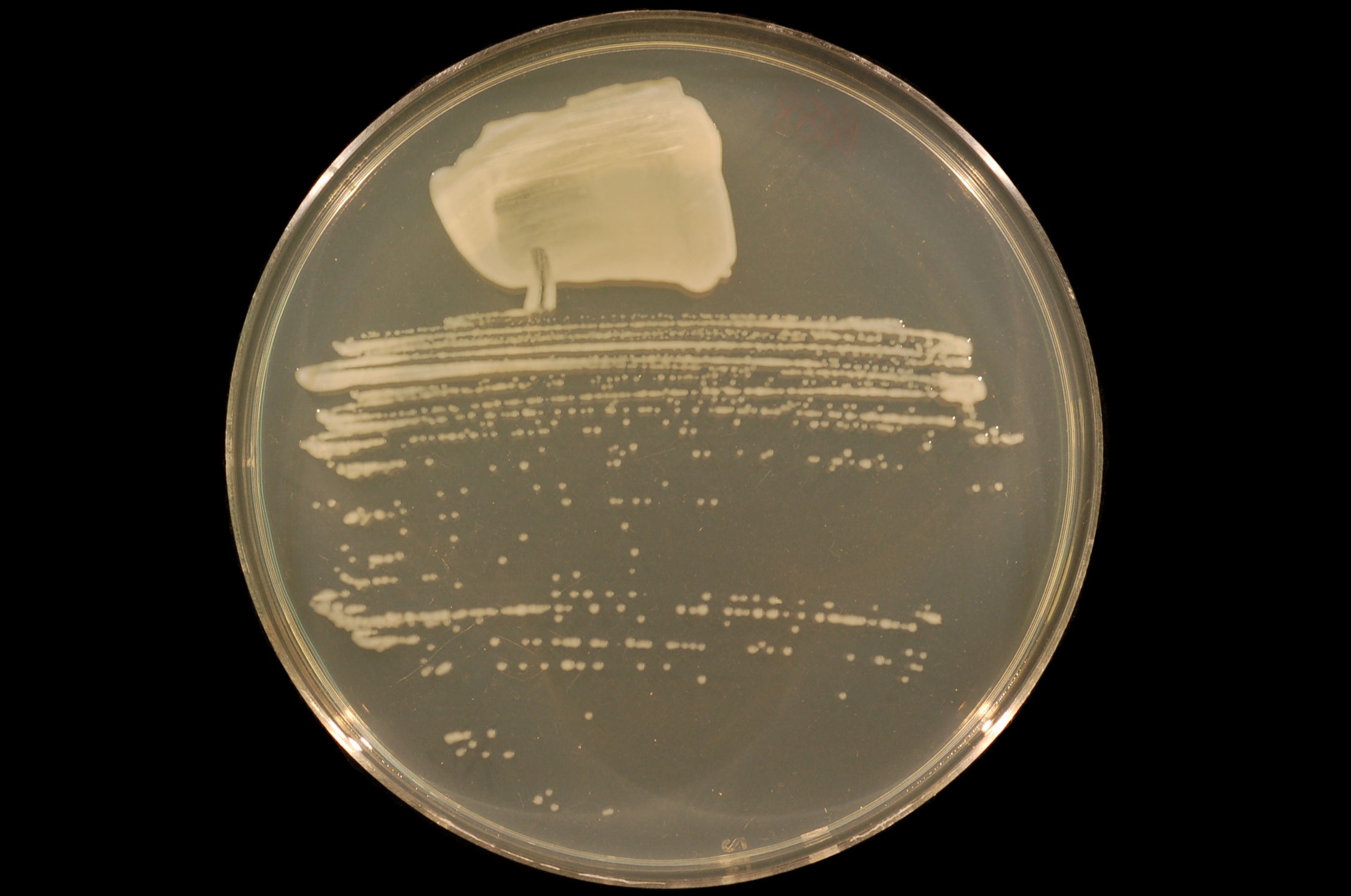
Image source: Wikipedia/Wikimedia
| Ecology, Host, and Life Cycle | |
|---|---|
| Oxygen requirements | Not Available |
| Optimal temperature | Not Available |
| Temperature range | Not Available |
| Habitat | Not Available |
| Biotic relationship | Not Available |
| Host(s) | Not Available |
| Cell arrangement | Not Available |
| Sporulation | Not Available |
| Energy source | Not Available |
| Pathogenicity | Not Available |
Gene Summary
Adenine Count
729492 bp
Thymine Count
731019 bp
Guanine Count
1151657 bp
Cytosine Count
1156351 bp
Genome Length
3768519 bp
Protein-coding Genes
3530 genes
Non-Coding Genes
90 genes
# of Chromosomes/Plasmids
3
Genes
| Name | Locus Tag | UniProt ID | Strand Orientation | Gene Start/End | Protein Molecular Weight |
|---|---|---|---|---|---|
| mfs transporter | PYH37_001631 | P37643 | Negative | 1704611 - 1705951 | 47907.1 |
| ubiquinol oxidase subunit ii | PYH37_001632 | Q9I427 | Positive | 1706232 - 1707395 | 42568.1 |
| cytochrome o ubiquinol oxidase subunit i | PYH37_001633 | P0ABJ0 | Positive | 1707440 - 1709443 | 74979.1 |
| cytochrome o ubiquinol oxidase subunit iii | PYH37_001634 | P0ABJ4 | Positive | 1709448 - 1710074 | 23250.6 |
| cytochrome o ubiquinol oxidase subunit iv | PYH37_001635 | P0ABJ7 | Positive | 1710071 - 1710472 | 14702.3 |
| surf1 family protein | PYH37_001636 | Q9QXU2 | Positive | 1710527 - 1711309 | 28312.0 |
| duf992 domain-containing protein | PYH37_001637 | Not Available | Negative | 1711370 - 1711900 | 17978.4 |
| duf922 domain-containing protein | PYH37_001638 | Not Available | Negative | 1712148 - 1712747 | 21960.5 |
| m10 family metallopeptidase c-terminal domain-containing protein | PYH37_001639 | Q03023 | Positive | 1713193 - 1714710 | 53208.0 |
| tetr family transcriptional regulator | PYH37_001640 | P32398 | Positive | 1715201 - 1715806 | 22936.4 |
Pathways
0 pathways
No pathways found
No metabolic pathways have been associated with this bacterium yet.
Health Effects
No health effects information available for this bacterium.