Kingdom
Pseudomonadati
Phylum
Pseudomonadota
Class
Alphaproteobacteria
Order
Hyphomicrobiales
Family
Rhizobiaceae
Genus
Sinorhizobium
Description
Taxonomy
| Kingdom | Pseudomonadati |
|---|---|
| Phylum | Pseudomonadota |
| Class | Alphaproteobacteria |
| Order | Hyphomicrobiales |
| Family | Rhizobiaceae |
| Genus | Sinorhizobium |
| Species | Sinorhizobium numidicum |
| Strain | No strain |
Profile
| Physiology | |
|---|---|
| Gram staining properties | Not Available |
| Shape | Not Available |
| Mobility | Not Available |
| Flagellar presence | Yes |
| Number of membranes | Not Available |
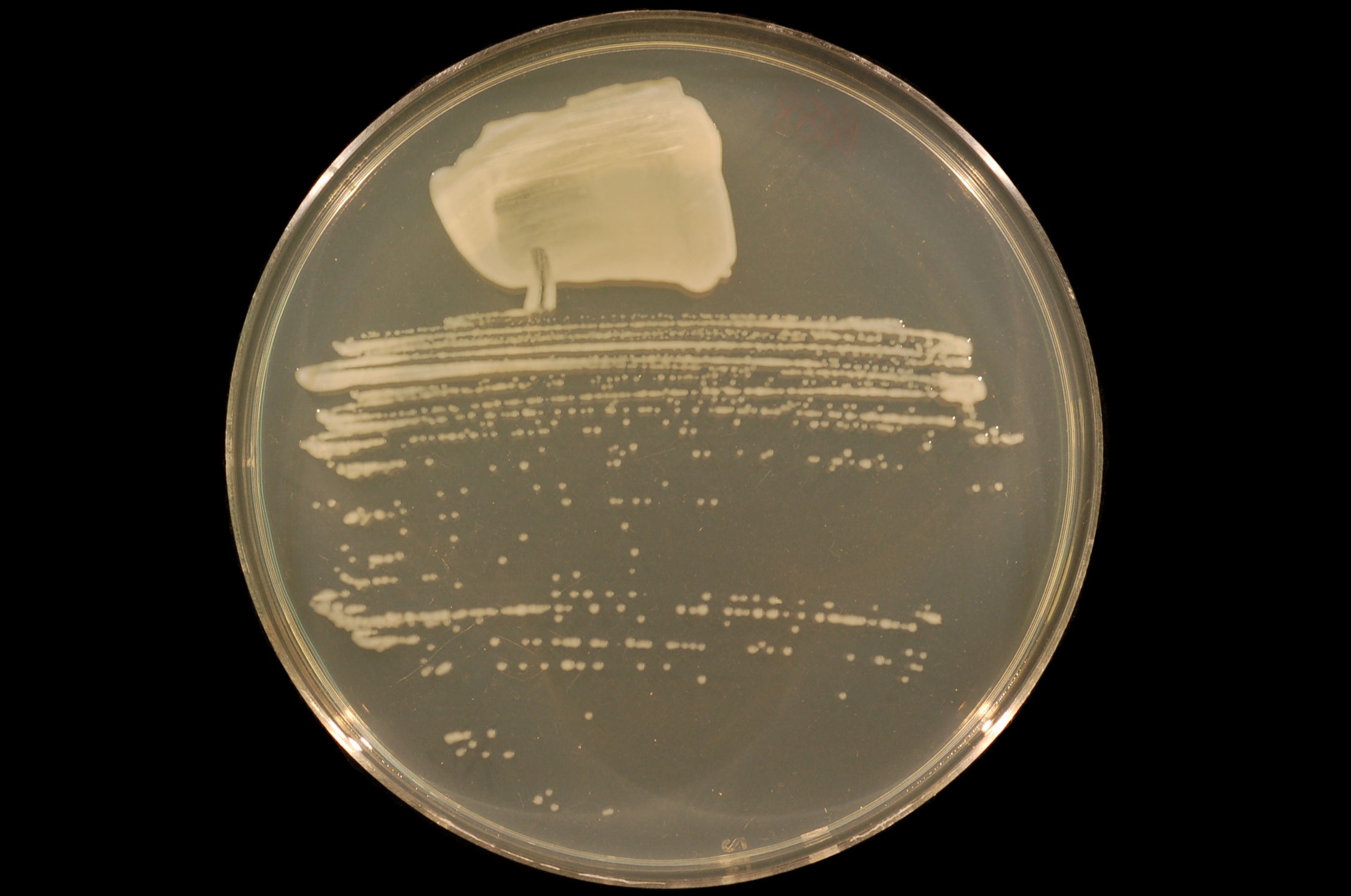
Image source: Wikipedia/Wikimedia
| Ecology, Host, and Life Cycle | |
|---|---|
| Oxygen requirements | Not Available |
| Optimal temperature | Not Available |
| Temperature range | Not Available |
| Habitat | Not Available |
| Biotic relationship | Not Available |
| Host(s) | Not Available |
| Cell arrangement | Not Available |
| Sporulation | Not Available |
| Energy source | Not Available |
| Pathogenicity | Not Available |
Gene Summary
Adenine Count
729492 bp
Thymine Count
731019 bp
Guanine Count
1151657 bp
Cytosine Count
1156351 bp
Genome Length
3768519 bp
Protein-coding Genes
3530 genes
Non-Coding Genes
90 genes
# of Chromosomes/Plasmids
3
Genes
| Name | Locus Tag | UniProt ID | Strand Orientation | Gene Start/End | Protein Molecular Weight |
|---|---|---|---|---|---|
| s-(hydroxymethyl)glutathione synthase | PYH37_001431 | Q92WX6 | Negative | 1504027 - 1504596 | 20193.1 |
| abc transporter permease | PYH37_001432 | P51321 | Negative | 1504821 - 1505612 | 29100.9 |
| atp-binding cassette domain-containing protein | PYH37_001433 | O52618 | Negative | 1505609 - 1506349 | 25896.4 |
| abc transporter atp-binding protein | PYH37_001434 | Q6FFZ1 | Negative | 1506346 - 1506984 | 23002.1 |
| abc transporter permease | PYH37_001435 | P40401 | Negative | 1506981 - 1507742 | 27906.3 |
| abc transporter substrate-binding protein | PYH37_001436 | Not Available | Negative | 1507735 - 1508706 | 34886.0 |
| hypothetical protein | PYH37_001437 | Not Available | Negative | 1508797 - 1509054 | 9235.11 |
| hypothetical protein | PYH37_001438 | Not Available | Negative | 1509082 - 1509525 | 15532.8 |
| yvtn family beta-propeller repeat protein | PYH37_001439 | Q8Z740 | Negative | 1509566 - 1510540 | 35056.6 |
| abc transporter substrate-binding protein | PYH37_001440 | Not Available | Negative | 1510542 - 1511729 | 42928.0 |
Pathways
0 pathways
No pathways found
No metabolic pathways have been associated with this bacterium yet.
Health Effects
No health effects information available for this bacterium.