Kingdom
Pseudomonadati
Phylum
Pseudomonadota
Class
Alphaproteobacteria
Order
Hyphomicrobiales
Family
Rhizobiaceae
Genus
Sinorhizobium
Description
Taxonomy
| Kingdom | Pseudomonadati |
|---|---|
| Phylum | Pseudomonadota |
| Class | Alphaproteobacteria |
| Order | Hyphomicrobiales |
| Family | Rhizobiaceae |
| Genus | Sinorhizobium |
| Species | Sinorhizobium numidicum |
| Strain | No strain |
Profile
| Physiology | |
|---|---|
| Gram staining properties | Not Available |
| Shape | Not Available |
| Mobility | Not Available |
| Flagellar presence | Yes |
| Number of membranes | Not Available |
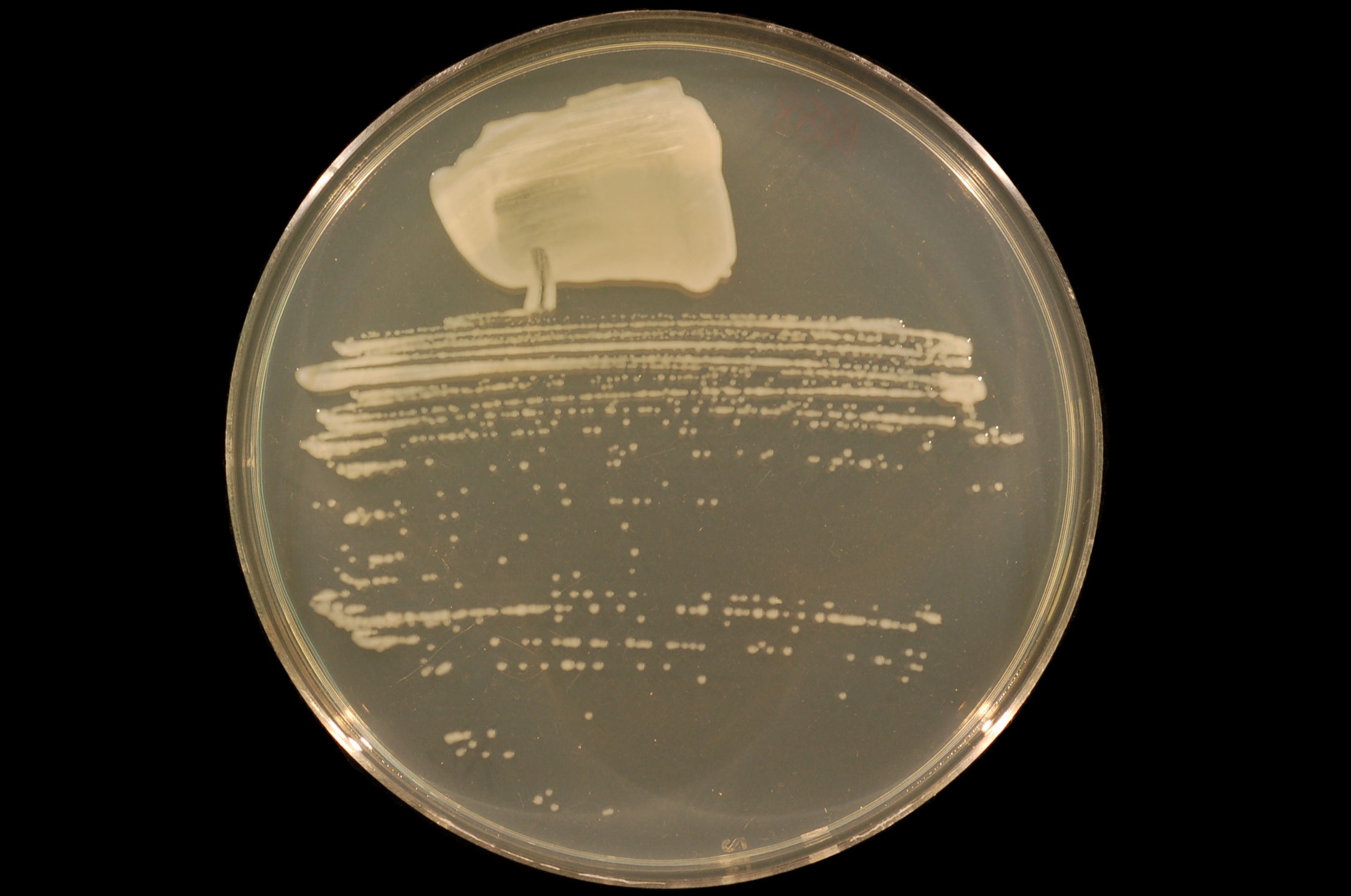
Image source: Wikipedia/Wikimedia
| Ecology, Host, and Life Cycle | |
|---|---|
| Oxygen requirements | Not Available |
| Optimal temperature | Not Available |
| Temperature range | Not Available |
| Habitat | Not Available |
| Biotic relationship | Not Available |
| Host(s) | Not Available |
| Cell arrangement | Not Available |
| Sporulation | Not Available |
| Energy source | Not Available |
| Pathogenicity | Not Available |
Gene Summary
Adenine Count
729492 bp
Thymine Count
731019 bp
Guanine Count
1151657 bp
Cytosine Count
1156351 bp
Genome Length
3768519 bp
Protein-coding Genes
3530 genes
Non-Coding Genes
90 genes
# of Chromosomes/Plasmids
3
Genes
| Name | Locus Tag | UniProt ID | Strand Orientation | Gene Start/End | Protein Molecular Weight |
|---|---|---|---|---|---|
| abc transporter substrate-binding protein | PYH37_001261 | A0QYB3 | Negative | 1325030 - 1326046 | 35955.0 |
| sensor histidine kinase | PYH37_001262 | Q1M799 | Positive | 1326327 - 1327559 | 44979.9 |
| response regulator transcription factor | PYH37_001263 | P96686 | Positive | 1327576 - 1328298 | 27337.4 |
| ai-2e family transporter | PYH37_001264 | O66948 | Positive | 1328401 - 1329480 | 38514.1 |
| redoxin domain-containing protein | PYH37_001265 | Not Available | Negative | 1329544 - 1330284 | 26696.9 |
| sugar phosphate isomerase/epimerase | PYH37_001266 | Not Available | Negative | 1330573 - 1331352 | 28724.6 |
| hydroxyacid dehydrogenase | PYH37_001267 | O27051 | Negative | 1331349 - 1332359 | 36479.4 |
| duf2264 domain-containing protein | PYH37_001268 | Not Available | Negative | 1332356 - 1334209 | 68374.7 |
| laci family transcriptional regulator | PYH37_001269 | P46456 | Negative | 1334206 - 1335228 | 36529.6 |
| abc transporter substrate-binding protein | PYH37_001270 | O31518 | Positive | 1335369 - 1336664 | 46741.5 |
Pathways
0 pathways
No pathways found
No metabolic pathways have been associated with this bacterium yet.
Health Effects
No health effects information available for this bacterium.