Kingdom
Pseudomonadati
Phylum
Pseudomonadota
Class
Alphaproteobacteria
Order
Hyphomicrobiales
Family
Rhizobiaceae
Genus
Sinorhizobium
Description
Taxonomy
| Kingdom | Pseudomonadati |
|---|---|
| Phylum | Pseudomonadota |
| Class | Alphaproteobacteria |
| Order | Hyphomicrobiales |
| Family | Rhizobiaceae |
| Genus | Sinorhizobium |
| Species | Sinorhizobium numidicum |
| Strain | No strain |
Profile
| Physiology | |
|---|---|
| Gram staining properties | Not Available |
| Shape | Not Available |
| Mobility | Not Available |
| Flagellar presence | Yes |
| Number of membranes | Not Available |
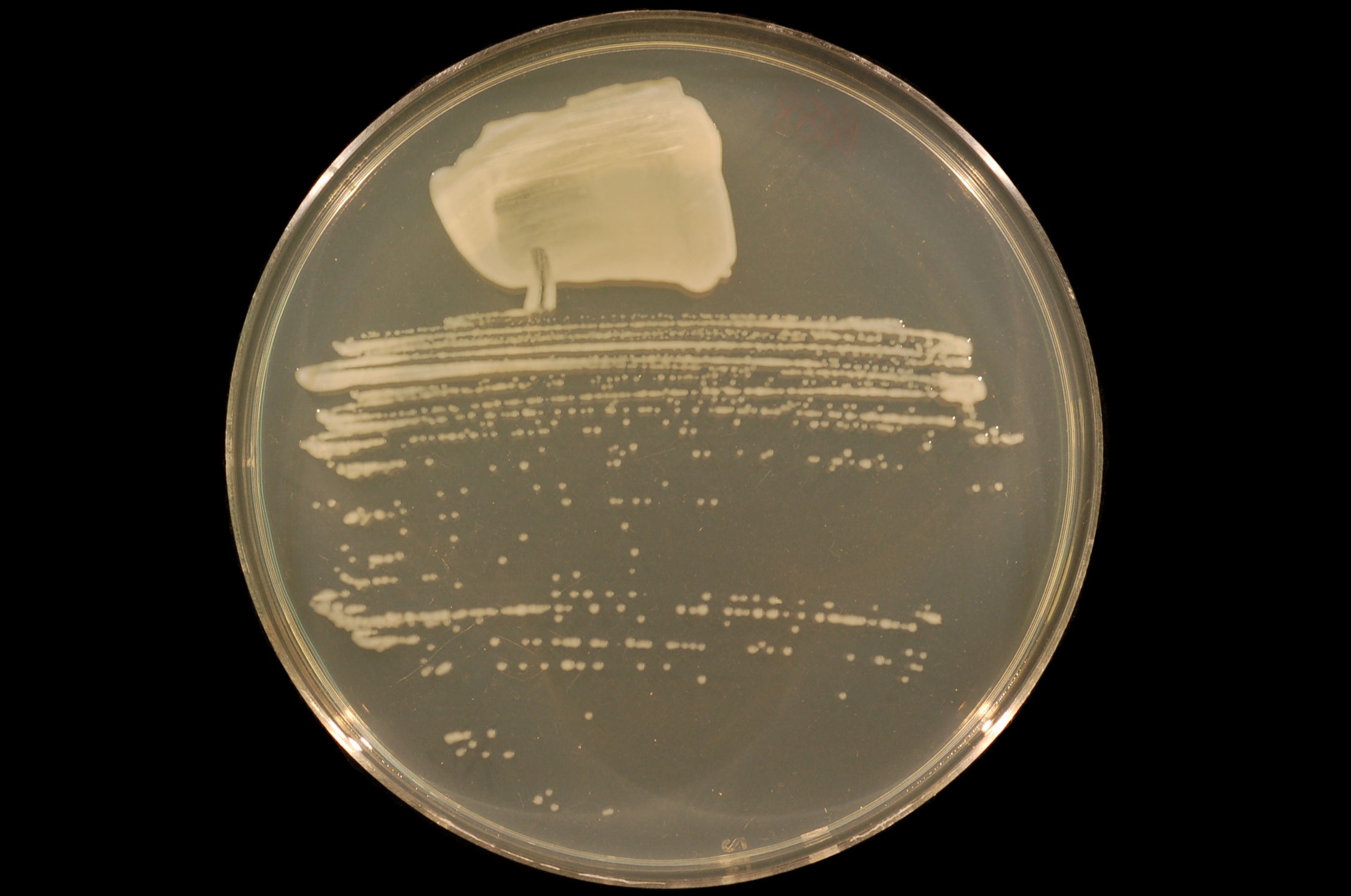
Image source: Wikipedia/Wikimedia
| Ecology, Host, and Life Cycle | |
|---|---|
| Oxygen requirements | Not Available |
| Optimal temperature | Not Available |
| Temperature range | Not Available |
| Habitat | Not Available |
| Biotic relationship | Not Available |
| Host(s) | Not Available |
| Cell arrangement | Not Available |
| Sporulation | Not Available |
| Energy source | Not Available |
| Pathogenicity | Not Available |
Gene Summary
Adenine Count
729492 bp
Thymine Count
731019 bp
Guanine Count
1151657 bp
Cytosine Count
1156351 bp
Genome Length
3768519 bp
Protein-coding Genes
3530 genes
Non-Coding Genes
90 genes
# of Chromosomes/Plasmids
3
Genes
| Name | Locus Tag | UniProt ID | Strand Orientation | Gene Start/End | Protein Molecular Weight |
|---|---|---|---|---|---|
| atp-dependent dna ligase | PYH37_001171 | A0R5T2 | Negative | 1227509 - 1228594 | 40245.1 |
| ybhb/ybcl family raf kinase inhibitor-like protein | PYH37_001172 | O67293 | Negative | 1228893 - 1229354 | 16821.9 |
| acetate/propionate family kinase | PYH37_001173 | P58382 | Positive | 1229884 - 1231110 | 44154.3 |
| phosphoketolase family protein | PYH37_001174 | Q89S87 | Positive | 1231192 - 1233576 | 89735.9 |
| glycogen synthase glga | PYH37_001175 | P58394 | Positive | 1233790 - 1235244 | 52648.0 |
| dmt family transporter | PYH37_001176 | Q9ZE70 | Positive | 1235632 - 1236543 | 32714.2 |
| fumarylacetoacetate hydrolase family protein | PYH37_001177 | A9ALD1 | Negative | 1236703 - 1237542 | 29594.5 |
| abc transporter substrate-binding protein | PYH37_001178 | G3XD47 | Positive | 1237858 - 1238637 | 28502.3 |
| sdr family oxidoreductase | PYH37_001179 | P50199 | Positive | 1238926 - 1239675 | 25786.9 |
| 3-hydroxyisobutyrate dehydrogenase | PYH37_001180 | P63936 | Negative | 1239681 - 1240577 | 30282.4 |
Pathways
0 pathways
No pathways found
No metabolic pathways have been associated with this bacterium yet.
Health Effects
No health effects information available for this bacterium.