Kingdom
Pseudomonadati
Phylum
Pseudomonadota
Class
Alphaproteobacteria
Order
Hyphomicrobiales
Family
Rhizobiaceae
Genus
Sinorhizobium
Description
Taxonomy
| Kingdom | Pseudomonadati |
|---|---|
| Phylum | Pseudomonadota |
| Class | Alphaproteobacteria |
| Order | Hyphomicrobiales |
| Family | Rhizobiaceae |
| Genus | Sinorhizobium |
| Species | Sinorhizobium numidicum |
| Strain | No strain |
Profile
| Physiology | |
|---|---|
| Gram staining properties | Not Available |
| Shape | Not Available |
| Mobility | Not Available |
| Flagellar presence | Yes |
| Number of membranes | Not Available |
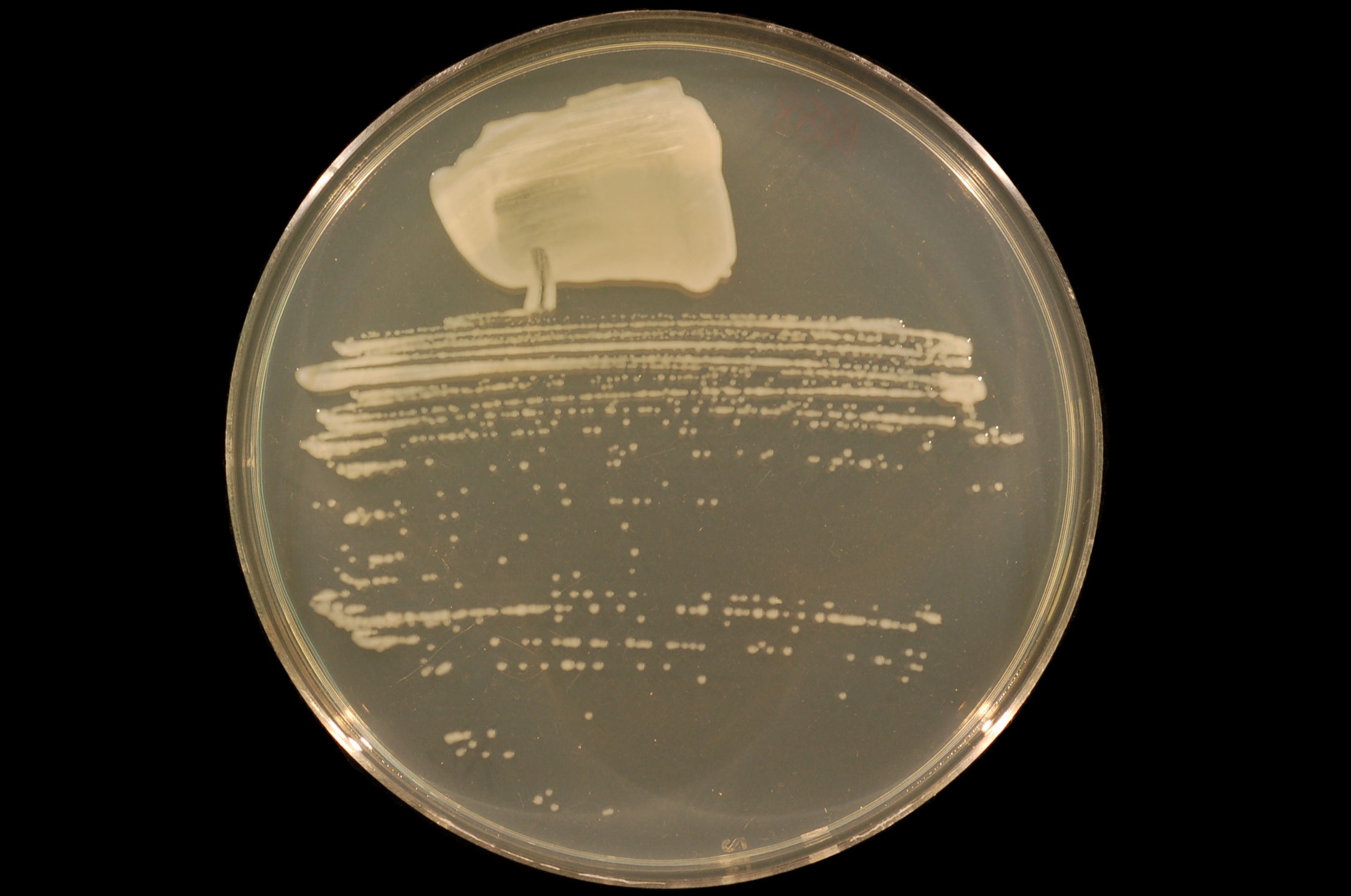
Image source: Wikipedia/Wikimedia
| Ecology, Host, and Life Cycle | |
|---|---|
| Oxygen requirements | Not Available |
| Optimal temperature | Not Available |
| Temperature range | Not Available |
| Habitat | Not Available |
| Biotic relationship | Not Available |
| Host(s) | Not Available |
| Cell arrangement | Not Available |
| Sporulation | Not Available |
| Energy source | Not Available |
| Pathogenicity | Not Available |
Gene Summary
Adenine Count
729492 bp
Thymine Count
731019 bp
Guanine Count
1151657 bp
Cytosine Count
1156351 bp
Genome Length
3768519 bp
Protein-coding Genes
3530 genes
Non-Coding Genes
90 genes
# of Chromosomes/Plasmids
3
Genes
| Name | Locus Tag | UniProt ID | Strand Orientation | Gene Start/End | Protein Molecular Weight |
|---|---|---|---|---|---|
| fmnh2-dependent alkanesulfonate monooxygenase | PYH37_001141 | Q8UAE8 | Negative | 1202314 - 1203489 | 42310.9 |
| aliphatic sulfonate abc transporter substrate-binding protein | PYH37_001142 | P75853 | Negative | 1203515 - 1204480 | 34129.0 |
| dihydrofolate reductase family protein | PYH37_001143 | P37508 | Negative | 1204919 - 1205491 | 20856.9 |
| putative urea abc transporter substrate-binding protein | PYH37_001144 | Q8YDR6 | Positive | 1206068 - 1207159 | 38541.9 |
| abc transporter permease subunit | PYH37_001145 | Q47539 | Positive | 1207242 - 1208063 | 29419.3 |
| abc transporter atp-binding protein | PYH37_001146 | P73265 | Positive | 1208063 - 1208869 | 29372.8 |
| agmatinase family protein | PYH37_001147 | P73270 | Positive | 1208862 - 1210067 | 44015.7 |
| hypothetical protein | PYH37_001148 | Not Available | Positive | 1210078 - 1210602 | 19580.7 |
| hupe/urej family protein | PYH37_001149 | P27650 | Positive | 1210630 - 1211217 | 19570.3 |
| hypothetical protein | PYH37_001150 | Not Available | Negative | 1211586 - 1212248 | 24465.1 |
Pathways
0 pathways
No pathways found
No metabolic pathways have been associated with this bacterium yet.
Health Effects
No health effects information available for this bacterium.