Kingdom
Pseudomonadati
Phylum
Pseudomonadota
Class
Alphaproteobacteria
Order
Hyphomicrobiales
Family
Rhizobiaceae
Genus
Sinorhizobium
Description
Taxonomy
| Kingdom | Pseudomonadati |
|---|---|
| Phylum | Pseudomonadota |
| Class | Alphaproteobacteria |
| Order | Hyphomicrobiales |
| Family | Rhizobiaceae |
| Genus | Sinorhizobium |
| Species | Sinorhizobium numidicum |
| Strain | No strain |
Profile
| Physiology | |
|---|---|
| Gram staining properties | Not Available |
| Shape | Not Available |
| Mobility | Not Available |
| Flagellar presence | Yes |
| Number of membranes | Not Available |
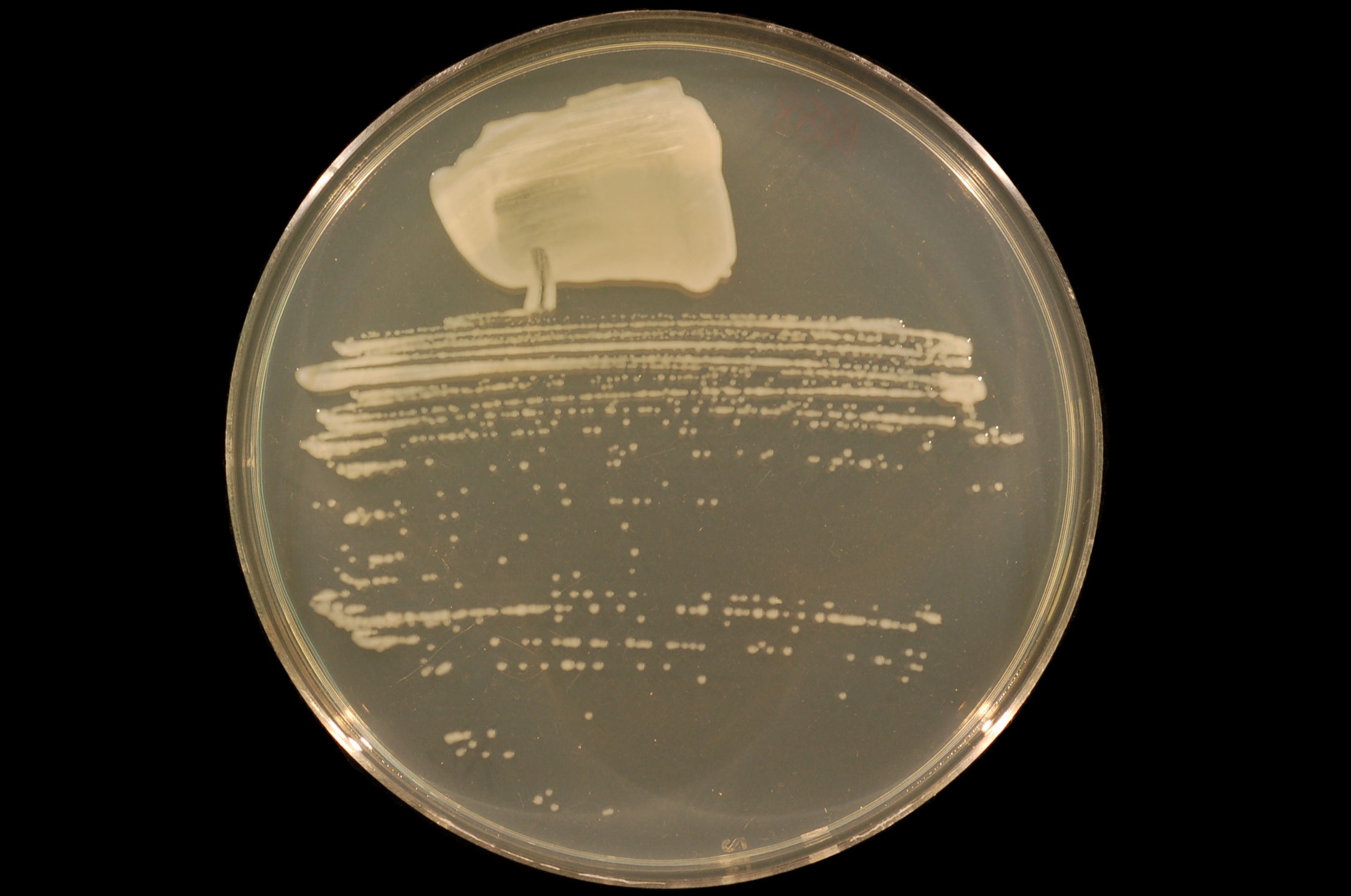
Image source: Wikipedia/Wikimedia
| Ecology, Host, and Life Cycle | |
|---|---|
| Oxygen requirements | Not Available |
| Optimal temperature | Not Available |
| Temperature range | Not Available |
| Habitat | Not Available |
| Biotic relationship | Not Available |
| Host(s) | Not Available |
| Cell arrangement | Not Available |
| Sporulation | Not Available |
| Energy source | Not Available |
| Pathogenicity | Not Available |
Gene Summary
Adenine Count
729492 bp
Thymine Count
731019 bp
Guanine Count
1151657 bp
Cytosine Count
1156351 bp
Genome Length
3768519 bp
Protein-coding Genes
3530 genes
Non-Coding Genes
90 genes
# of Chromosomes/Plasmids
3
Genes
| Name | Locus Tag | UniProt ID | Strand Orientation | Gene Start/End | Protein Molecular Weight |
|---|---|---|---|---|---|
| calcium-binding protein | PYH37_001061 | Not Available | Positive | 1116792 - 1117982 | 40150.7 |
| nad(p)-dependent oxidoreductase | PYH37_001062 | Q8VZC0 | Negative | 1118098 - 1119015 | 32559.0 |
| atp-grasp domain-containing protein | PYH37_001063 | Q8TWX0 | Negative | 1119048 - 1120040 | 36319.9 |
| php domain-containing protein | PYH37_001064 | Q44408 | Negative | 1120037 - 1120777 | 27645.0 |
| 3'(2'),5'-bisphosphate nucleotidase cysq | PYH37_001065 | Q8Z153 | Negative | 1120867 - 1121676 | 28832.2 |
| sulfate adenylyltransferase subunit cysn | PYH37_001066 | O07309 | Negative | 1121673 - 1123574 | 69856.3 |
| sulfate adenylyltransferase subunit cysd | PYH37_001067 | P13441 | Negative | 1123574 - 1124473 | 34835.1 |
| rok family transcriptional regulator | PYH37_001068 | P55455 | Negative | 1124706 - 1125932 | 43112.8 |
| extracellular solute-binding protein | PYH37_001069 | Q7LYW7 | Positive | 1126160 - 1127398 | 44495.7 |
| sugar abc transporter permease | PYH37_001070 | O51924 | Positive | 1127709 - 1128590 | 31561.3 |
Pathways
0 pathways
No pathways found
No metabolic pathways have been associated with this bacterium yet.
Health Effects
No health effects information available for this bacterium.