Kingdom
Pseudomonadati
Phylum
Pseudomonadota
Class
Alphaproteobacteria
Order
Hyphomicrobiales
Family
Rhizobiaceae
Genus
Sinorhizobium
Description
Taxonomy
| Kingdom | Pseudomonadati |
|---|---|
| Phylum | Pseudomonadota |
| Class | Alphaproteobacteria |
| Order | Hyphomicrobiales |
| Family | Rhizobiaceae |
| Genus | Sinorhizobium |
| Species | Sinorhizobium numidicum |
| Strain | No strain |
Profile
| Physiology | |
|---|---|
| Gram staining properties | Not Available |
| Shape | Not Available |
| Mobility | Not Available |
| Flagellar presence | Yes |
| Number of membranes | Not Available |
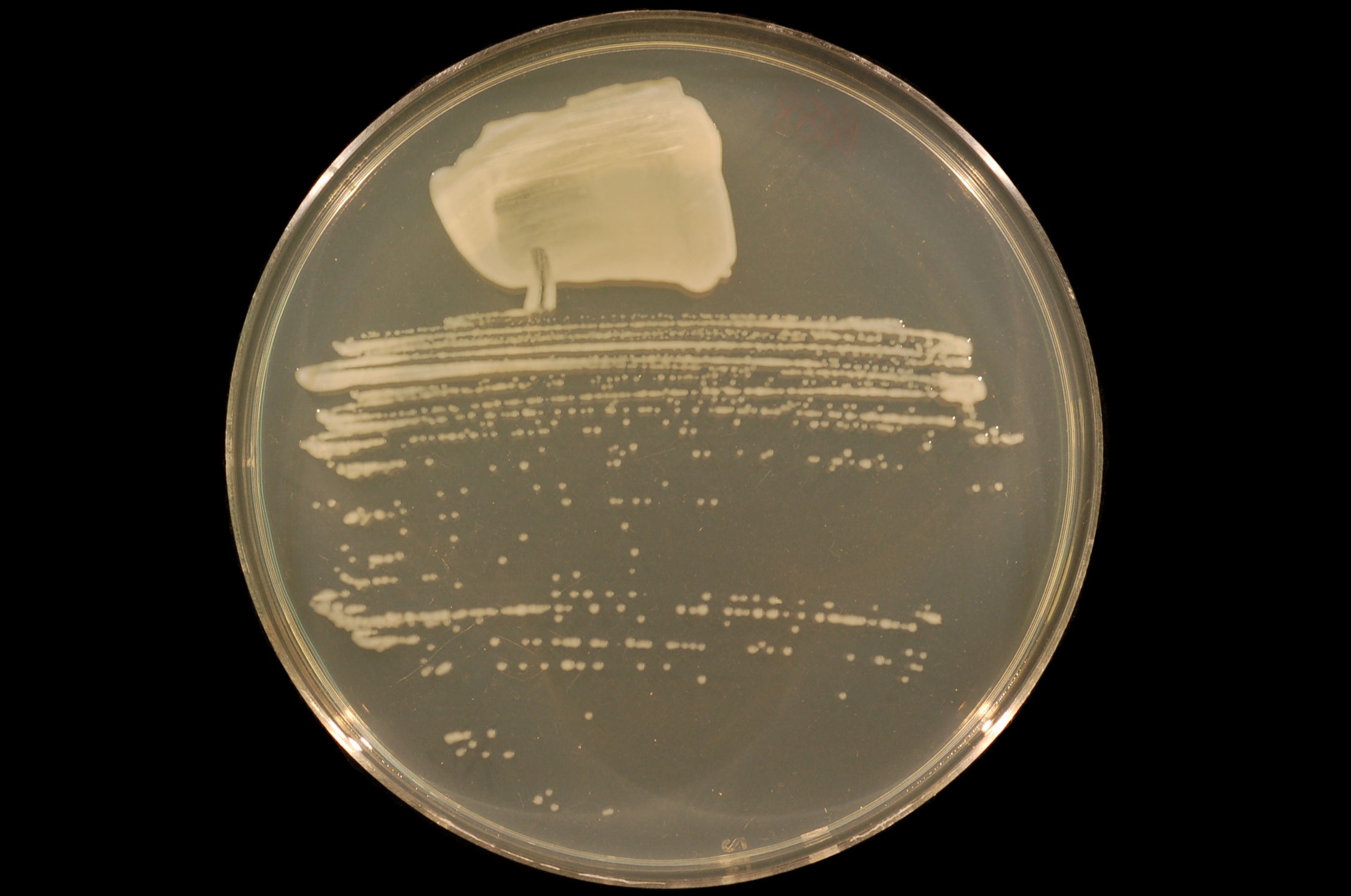
Image source: Wikipedia/Wikimedia
| Ecology, Host, and Life Cycle | |
|---|---|
| Oxygen requirements | Not Available |
| Optimal temperature | Not Available |
| Temperature range | Not Available |
| Habitat | Not Available |
| Biotic relationship | Not Available |
| Host(s) | Not Available |
| Cell arrangement | Not Available |
| Sporulation | Not Available |
| Energy source | Not Available |
| Pathogenicity | Not Available |
Gene Summary
Adenine Count
729492 bp
Thymine Count
731019 bp
Guanine Count
1151657 bp
Cytosine Count
1156351 bp
Genome Length
3768519 bp
Protein-coding Genes
3530 genes
Non-Coding Genes
90 genes
# of Chromosomes/Plasmids
3
Genes
| Name | Locus Tag | UniProt ID | Strand Orientation | Gene Start/End | Protein Molecular Weight |
|---|---|---|---|---|---|
| glycosyl transferase | PYH37_001011 | B9K6P7 | Negative | 1052812 - 1053993 | 42464.6 |
| glycosyltransferase family 4 protein | PYH37_001012 | P26388 | Negative | 1053975 - 1055222 | 46509.2 |
| glycosyltransferase family protein | PYH37_001013 | Q58652 | Negative | 1055227 - 1056441 | 45801.6 |
| abc transporter permease | PYH37_001014 | P42063 | Negative | 1056519 - 1057694 | 43402.8 |
| abc transporter permease | PYH37_001015 | P42062 | Negative | 1057691 - 1058689 | 37298.4 |
| abc transporter substrate-binding protein | PYH37_001016 | Q9X4Y1 | Negative | 1058691 - 1060592 | 71488.7 |
| abc transporter atp-binding protein | PYH37_001017 | Q8ZQM4 | Negative | 1060589 - 1062481 | 68504.1 |
| polysaccharide lyase | PYH37_001018 | Not Available | Negative | 1062707 - 1063675 | 35365.6 |
| adenylate/guanylate cyclase domain-containing protein | PYH37_001019 | P9WQ30 | Negative | 1063684 - 1065033 | 49483.3 |
| nucleotide sugar dehydrogenase | PYH37_001020 | G3XD94 | Positive | 1065439 - 1066776 | 48457.3 |
Pathways
0 pathways
No pathways found
No metabolic pathways have been associated with this bacterium yet.
Health Effects
No health effects information available for this bacterium.