Kingdom
Pseudomonadati
Phylum
Pseudomonadota
Class
Alphaproteobacteria
Order
Hyphomicrobiales
Family
Rhizobiaceae
Genus
Sinorhizobium
Description
Taxonomy
| Kingdom | Pseudomonadati |
|---|---|
| Phylum | Pseudomonadota |
| Class | Alphaproteobacteria |
| Order | Hyphomicrobiales |
| Family | Rhizobiaceae |
| Genus | Sinorhizobium |
| Species | Sinorhizobium numidicum |
| Strain | No strain |
Profile
| Physiology | |
|---|---|
| Gram staining properties | Not Available |
| Shape | Not Available |
| Mobility | Not Available |
| Flagellar presence | Yes |
| Number of membranes | Not Available |
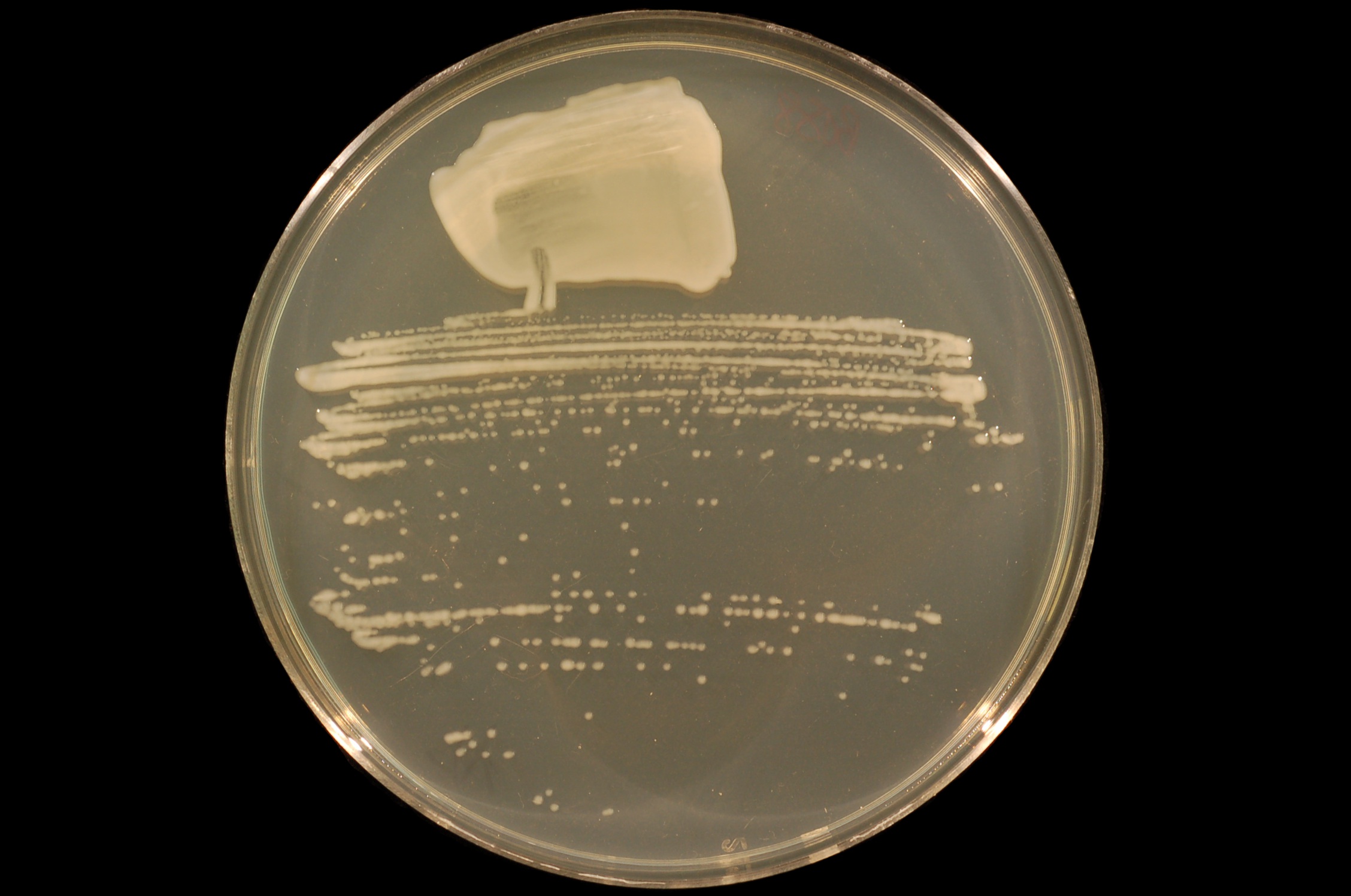
Image source: Wikipedia/Wikimedia
| Ecology, Host, and Life Cycle | |
|---|---|
| Oxygen requirements | Not Available |
| Optimal temperature | Not Available |
| Temperature range | Not Available |
| Habitat | Not Available |
| Biotic relationship | Not Available |
| Host(s) | Not Available |
| Cell arrangement | Not Available |
| Sporulation | Not Available |
| Energy source | Not Available |
| Pathogenicity | Not Available |
Gene Summary
Adenine Count
729492 bp
Thymine Count
731019 bp
Guanine Count
1151657 bp
Cytosine Count
1156351 bp
Genome Length
3768519 bp
Protein-coding Genes
3530 genes
Non-Coding Genes
90 genes
# of Chromosomes/Plasmids
3
Genes
| Name | Locus Tag | UniProt ID | Strand Orientation | Gene Start/End | Protein Molecular Weight |
|---|---|---|---|---|---|
| aldo/keto reductase | PYH37_002483 | P77735 | Negative | 278819 - 279769 | 34671.0 |
| gfo/idh/moca family oxidoreductase | PYH37_002484 | P49305 | Positive | 280020 - 281006 | 36593.3 |
| hypothetical protein | PYH37_002485 | Not Available | Negative | 281064 - 281474 | 14169.0 |
| helix-turn-helix transcriptional regulator | PYH37_002486 | P67705 | Positive | 281600 - 282391 | 28995.9 |
| hypothetical protein | PYH37_002487 | Not Available | Positive | 282417 - 282668 | 9120.45 |
| exodeoxyribonuclease vii large subunit | PYH37_002488 | C3MCQ9 | Positive | 282755 - 284341 | 57580.1 |
| nad(p)h-dependent oxidoreductase | PYH37_002489 | P43340 | Positive | 284408 - 284998 | 22465.2 |
| marr family transcriptional regulator | PYH37_002490 | P42195 | Negative | 285011 - 285496 | 17931.6 |
| eama family transporter | PYH37_002491 | P42194 | Positive | 285603 - 286481 | 30682.6 |
| aminopeptidase | PYH37_002492 | P42778 | Negative | 286547 - 287803 | 45279.5 |
Pathways
0 pathways
No pathways found
No metabolic pathways have been associated with this bacterium yet.
Health Effects
No health effects information available for this bacterium.