Kingdom
Pseudomonadati
Phylum
Pseudomonadota
Class
Alphaproteobacteria
Order
Hyphomicrobiales
Family
Rhizobiaceae
Genus
Sinorhizobium
Description
Taxonomy
| Kingdom | Pseudomonadati |
|---|---|
| Phylum | Pseudomonadota |
| Class | Alphaproteobacteria |
| Order | Hyphomicrobiales |
| Family | Rhizobiaceae |
| Genus | Sinorhizobium |
| Species | Sinorhizobium numidicum |
| Strain | No strain |
Profile
| Physiology | |
|---|---|
| Gram staining properties | Not Available |
| Shape | Not Available |
| Mobility | Not Available |
| Flagellar presence | Yes |
| Number of membranes | Not Available |
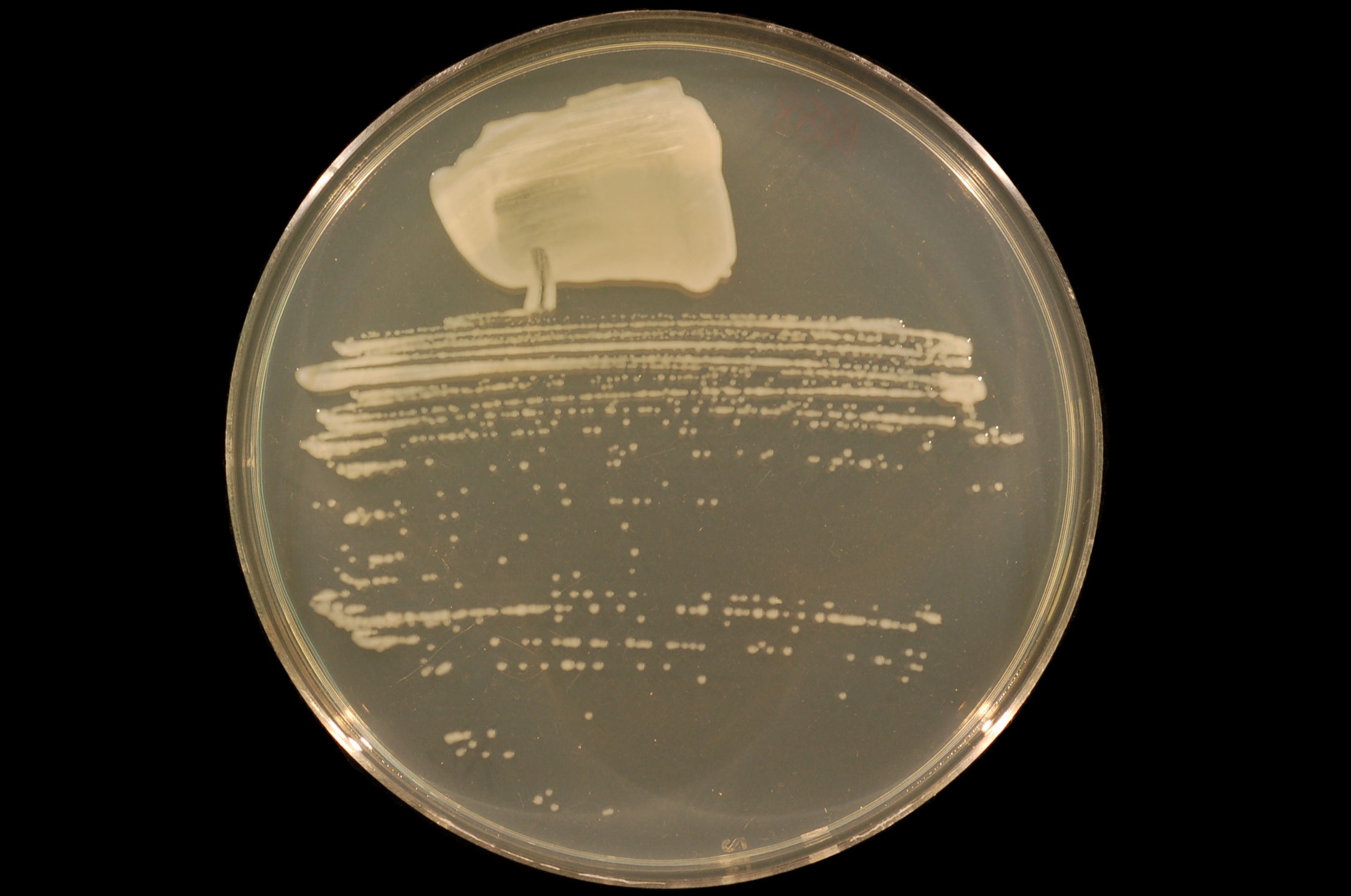
Image source: Wikipedia/Wikimedia
| Ecology, Host, and Life Cycle | |
|---|---|
| Oxygen requirements | Not Available |
| Optimal temperature | Not Available |
| Temperature range | Not Available |
| Habitat | Not Available |
| Biotic relationship | Not Available |
| Host(s) | Not Available |
| Cell arrangement | Not Available |
| Sporulation | Not Available |
| Energy source | Not Available |
| Pathogenicity | Not Available |
Gene Summary
Adenine Count
729492 bp
Thymine Count
731019 bp
Guanine Count
1151657 bp
Cytosine Count
1156351 bp
Genome Length
3768519 bp
Protein-coding Genes
3530 genes
Non-Coding Genes
90 genes
# of Chromosomes/Plasmids
3
Genes
| Name | Locus Tag | UniProt ID | Strand Orientation | Gene Start/End | Protein Molecular Weight |
|---|---|---|---|---|---|
| phosphoglycerate dehydrogenase | PYH37_005282 | P73821 | Negative | 3141662 - 3143257 | 56278.4 |
| phosphoserine transaminase | PYH37_005283 | Q8TNI1 | Negative | 3143340 - 3144518 | 42255.7 |
| porin family protein | PYH37_005284 | Q8FVC3 | Negative | 3144682 - 3145521 | 29251.8 |
| porin family protein | PYH37_005285 | Q579D9 | Negative | 3146082 - 3146909 | 29601.5 |
| phosphoglucosamine mutase | PYH37_005286 | Q92M99 | Negative | 3147196 - 3148548 | 48323.4 |
| atp-dependent zinc metalloprotease ftsh | PYH37_005287 | A1URA3 | Negative | 3148910 - 3150847 | 70565.7 |
| trna lysidine(34) synthetase tils | PYH37_005288 | Q92JY3 | Negative | 3150948 - 3152294 | 48510.4 |
| tol-pal system protein ybgf | PYH37_005289 | Not Available | Negative | 3152306 - 3153322 | 35706.4 |
| peptidoglycan-associated lipoprotein pal | PYH37_005290 | Q926C3 | Negative | 3153517 - 3154047 | 18826.3 |
| tol-pal system beta propeller repeat protein tolb | PYH37_005291 | Q926C2 | Negative | 3154232 - 3155542 | 48241.3 |
Pathways
0 pathways
No pathways found
No metabolic pathways have been associated with this bacterium yet.
Health Effects
No health effects information available for this bacterium.