Kingdom
Pseudomonadati
Phylum
Pseudomonadota
Class
Alphaproteobacteria
Order
Hyphomicrobiales
Family
Rhizobiaceae
Genus
Sinorhizobium
Description
Taxonomy
| Kingdom | Pseudomonadati |
|---|---|
| Phylum | Pseudomonadota |
| Class | Alphaproteobacteria |
| Order | Hyphomicrobiales |
| Family | Rhizobiaceae |
| Genus | Sinorhizobium |
| Species | Sinorhizobium numidicum |
| Strain | No strain |
Profile
| Physiology | |
|---|---|
| Gram staining properties | Not Available |
| Shape | Not Available |
| Mobility | Not Available |
| Flagellar presence | Yes |
| Number of membranes | Not Available |
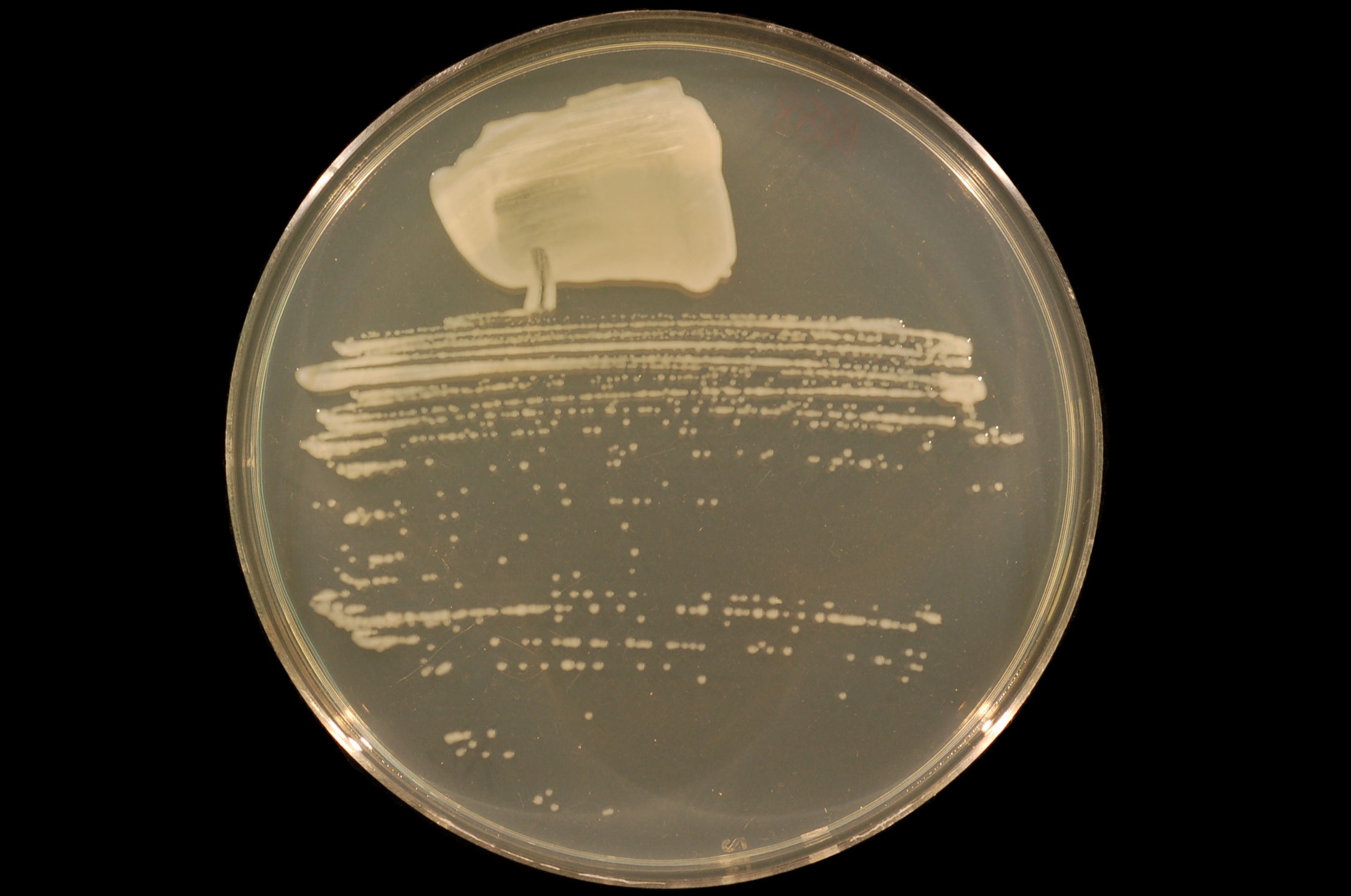
Image source: Wikipedia/Wikimedia
| Ecology, Host, and Life Cycle | |
|---|---|
| Oxygen requirements | Not Available |
| Optimal temperature | Not Available |
| Temperature range | Not Available |
| Habitat | Not Available |
| Biotic relationship | Not Available |
| Host(s) | Not Available |
| Cell arrangement | Not Available |
| Sporulation | Not Available |
| Energy source | Not Available |
| Pathogenicity | Not Available |
Gene Summary
Adenine Count
729492 bp
Thymine Count
731019 bp
Guanine Count
1151657 bp
Cytosine Count
1156351 bp
Genome Length
3768519 bp
Protein-coding Genes
3530 genes
Non-Coding Genes
90 genes
# of Chromosomes/Plasmids
3
Genes
| Name | Locus Tag | UniProt ID | Strand Orientation | Gene Start/End | Protein Molecular Weight |
|---|---|---|---|---|---|
| kef family k(+) transporter | PYH37_005202 | P39830 | Negative | 3076057 - 3077787 | 61041.7 |
| hypothetical protein | PYH37_005203 | Not Available | Negative | 3077791 - 3078057 | 9155.45 |
| glutathione s-transferase family protein | PYH37_005204 | Not Available | Positive | 3078044 - 3078766 | 25684.5 |
| hypothetical protein | PYH37_005205 | Not Available | Positive | 3078836 - 3080635 | 66473.4 |
| duf3606 domain-containing protein | PYH37_005206 | Not Available | Positive | 3080821 - 3081003 | 6972.33 |
| hnh endonuclease | PYH37_005207 | Not Available | Negative | 3081373 - 3081684 | 11985.4 |
| Trna-arg | Not Available | Not Available | Positive | 3081802 - 3081878 | Not Available |
| hypothetical protein | PYH37_005209 | Not Available | Negative | 3081887 - 3082210 | 12052.4 |
| helix-turn-helix transcriptional regulator | PYH37_005210 | Not Available | Positive | 3082339 - 3082605 | 9315.08 |
| hypothetical protein | PYH37_005211 | Not Available | Positive | 3082793 - 3083056 | 10233.6 |
Pathways
0 pathways
No pathways found
No metabolic pathways have been associated with this bacterium yet.
Health Effects
No health effects information available for this bacterium.