Kingdom
Pseudomonadati
Phylum
Pseudomonadota
Class
Alphaproteobacteria
Order
Hyphomicrobiales
Family
Rhizobiaceae
Genus
Sinorhizobium
Description
Taxonomy
| Kingdom | Pseudomonadati |
|---|---|
| Phylum | Pseudomonadota |
| Class | Alphaproteobacteria |
| Order | Hyphomicrobiales |
| Family | Rhizobiaceae |
| Genus | Sinorhizobium |
| Species | Sinorhizobium numidicum |
| Strain | No strain |
Profile
| Physiology | |
|---|---|
| Gram staining properties | Not Available |
| Shape | Not Available |
| Mobility | Not Available |
| Flagellar presence | Yes |
| Number of membranes | Not Available |
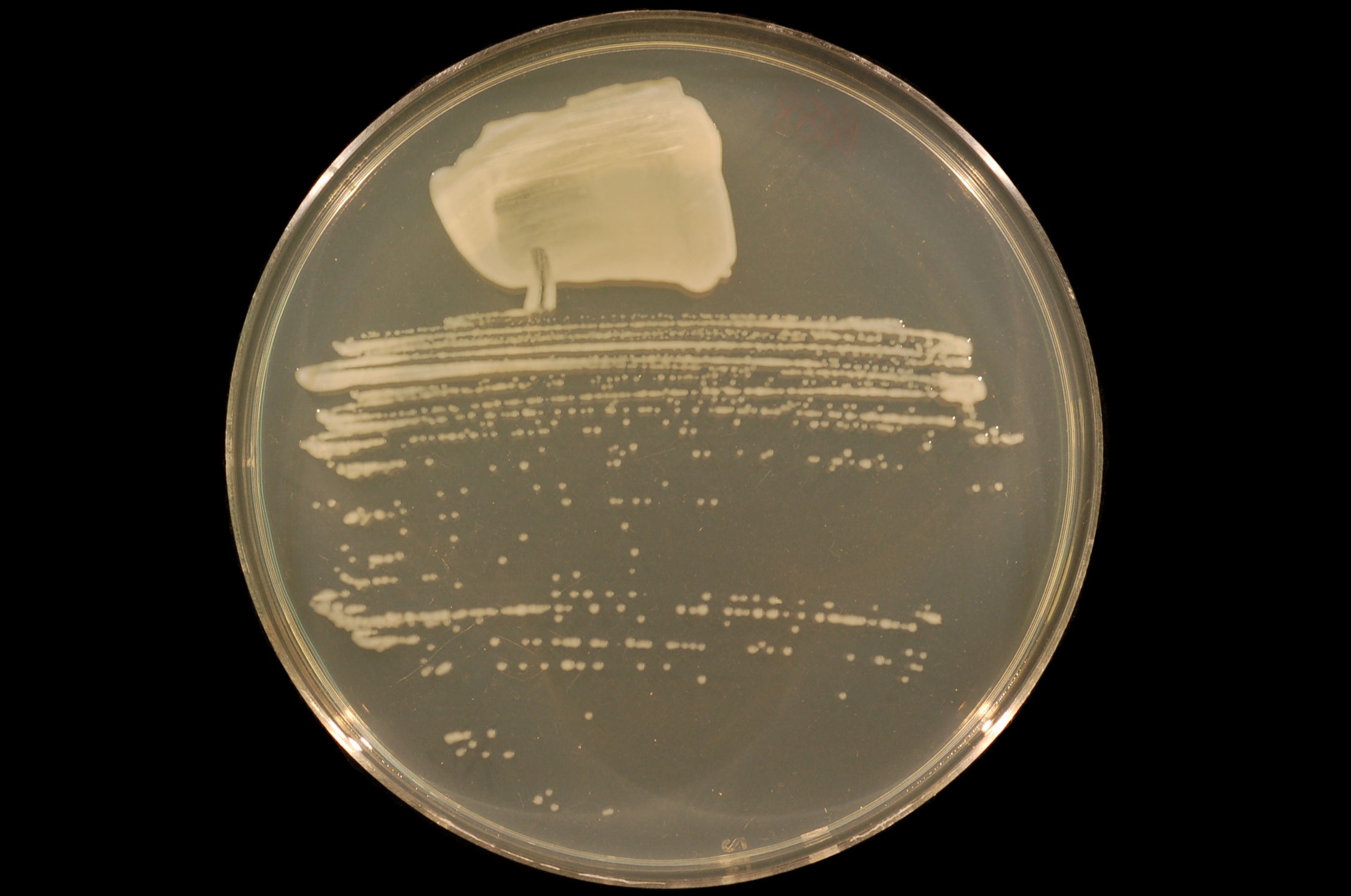
Image source: Wikipedia/Wikimedia
| Ecology, Host, and Life Cycle | |
|---|---|
| Oxygen requirements | Not Available |
| Optimal temperature | Not Available |
| Temperature range | Not Available |
| Habitat | Not Available |
| Biotic relationship | Not Available |
| Host(s) | Not Available |
| Cell arrangement | Not Available |
| Sporulation | Not Available |
| Energy source | Not Available |
| Pathogenicity | Not Available |
Gene Summary
Adenine Count
729492 bp
Thymine Count
731019 bp
Guanine Count
1151657 bp
Cytosine Count
1156351 bp
Genome Length
3768519 bp
Protein-coding Genes
3530 genes
Non-Coding Genes
90 genes
# of Chromosomes/Plasmids
3
Genes
| Name | Locus Tag | UniProt ID | Strand Orientation | Gene Start/End | Protein Molecular Weight |
|---|---|---|---|---|---|
| acetyl-coa carboxylase carboxyltransferase subunit alpha | PYH37_005182 | C3MHX3 | Positive | 3054658 - 3055611 | 34700.5 |
| murein l,d-transpeptidase | PYH37_005183 | P0AAA0 | Positive | 3055866 - 3057290 | 52361.2 |
| sulfurtransferase tusa family protein | PYH37_005184 | Q7MZZ5 | Positive | 3057290 - 3057541 | 9381.47 |
| gtp-binding protein | PYH37_005185 | P24203 | Negative | 3057538 - 3058680 | 41312.3 |
| d-alanyl-d-alanine carboxypeptidase | PYH37_005186 | P08506 | Negative | 3058693 - 3059772 | 38484.4 |
| m20 family metallopeptidase | PYH37_005187 | P45493 | Positive | 3059962 - 3061125 | 41084.2 |
| lrp/asnc ligand binding domain-containing protein | PYH37_005188 | P37424 | Positive | 3061147 - 3061611 | 17338.2 |
| nad(p)-dependent alcohol dehydrogenase | PYH37_005189 | P0CH36 | Negative | 3061715 - 3062764 | 37564.0 |
| arac family transcriptional regulator | PYH37_005190 | Q46855 | Positive | 3062998 - 3063939 | 34647.9 |
| aminotransferase | PYH37_005191 | Q7SY54 | Negative | 3063997 - 3066927 | 106812.0 |
Pathways
0 pathways
No pathways found
No metabolic pathways have been associated with this bacterium yet.
Health Effects
No health effects information available for this bacterium.