Kingdom
Pseudomonadati
Phylum
Pseudomonadota
Class
Alphaproteobacteria
Order
Hyphomicrobiales
Family
Rhizobiaceae
Genus
Sinorhizobium
Description
Taxonomy
| Kingdom | Pseudomonadati |
|---|---|
| Phylum | Pseudomonadota |
| Class | Alphaproteobacteria |
| Order | Hyphomicrobiales |
| Family | Rhizobiaceae |
| Genus | Sinorhizobium |
| Species | Sinorhizobium numidicum |
| Strain | No strain |
Profile
| Physiology | |
|---|---|
| Gram staining properties | Not Available |
| Shape | Not Available |
| Mobility | Not Available |
| Flagellar presence | Yes |
| Number of membranes | Not Available |
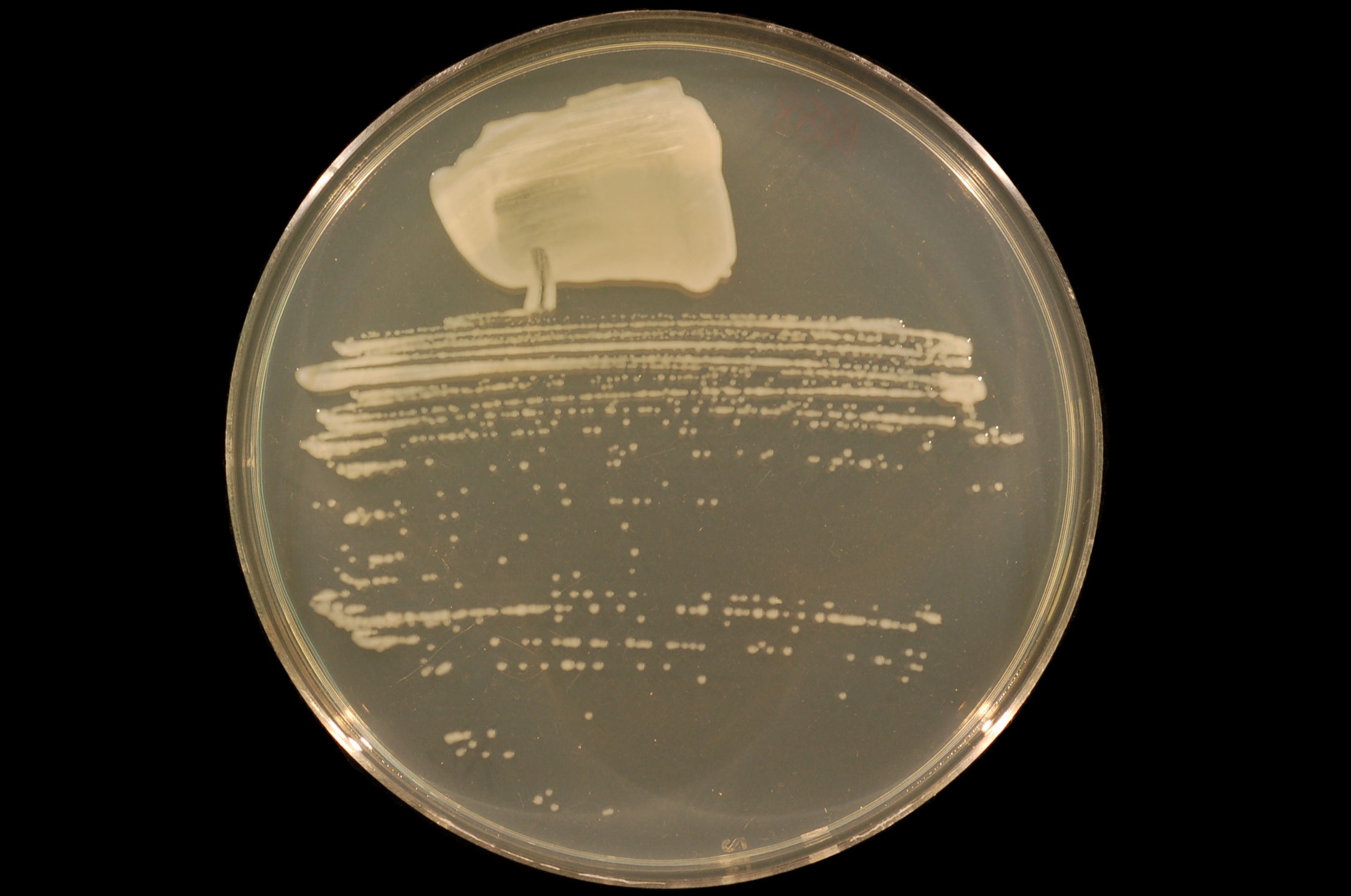
Image source: Wikipedia/Wikimedia
| Ecology, Host, and Life Cycle | |
|---|---|
| Oxygen requirements | Not Available |
| Optimal temperature | Not Available |
| Temperature range | Not Available |
| Habitat | Not Available |
| Biotic relationship | Not Available |
| Host(s) | Not Available |
| Cell arrangement | Not Available |
| Sporulation | Not Available |
| Energy source | Not Available |
| Pathogenicity | Not Available |
Gene Summary
Adenine Count
729492 bp
Thymine Count
731019 bp
Guanine Count
1151657 bp
Cytosine Count
1156351 bp
Genome Length
3768519 bp
Protein-coding Genes
3530 genes
Non-Coding Genes
90 genes
# of Chromosomes/Plasmids
3
Genes
| Name | Locus Tag | UniProt ID | Strand Orientation | Gene Start/End | Protein Molecular Weight |
|---|---|---|---|---|---|
| urease subunit gamma | PYH37_005042 | C3MGX6 | Negative | 2914527 - 2914829 | 11142.7 |
| urease accessory protein ured | PYH37_005043 | P42888 | Negative | 2914857 - 2915690 | 29705.0 |
| glutathione s-transferase family protein | PYH37_005044 | B6YWH0 | Negative | 2915851 - 2916821 | 34504.5 |
| alpha/beta hydrolase | PYH37_005045 | O31158 | Negative | 2917059 - 2917892 | 30431.8 |
| hypothetical protein | PYH37_005046 | Not Available | Positive | 2917891 - 2918049 | 5056.25 |
| marr family transcriptional regulator | PYH37_005047 | O34777 | Positive | 2918267 - 2918719 | 16819.6 |
| branched-chain amino acid abc transporter substrate-binding protein | PYH37_005048 | Q8YJ23 | Negative | 2918842 - 2919960 | 38984.1 |
| hypothetical protein | PYH37_005049 | Not Available | Negative | 2920075 - 2920419 | 13376.4 |
| abc transporter atp-binding protein | PYH37_005050 | P21630 | Negative | 2920445 - 2921170 | 26419.5 |
| abc transporter atp-binding protein | PYH37_005051 | P21629 | Negative | 2921167 - 2922054 | 32606.5 |
Pathways
0 pathways
No pathways found
No metabolic pathways have been associated with this bacterium yet.
Health Effects
No health effects information available for this bacterium.