Kingdom
Pseudomonadati
Phylum
Pseudomonadota
Class
Alphaproteobacteria
Order
Hyphomicrobiales
Family
Rhizobiaceae
Genus
Sinorhizobium
Description
Taxonomy
| Kingdom | Pseudomonadati |
|---|---|
| Phylum | Pseudomonadota |
| Class | Alphaproteobacteria |
| Order | Hyphomicrobiales |
| Family | Rhizobiaceae |
| Genus | Sinorhizobium |
| Species | Sinorhizobium numidicum |
| Strain | No strain |
Profile
| Physiology | |
|---|---|
| Gram staining properties | Not Available |
| Shape | Not Available |
| Mobility | Not Available |
| Flagellar presence | Yes |
| Number of membranes | Not Available |
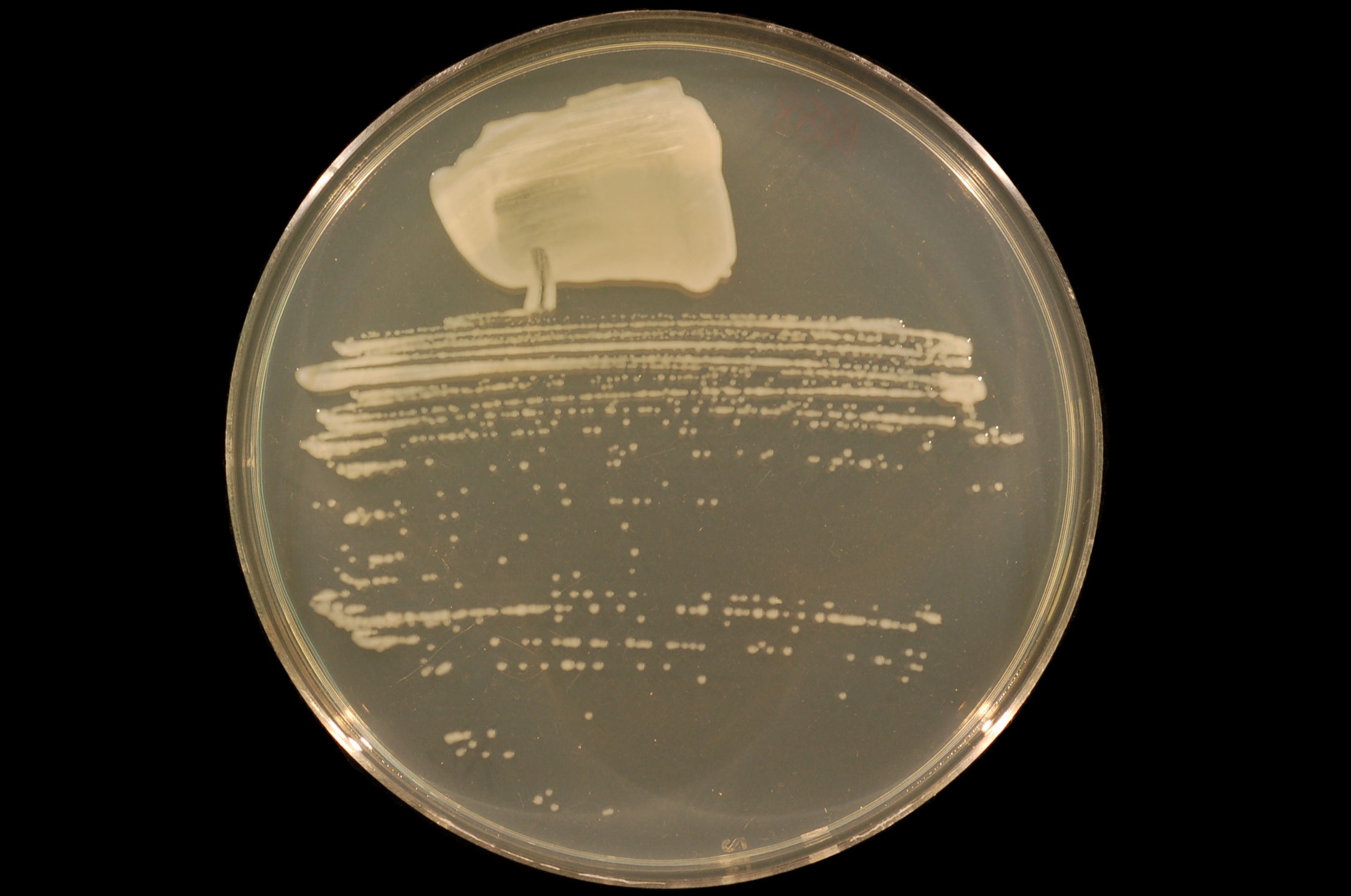
Image source: Wikipedia/Wikimedia
| Ecology, Host, and Life Cycle | |
|---|---|
| Oxygen requirements | Not Available |
| Optimal temperature | Not Available |
| Temperature range | Not Available |
| Habitat | Not Available |
| Biotic relationship | Not Available |
| Host(s) | Not Available |
| Cell arrangement | Not Available |
| Sporulation | Not Available |
| Energy source | Not Available |
| Pathogenicity | Not Available |
Gene Summary
Adenine Count
729492 bp
Thymine Count
731019 bp
Guanine Count
1151657 bp
Cytosine Count
1156351 bp
Genome Length
3768519 bp
Protein-coding Genes
3530 genes
Non-Coding Genes
90 genes
# of Chromosomes/Plasmids
3
Genes
| Name | Locus Tag | UniProt ID | Strand Orientation | Gene Start/End | Protein Molecular Weight |
|---|---|---|---|---|---|
| efflux rnd transporter permease subunit | PYH37_005032 | P25197 | Positive | 2905089 - 2908394 | 119671.0 |
| urease accessory protein ureg | PYH37_005033 | Q92MY5 | Negative | 2908609 - 2909220 | 21926.5 |
| urease accessory protein uref | PYH37_005034 | A6UC30 | Negative | 2909249 - 2909920 | 23840.3 |
| urease accessory protein uree | PYH37_005035 | C3MGI0 | Negative | 2909913 - 2910398 | 18023.7 |
| antibiotic biosynthesis monooxygenase | PYH37_005036 | P73602 | Negative | 2910400 - 2910696 | 10897.2 |
| peroxiredoxin | PYH37_005037 | O69777 | Negative | 2910833 - 2911372 | 19934.5 |
| urease subunit alpha | PYH37_005038 | C3MGI5 | Negative | 2911547 - 2913259 | 60536.6 |
| urease operon accessory protein | PYH37_005039 | P42880 | Negative | 2913264 - 2913911 | 23335.5 |
| urease subunit beta | PYH37_005040 | C3MGX4 | Negative | 2913947 - 2914252 | 10945.1 |
| duf1272 domain-containing protein | PYH37_005041 | P42878 | Negative | 2914263 - 2914517 | 9168.13 |
Pathways
0 pathways
No pathways found
No metabolic pathways have been associated with this bacterium yet.
Health Effects
No health effects information available for this bacterium.