Kingdom
Pseudomonadati
Phylum
Pseudomonadota
Class
Alphaproteobacteria
Order
Hyphomicrobiales
Family
Rhizobiaceae
Genus
Sinorhizobium
Description
Taxonomy
| Kingdom | Pseudomonadati |
|---|---|
| Phylum | Pseudomonadota |
| Class | Alphaproteobacteria |
| Order | Hyphomicrobiales |
| Family | Rhizobiaceae |
| Genus | Sinorhizobium |
| Species | Sinorhizobium numidicum |
| Strain | No strain |
Profile
| Physiology | |
|---|---|
| Gram staining properties | Not Available |
| Shape | Not Available |
| Mobility | Not Available |
| Flagellar presence | Yes |
| Number of membranes | Not Available |
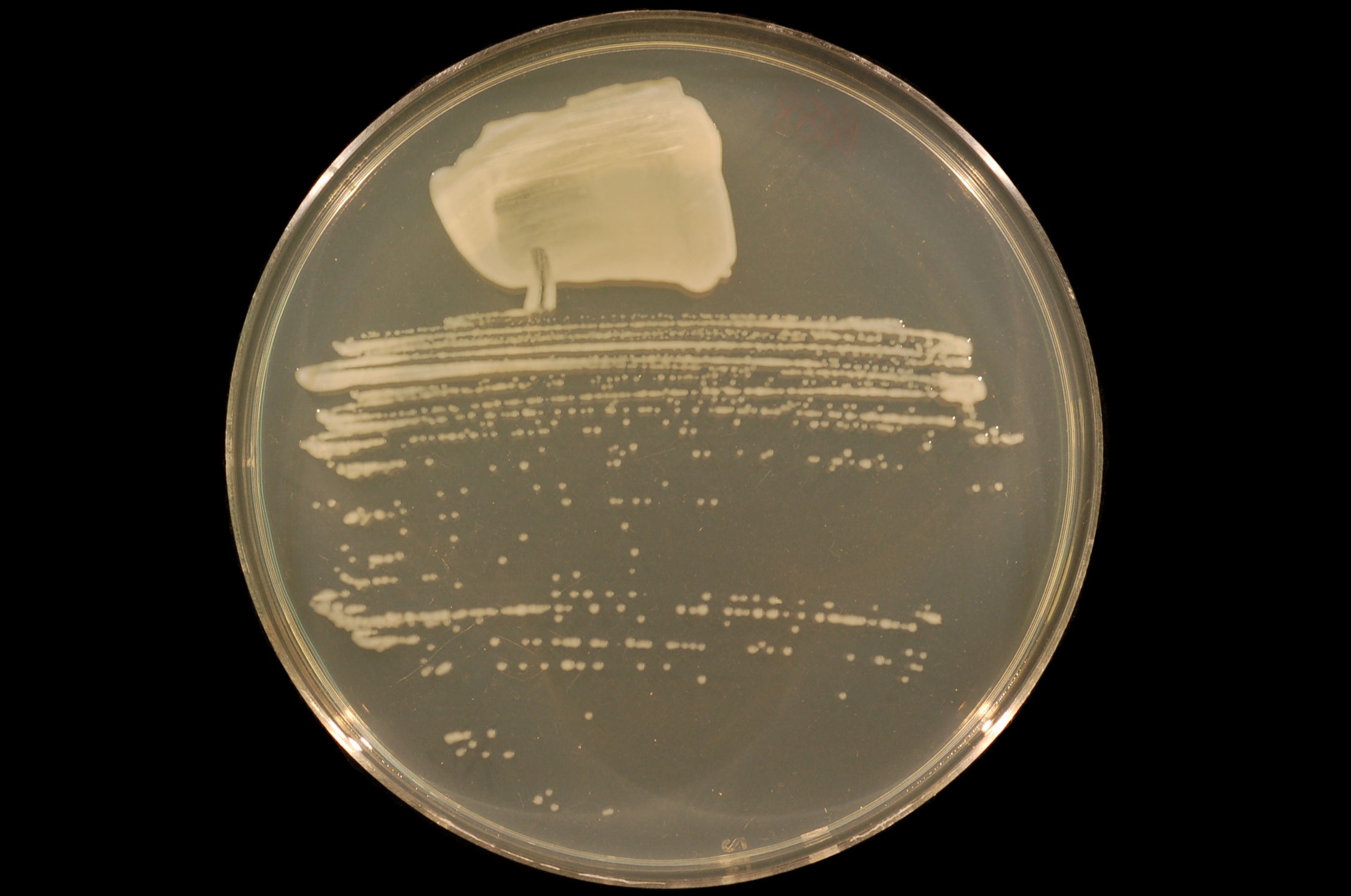
Image source: Wikipedia/Wikimedia
| Ecology, Host, and Life Cycle | |
|---|---|
| Oxygen requirements | Not Available |
| Optimal temperature | Not Available |
| Temperature range | Not Available |
| Habitat | Not Available |
| Biotic relationship | Not Available |
| Host(s) | Not Available |
| Cell arrangement | Not Available |
| Sporulation | Not Available |
| Energy source | Not Available |
| Pathogenicity | Not Available |
Gene Summary
Adenine Count
729492 bp
Thymine Count
731019 bp
Guanine Count
1151657 bp
Cytosine Count
1156351 bp
Genome Length
3768519 bp
Protein-coding Genes
3530 genes
Non-Coding Genes
90 genes
# of Chromosomes/Plasmids
3
Genes
| Name | Locus Tag | UniProt ID | Strand Orientation | Gene Start/End | Protein Molecular Weight |
|---|---|---|---|---|---|
| glutathione s-transferase family protein | PYH37_004912 | O07541 | Positive | 2789703 - 2790803 | 40394.7 |
| dead/deah box helicase | PYH37_004913 | P25888 | Positive | 2791103 - 2792590 | 53702.8 |
| cysteine hydrolase | PYH37_004914 | Q1MW86 | Negative | 2792692 - 2793249 | 19972.7 |
| dmt family transporter | PYH37_004915 | O32256 | Negative | 2793324 - 2794247 | 32375.6 |
| gyri-like domain-containing protein | PYH37_004916 | Not Available | Negative | 2794374 - 2794835 | 17727.0 |
| circularly permuted type 2 atp-grasp protein | PYH37_004917 | Q55587 | Positive | 2795155 - 2796549 | 51885.5 |
| alpha-e domain-containing protein | PYH37_004918 | P9WL96 | Positive | 2796554 - 2797492 | 35313.9 |
| transglutaminase family protein | PYH37_004919 | Q49757 | Positive | 2797509 - 2798357 | 31189.7 |
| l-arabinonate dehydratase | PYH37_004920 | B5ZZ34 | Negative | 2798525 - 2800264 | 62295.6 |
| aldehyde dehydrogenase family protein | PYH37_004921 | P42236 | Negative | 2800313 - 2801746 | 50620.5 |
Pathways
0 pathways
No pathways found
No metabolic pathways have been associated with this bacterium yet.
Health Effects
No health effects information available for this bacterium.