Kingdom
Pseudomonadati
Phylum
Pseudomonadota
Class
Alphaproteobacteria
Order
Hyphomicrobiales
Family
Rhizobiaceae
Genus
Sinorhizobium
Description
Taxonomy
| Kingdom | Pseudomonadati |
|---|---|
| Phylum | Pseudomonadota |
| Class | Alphaproteobacteria |
| Order | Hyphomicrobiales |
| Family | Rhizobiaceae |
| Genus | Sinorhizobium |
| Species | Sinorhizobium numidicum |
| Strain | No strain |
Profile
| Physiology | |
|---|---|
| Gram staining properties | Not Available |
| Shape | Not Available |
| Mobility | Not Available |
| Flagellar presence | Yes |
| Number of membranes | Not Available |
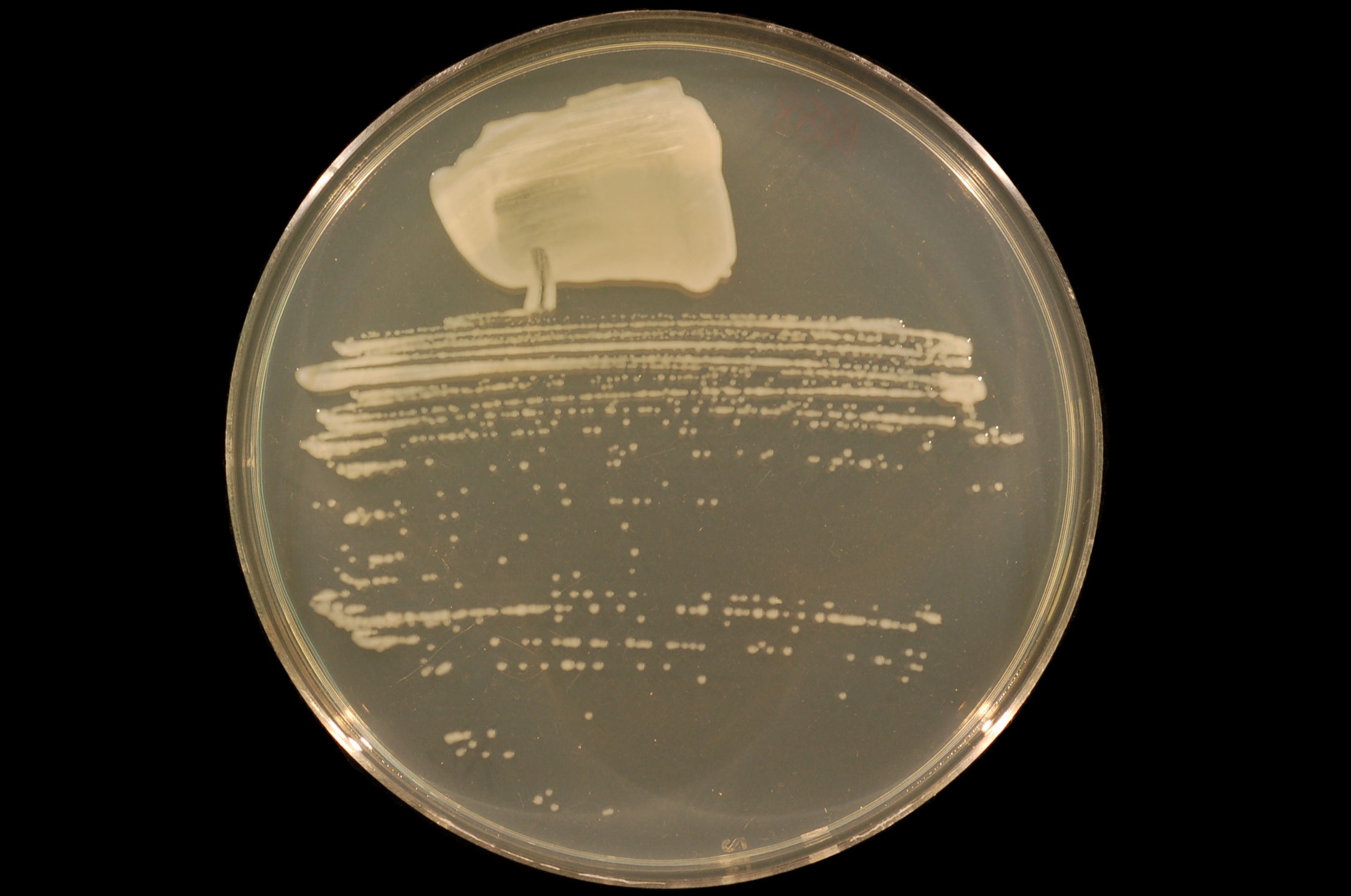
Image source: Wikipedia/Wikimedia
| Ecology, Host, and Life Cycle | |
|---|---|
| Oxygen requirements | Not Available |
| Optimal temperature | Not Available |
| Temperature range | Not Available |
| Habitat | Not Available |
| Biotic relationship | Not Available |
| Host(s) | Not Available |
| Cell arrangement | Not Available |
| Sporulation | Not Available |
| Energy source | Not Available |
| Pathogenicity | Not Available |
Gene Summary
Adenine Count
729492 bp
Thymine Count
731019 bp
Guanine Count
1151657 bp
Cytosine Count
1156351 bp
Genome Length
3768519 bp
Protein-coding Genes
3530 genes
Non-Coding Genes
90 genes
# of Chromosomes/Plasmids
3
Genes
| Name | Locus Tag | UniProt ID | Strand Orientation | Gene Start/End | Protein Molecular Weight |
|---|---|---|---|---|---|
| methyl-accepting chemotaxis protein | PYH37_004622 | P55439 | Negative | 2470715 - 2472796 | 73369.7 |
| hypothetical protein | PYH37_004623 | Not Available | Positive | 2473050 - 2473208 | 5611.99 |
| sco family protein | PYH37_004624 | P38072 | Positive | 2473356 - 2473955 | 21988.4 |
| 50s ribosomal protein l11 methyltransferase | PYH37_004625 | Q92NN5 | Positive | 2474061 - 2474936 | 31460.0 |
| aminopeptidase p family protein | PYH37_004626 | C0SCV1 | Positive | 2475465 - 2477300 | 65923.7 |
| hypothetical protein | PYH37_004627 | Not Available | Negative | 2477540 - 2477779 | 8175.99 |
| azld family protein | PYH37_004628 | Not Available | Negative | 2478006 - 2478314 | 10924.9 |
| azlc family abc transporter permease | PYH37_004629 | P76630 | Negative | 2478317 - 2479033 | 25935.9 |
| 3-methyl-2-oxobutanoate hydroxymethyltransferase | PYH37_004630 | A6UB62 | Negative | 2479415 - 2480236 | 29286.6 |
| pantoate--beta-alanine ligase | PYH37_004631 | C3MEL7 | Negative | 2480239 - 2481114 | 31784.8 |
Pathways
0 pathways
No pathways found
No metabolic pathways have been associated with this bacterium yet.
Health Effects
No health effects information available for this bacterium.