Kingdom
Pseudomonadati
Phylum
Pseudomonadota
Class
Alphaproteobacteria
Order
Hyphomicrobiales
Family
Rhizobiaceae
Genus
Sinorhizobium
Description
Taxonomy
| Kingdom | Pseudomonadati |
|---|---|
| Phylum | Pseudomonadota |
| Class | Alphaproteobacteria |
| Order | Hyphomicrobiales |
| Family | Rhizobiaceae |
| Genus | Sinorhizobium |
| Species | Sinorhizobium numidicum |
| Strain | No strain |
Profile
| Physiology | |
|---|---|
| Gram staining properties | Not Available |
| Shape | Not Available |
| Mobility | Not Available |
| Flagellar presence | Yes |
| Number of membranes | Not Available |
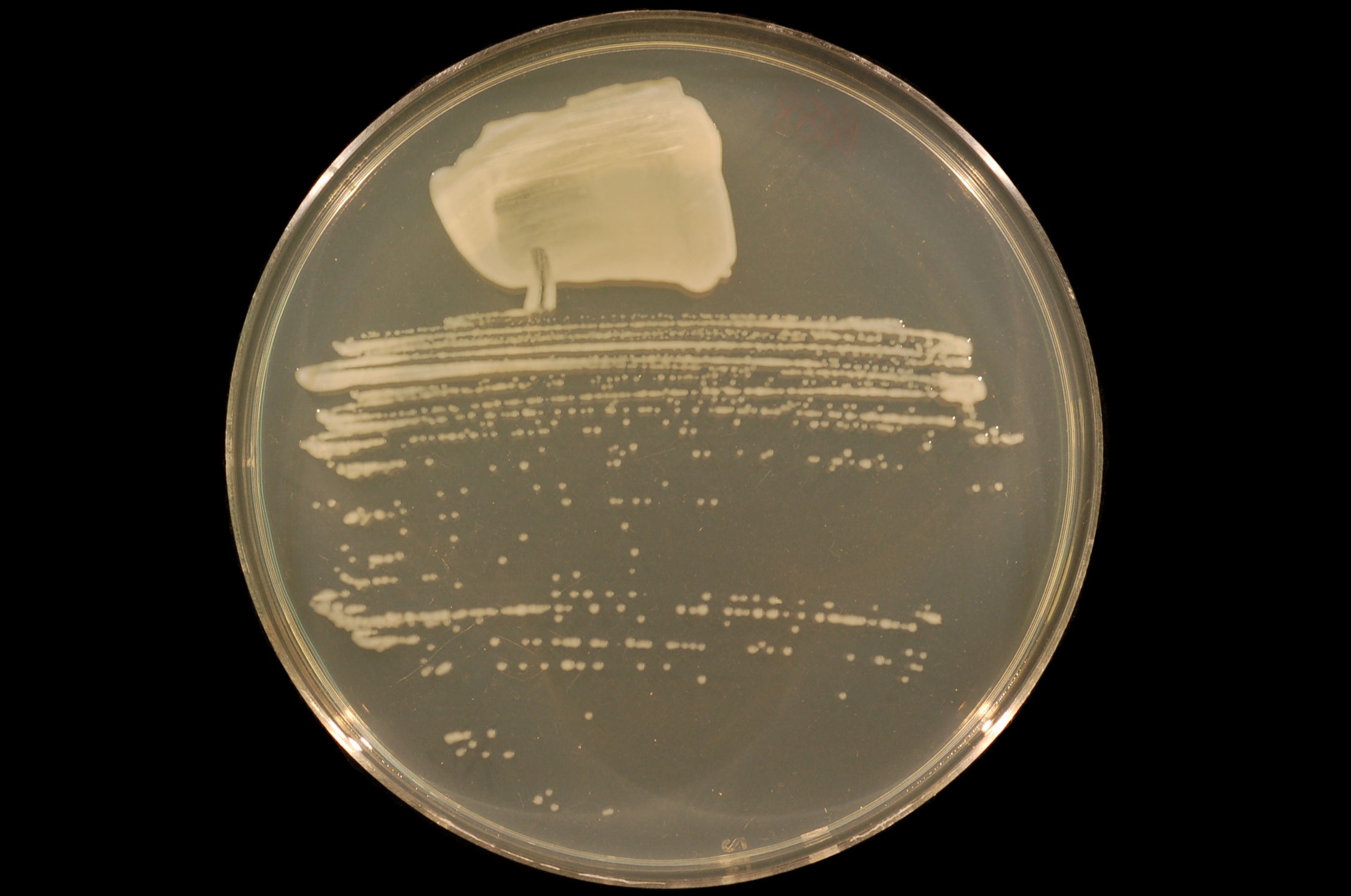
Image source: Wikipedia/Wikimedia
| Ecology, Host, and Life Cycle | |
|---|---|
| Oxygen requirements | Not Available |
| Optimal temperature | Not Available |
| Temperature range | Not Available |
| Habitat | Not Available |
| Biotic relationship | Not Available |
| Host(s) | Not Available |
| Cell arrangement | Not Available |
| Sporulation | Not Available |
| Energy source | Not Available |
| Pathogenicity | Not Available |
Gene Summary
Adenine Count
729492 bp
Thymine Count
731019 bp
Guanine Count
1151657 bp
Cytosine Count
1156351 bp
Genome Length
3768519 bp
Protein-coding Genes
3530 genes
Non-Coding Genes
90 genes
# of Chromosomes/Plasmids
3
Genes
| Name | Locus Tag | UniProt ID | Strand Orientation | Gene Start/End | Protein Molecular Weight |
|---|---|---|---|---|---|
| transcriptional repressor | PYH37_004302 | P0AC51 | Negative | 2154317 - 2154712 | 14698.6 |
| zinc abc transporter permease subunit znub | PYH37_004303 | P39832 | Negative | 2154712 - 2155536 | 29217.1 |
| atp-binding cassette domain-containing protein | PYH37_004304 | Q92P76 | Negative | 2155529 - 2156437 | 32805.3 |
| zinc abc transporter substrate-binding protein znua | PYH37_004305 | Q8YDJ7 | Positive | 2156586 - 2157599 | 36117.4 |
| rcnb family protein | PYH37_004306 | Not Available | Negative | 2157714 - 2158082 | 14284.5 |
| glycoside hydrolase family 43 protein | PYH37_004307 | P94489 | Negative | 2158209 - 2159834 | 61207.1 |
| trap transporter small permease subunit | PYH37_004308 | Not Available | Positive | 2160172 - 2160747 | 21227.4 |
| trap transporter large permease subunit | PYH37_004309 | Q9HU16 | Positive | 2160744 - 2162540 | 62925.6 |
| trap transporter substrate-binding protein | PYH37_004310 | Q3J1R2 | Negative | 2162644 - 2163750 | 39922.7 |
| l-glyceraldehyde 3-phosphate reductase | PYH37_004311 | Q8X529 | Negative | 2164045 - 2165073 | 38191.2 |
Pathways
0 pathways
No pathways found
No metabolic pathways have been associated with this bacterium yet.
Health Effects
No health effects information available for this bacterium.