Kingdom
Pseudomonadati
Phylum
Pseudomonadota
Class
Alphaproteobacteria
Order
Hyphomicrobiales
Family
Rhizobiaceae
Genus
Sinorhizobium
Description
Taxonomy
| Kingdom | Pseudomonadati |
|---|---|
| Phylum | Pseudomonadota |
| Class | Alphaproteobacteria |
| Order | Hyphomicrobiales |
| Family | Rhizobiaceae |
| Genus | Sinorhizobium |
| Species | Sinorhizobium numidicum |
| Strain | No strain |
Profile
| Physiology | |
|---|---|
| Gram staining properties | Not Available |
| Shape | Not Available |
| Mobility | Not Available |
| Flagellar presence | Yes |
| Number of membranes | Not Available |
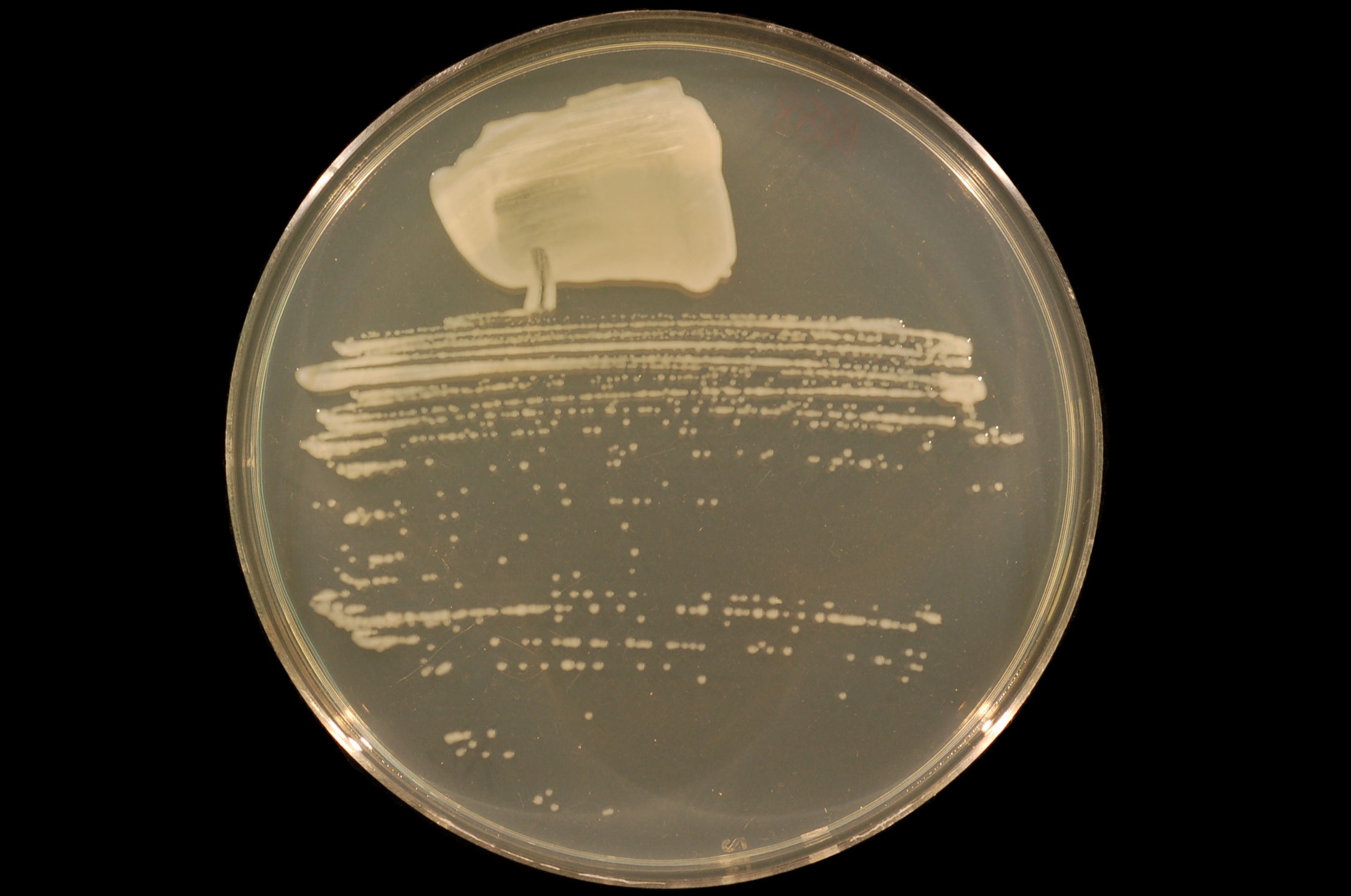
Image source: Wikipedia/Wikimedia
| Ecology, Host, and Life Cycle | |
|---|---|
| Oxygen requirements | Not Available |
| Optimal temperature | Not Available |
| Temperature range | Not Available |
| Habitat | Not Available |
| Biotic relationship | Not Available |
| Host(s) | Not Available |
| Cell arrangement | Not Available |
| Sporulation | Not Available |
| Energy source | Not Available |
| Pathogenicity | Not Available |
Gene Summary
Adenine Count
729492 bp
Thymine Count
731019 bp
Guanine Count
1151657 bp
Cytosine Count
1156351 bp
Genome Length
3768519 bp
Protein-coding Genes
3530 genes
Non-Coding Genes
90 genes
# of Chromosomes/Plasmids
3
Genes
| Name | Locus Tag | UniProt ID | Strand Orientation | Gene Start/End | Protein Molecular Weight |
|---|---|---|---|---|---|
| molybdopterin-guanine dinucleotide biosynthesis protein b | PYH37_004252 | P44902 | Positive | 2107663 - 2108175 | 18864.5 |
| ompa family protein | PYH37_004253 | P37665 | Negative | 2108298 - 2110574 | 85843.8 |
| abc transporter substrate-binding protein | PYH37_004254 | G3XD47 | Positive | 2110991 - 2111773 | 28077.4 |
| abc transporter permease | PYH37_004255 | P35118 | Positive | 2111938 - 2112741 | 28757.8 |
| abc transporter permease | PYH37_004256 | P35113 | Positive | 2112738 - 2113568 | 30987.4 |
| usg protein | PYH37_004257 | P12288 | Positive | 2113777 - 2114043 | 10471.7 |
| sdr family oxidoreductase | PYH37_004258 | Q9X248 | Negative | 2114067 - 2114771 | 25241.1 |
| duf2270 domain-containing protein | PYH37_004259 | Not Available | Negative | 2114979 - 2115704 | 27171.1 |
| class i sam-dependent methyltransferase | PYH37_004260 | Q5QZ53 | Positive | 2115986 - 2116813 | 30024.6 |
| nad(p)-dependent oxidoreductase | PYH37_004261 | O33730 | Positive | 2116988 - 2117857 | 30572.6 |
Pathways
0 pathways
No pathways found
No metabolic pathways have been associated with this bacterium yet.
Health Effects
No health effects information available for this bacterium.