Kingdom
Pseudomonadati
Phylum
Pseudomonadota
Class
Alphaproteobacteria
Order
Hyphomicrobiales
Family
Rhizobiaceae
Genus
Sinorhizobium
Description
Taxonomy
| Kingdom | Pseudomonadati |
|---|---|
| Phylum | Pseudomonadota |
| Class | Alphaproteobacteria |
| Order | Hyphomicrobiales |
| Family | Rhizobiaceae |
| Genus | Sinorhizobium |
| Species | Sinorhizobium numidicum |
| Strain | No strain |
Profile
| Physiology | |
|---|---|
| Gram staining properties | Not Available |
| Shape | Not Available |
| Mobility | Not Available |
| Flagellar presence | Yes |
| Number of membranes | Not Available |
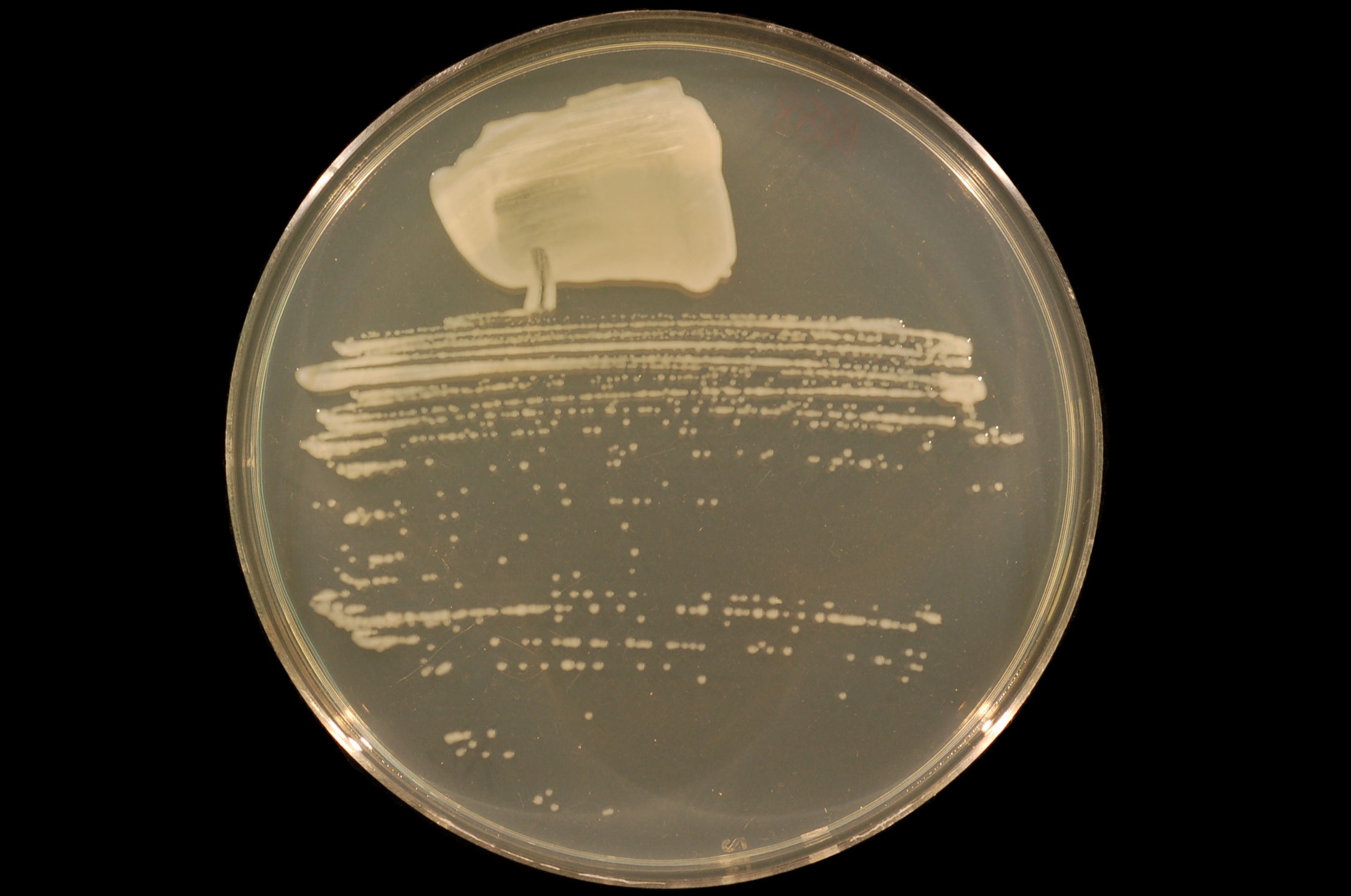
Image source: Wikipedia/Wikimedia
| Ecology, Host, and Life Cycle | |
|---|---|
| Oxygen requirements | Not Available |
| Optimal temperature | Not Available |
| Temperature range | Not Available |
| Habitat | Not Available |
| Biotic relationship | Not Available |
| Host(s) | Not Available |
| Cell arrangement | Not Available |
| Sporulation | Not Available |
| Energy source | Not Available |
| Pathogenicity | Not Available |
Gene Summary
Adenine Count
729492 bp
Thymine Count
731019 bp
Guanine Count
1151657 bp
Cytosine Count
1156351 bp
Genome Length
3768519 bp
Protein-coding Genes
3530 genes
Non-Coding Genes
90 genes
# of Chromosomes/Plasmids
3
Genes
| Name | Locus Tag | UniProt ID | Strand Orientation | Gene Start/End | Protein Molecular Weight |
|---|---|---|---|---|---|
| abc-type transport auxiliary lipoprotein family protein | PYH37_004212 | P29285 | Negative | 2060333 - 2060896 | 19875.9 |
| mce family protein | PYH37_004213 | P29285 | Negative | 2061038 - 2062408 | 48811.5 |
| abc transporter atp-binding protein | PYH37_004214 | P45031 | Negative | 2062501 - 2063313 | 29722.3 |
| abc transporter permease | PYH37_004215 | P45030 | Negative | 2063326 - 2064480 | 40712.5 |
| dipeptide epimerase | PYH37_004216 | P51981 | Positive | 2064717 - 2065700 | 34399.4 |
| mfs transporter | PYH37_004217 | P44629 | Negative | 2065652 - 2066875 | 44772.8 |
| udp-2,3-diacylglucosamine diphosphatase | PYH37_004218 | A1SWR2 | Negative | 2067004 - 2067849 | 31896.1 |
| nadp-dependent malic enzyme | PYH37_004219 | O30807 | Positive | 2068028 - 2070340 | 82844.1 |
| luxr c-terminal-related transcriptional regulator | PYH37_004220 | Q6NCZ5 | Positive | 2070515 - 2071252 | 27399.2 |
| acyl-homoserine-lactone synthase | PYH37_004221 | P33907 | Positive | 2071407 - 2072051 | 23914.8 |
Pathways
0 pathways
No pathways found
No metabolic pathways have been associated with this bacterium yet.
Health Effects
No health effects information available for this bacterium.