Kingdom
Pseudomonadati
Phylum
Pseudomonadota
Class
Alphaproteobacteria
Order
Hyphomicrobiales
Family
Rhizobiaceae
Genus
Sinorhizobium
Description
Taxonomy
| Kingdom | Pseudomonadati |
|---|---|
| Phylum | Pseudomonadota |
| Class | Alphaproteobacteria |
| Order | Hyphomicrobiales |
| Family | Rhizobiaceae |
| Genus | Sinorhizobium |
| Species | Sinorhizobium numidicum |
| Strain | No strain |
Profile
| Physiology | |
|---|---|
| Gram staining properties | Not Available |
| Shape | Not Available |
| Mobility | Not Available |
| Flagellar presence | Yes |
| Number of membranes | Not Available |
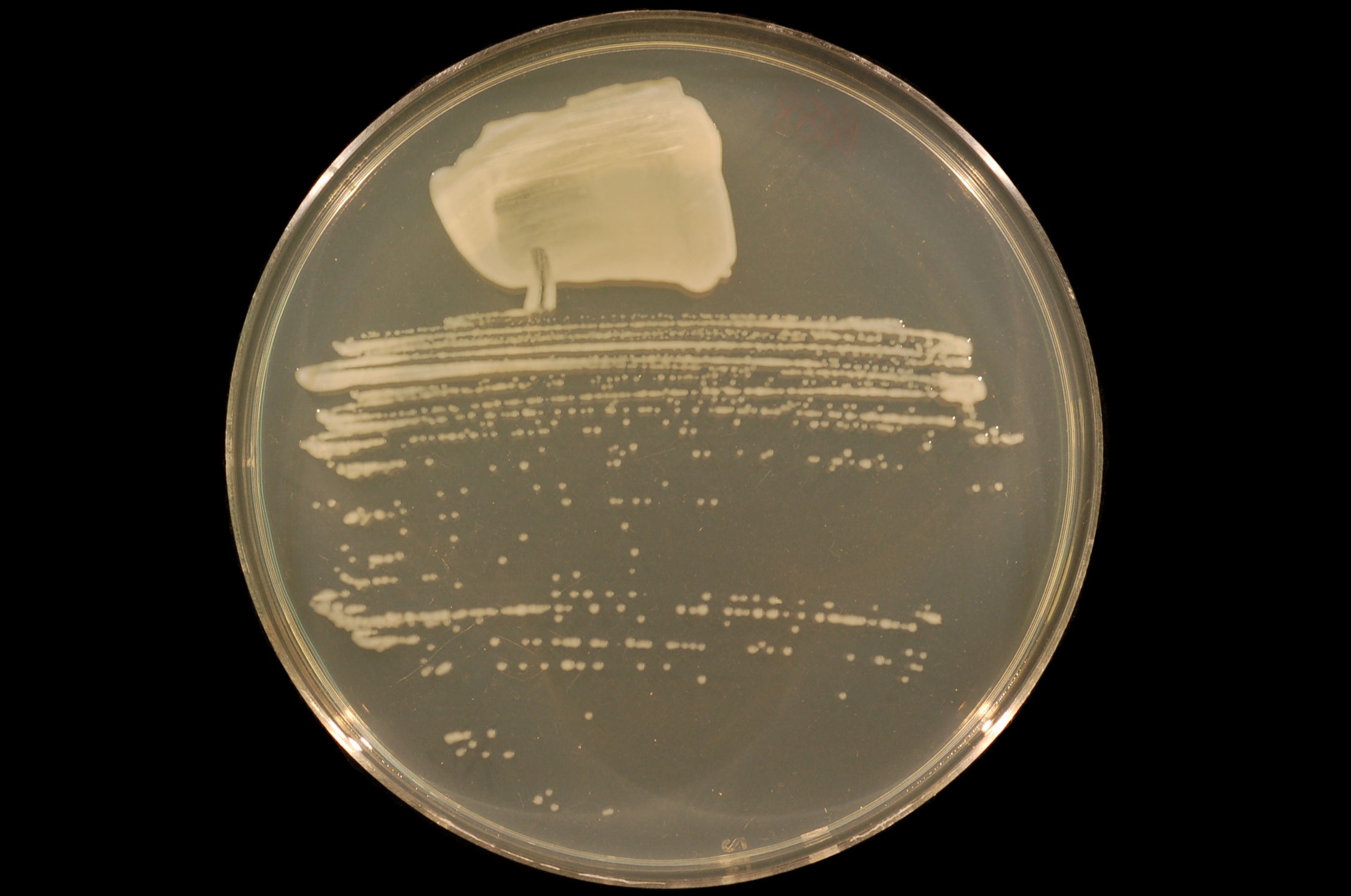
Image source: Wikipedia/Wikimedia
| Ecology, Host, and Life Cycle | |
|---|---|
| Oxygen requirements | Not Available |
| Optimal temperature | Not Available |
| Temperature range | Not Available |
| Habitat | Not Available |
| Biotic relationship | Not Available |
| Host(s) | Not Available |
| Cell arrangement | Not Available |
| Sporulation | Not Available |
| Energy source | Not Available |
| Pathogenicity | Not Available |
Gene Summary
Adenine Count
729492 bp
Thymine Count
731019 bp
Guanine Count
1151657 bp
Cytosine Count
1156351 bp
Genome Length
3768519 bp
Protein-coding Genes
3530 genes
Non-Coding Genes
90 genes
# of Chromosomes/Plasmids
3
Genes
| Name | Locus Tag | UniProt ID | Strand Orientation | Gene Start/End | Protein Molecular Weight |
|---|---|---|---|---|---|
| invasion associated locus b family protein | PYH37_004012 | Q57F20 | Positive | 1847562 - 1848191 | 22581.3 |
| heat shock protein hspq | PYH37_004013 | A7FJR9 | Negative | 1848341 - 1848670 | 13101.1 |
| type i glutamate--ammonia ligase | PYH37_004014 | Q59747 | Negative | 1848859 - 1850268 | 52103.1 |
| p-ii family nitrogen regulator | PYH37_004015 | Q52905 | Negative | 1850350 - 1850688 | 12281.9 |
| nad(p)h-hydrate dehydratase | PYH37_004016 | B5YIM0 | Positive | 1851034 - 1852509 | 50320.5 |
| xanthine phosphoribosyltransferase | PYH37_004017 | Q92PU1 | Negative | 1852546 - 1853043 | 18431.1 |
| competence/damage-inducible protein a | PYH37_004018 | A3MS85 | Negative | 1853259 - 1854005 | 26767.3 |
| duf2188 domain-containing protein | PYH37_004019 | Not Available | Positive | 1854391 - 1854633 | 8810.84 |
| hypothetical protein | PYH37_004020 | Not Available | Positive | 1854724 - 1854942 | 8032.43 |
| hypothetical protein | PYH37_004021 | Not Available | Negative | 1855117 - 1855287 | 6363.49 |
Pathways
0 pathways
No pathways found
No metabolic pathways have been associated with this bacterium yet.
Health Effects
No health effects information available for this bacterium.