Kingdom
Pseudomonadati
Phylum
Pseudomonadota
Class
Alphaproteobacteria
Order
Hyphomicrobiales
Family
Rhizobiaceae
Genus
Sinorhizobium
Description
Taxonomy
| Kingdom | Pseudomonadati |
|---|---|
| Phylum | Pseudomonadota |
| Class | Alphaproteobacteria |
| Order | Hyphomicrobiales |
| Family | Rhizobiaceae |
| Genus | Sinorhizobium |
| Species | Sinorhizobium numidicum |
| Strain | No strain |
Profile
| Physiology | |
|---|---|
| Gram staining properties | Not Available |
| Shape | Not Available |
| Mobility | Not Available |
| Flagellar presence | Yes |
| Number of membranes | Not Available |
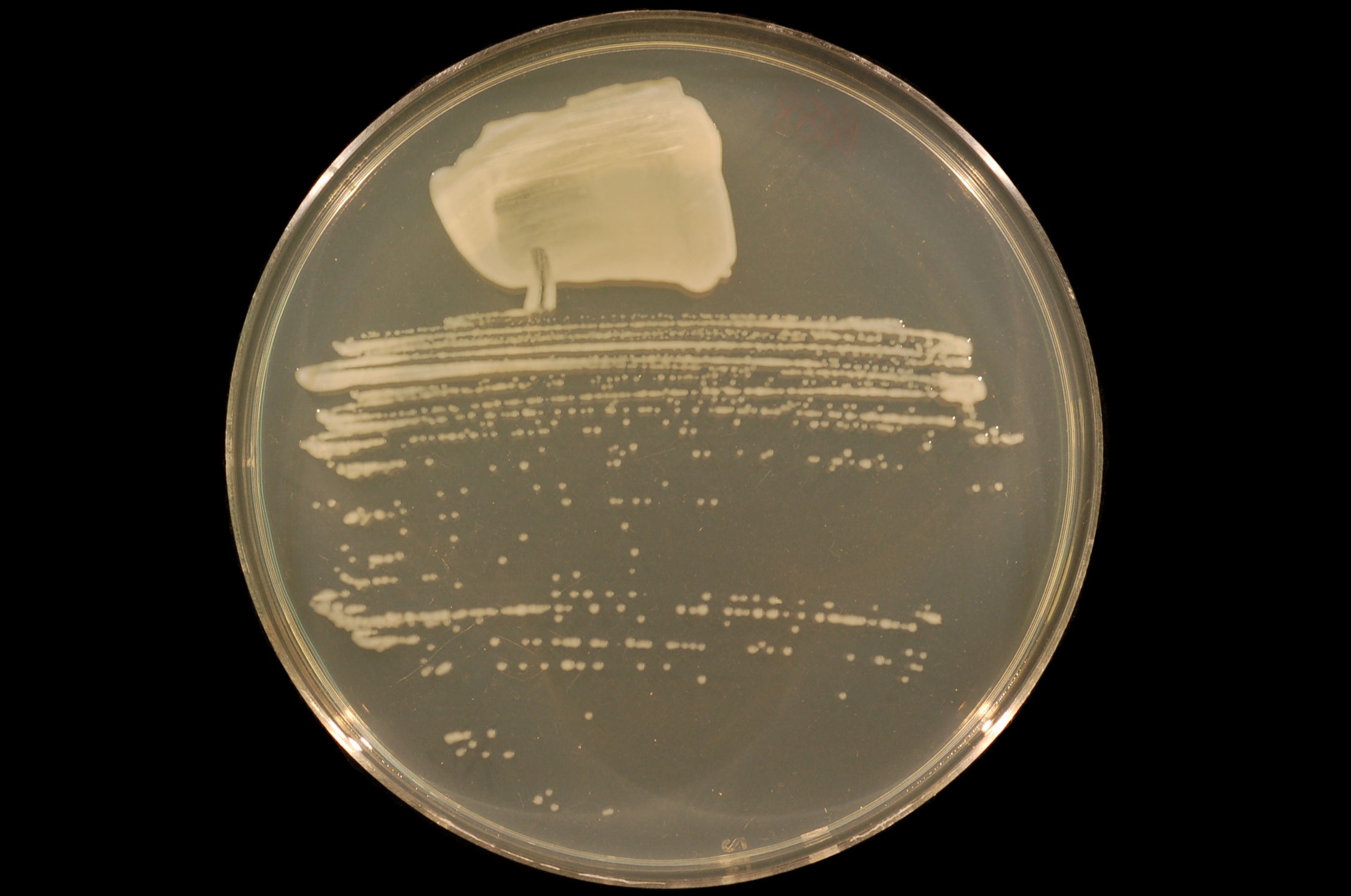
Image source: Wikipedia/Wikimedia
| Ecology, Host, and Life Cycle | |
|---|---|
| Oxygen requirements | Not Available |
| Optimal temperature | Not Available |
| Temperature range | Not Available |
| Habitat | Not Available |
| Biotic relationship | Not Available |
| Host(s) | Not Available |
| Cell arrangement | Not Available |
| Sporulation | Not Available |
| Energy source | Not Available |
| Pathogenicity | Not Available |
Gene Summary
Adenine Count
729492 bp
Thymine Count
731019 bp
Guanine Count
1151657 bp
Cytosine Count
1156351 bp
Genome Length
3768519 bp
Protein-coding Genes
3530 genes
Non-Coding Genes
90 genes
# of Chromosomes/Plasmids
3
Genes
| Name | Locus Tag | UniProt ID | Strand Orientation | Gene Start/End | Protein Molecular Weight |
|---|---|---|---|---|---|
| abc transporter permease | PYH37_003992 | D4GPW2 | Positive | 1820420 - 1821514 | 39980.0 |
| abc transporter permease | PYH37_003993 | D4GPW1 | Positive | 1821514 - 1822434 | 32098.2 |
| bmp family abc transporter substrate-binding protein | PYH37_003994 | Q2YKI6 | Positive | 1822481 - 1823551 | 38618.0 |
| fadr family transcriptional regulator | PYH37_003995 | P31475 | Positive | 1823805 - 1824560 | 27131.8 |
| hemolysin family protein | PYH37_003996 | P74409 | Positive | 1824705 - 1825997 | 46957.9 |
| molybdopterin molybdotransferase moea | PYH37_003997 | P12281 | Negative | 1826174 - 1827394 | 42669.3 |
| cyclic pyranopterin monophosphate synthase moac | PYH37_003998 | C3MCF1 | Negative | 1827394 - 1827888 | 17335.2 |
| indole-3-glycerol phosphate synthase trpc | PYH37_003999 | C3MCF2 | Negative | 1827888 - 1828703 | 29455.4 |
| anthranilate phosphoribosyltransferase | PYH37_004000 | Q92PS0 | Negative | 1828713 - 1829726 | 34702.9 |
| sura n-terminal domain-containing protein | PYH37_004001 | P0ADY2 | Negative | 1829745 - 1831637 | 68197.6 |
Pathways
0 pathways
No pathways found
No metabolic pathways have been associated with this bacterium yet.
Health Effects
No health effects information available for this bacterium.